

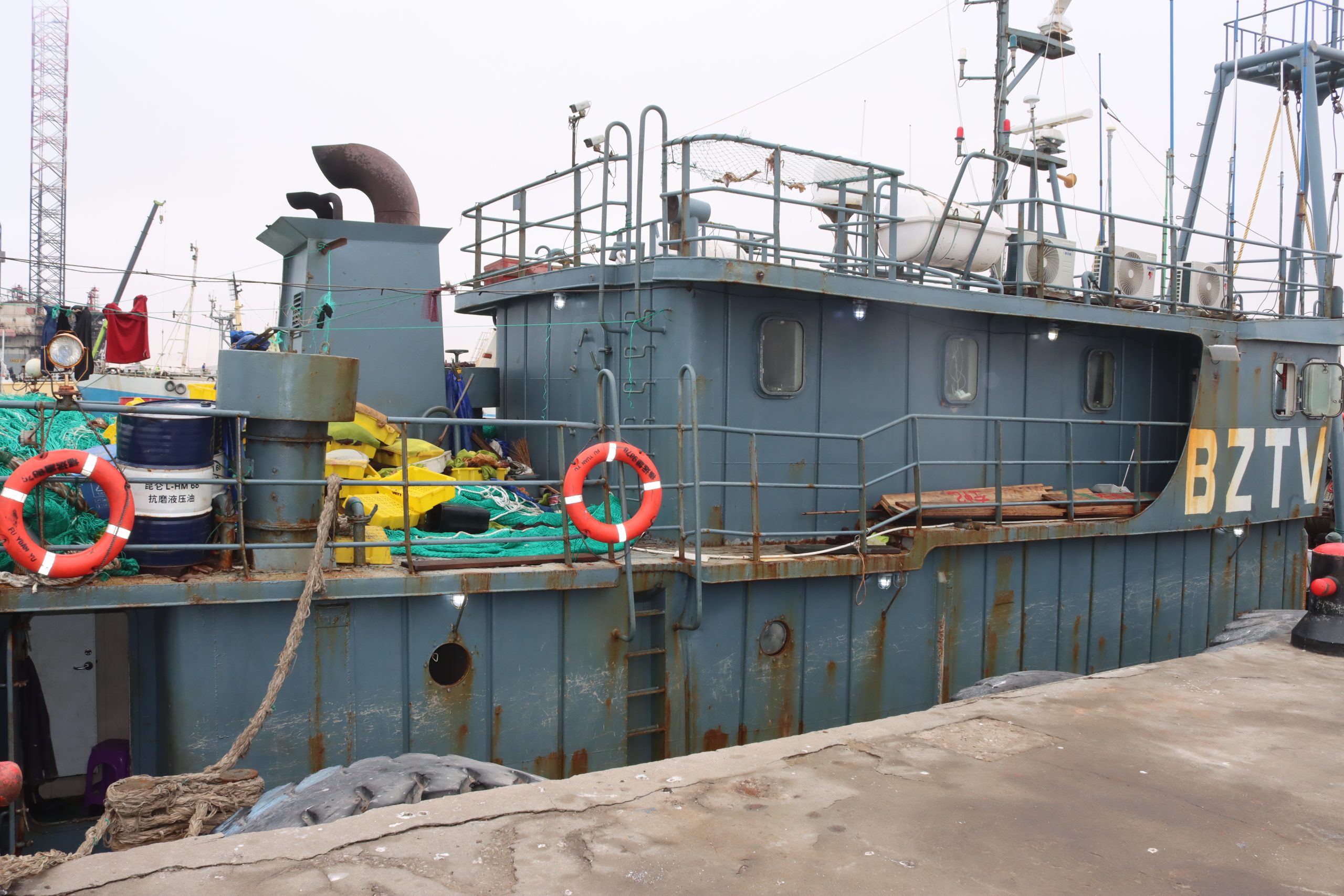

WALVIS BAY – Fishing nations lost up to N$426 billion to illegal, unreported, and unregulated (IUU) fishing in 2025, as these illegal activities continue to threaten marine resources and coastal economies worldwide.
This is according to the newly released IUU Fishing Index 2025 report compiled by the Global Initiative Against Transnational Organized Crime, an independent civil society organization with its headquarters in Geneva, Switzerland.
Africa remains the worst-performing region in addressing the growing problem.
The organization’s network includes law enforcement, governance, and development practitioners focused on developing innovative strategies to respond to organised crime. The report paints a grim picture of continued illegal fishing, weak governance, and accountability challenges, despite global efforts aimed at protecting fish stocks and improving ocean governance. According to the index, IUU fishing accounts for between 11% and 19% of global fish catches annually, representing between 10 million and 26 million tonnes of fish worth an estimated US$10 billion to US$23 billion every year (about N$185 billion to N$426 billion).
“The overall global score has remained largely unchanged since 2019, signalling a persistent failure to effectively tackle IUU fishing,” the report states.
The findings further show that the global fishing industry remains one of the world’s most important economic sectors, producing around 90 million tonnes of capture fisheries annually, supporting approximately 34 million jobs, and generating close to US$192 billion in seafood exports in 2022.
However, the report warns that marine resources are increasingly under threat due to overfishing and illegal practices. It notes that the proportion of fish stocks within biologically sustainable levels declined from 90% in 1974 to 62.3% in 2021.
Africa
Africa’s situation remains particularly concerning, with the report identifying the continent as the worst-performing region in combating IUU fishing due to weak enforcement systems, governance gaps, and limited resources. “Africa continued to be the worst-performing region, reflecting ongoing challenges in monitoring, control, and surveillance systems,” the report states.
The index further explains that developing coastal states remain highly vulnerable due to limited enforcement capacity and increasing pressure from international fishing fleets. “The risk of IUU fishing is driven not only by geography, but also by governance, enforcement capacity, and international cooperation,” the report notes. It adds that transparency, cooperation, and improved fisheries management remain critical in reducing the risk of illegal fishing.
Developing countries continue to carry the heaviest burden of IUU fishing activities, with the report stating that limited resources and capacity constraints hinder effective responses. These findings come amid growing international concern over declining fish stocks, organised criminal networks operating in global waters, and the long-term environmental impact of illegal fishing.
Namibia is not spared when it comes to illegal fishing activities along Namibia’s coast. Authorities recently arrested 22 fishermen linked to suspected illegal harvesting in restricted areas.
According to the agriculture ministry, the arrests form part of increased surveillance and compliance efforts aimed at curbing unauthorized fishing practices and safeguarding declining fish populations.
According to the ministry, illegal fishing is also being committed by Namibian-flagged and licensed vessels operating within the country’s EEZ, with several cases currently under investigation as enforcement efforts intensify. “Any violation of the country’s legal provisions will be met with the full force of the law, regardless of whether the vessel is foreign or Namibian flagged and licensed,” spokesperson of the ministry, Romeo Muyunda, said last week.
Declining fish stocks
In April, President Netumbo Nandi-Ndaitwah also raised concern over declining fish stocks in Namibia.
She noted a general downward trend in total allowable catch (TAC) species. “While the country continues with science-based fisheries management, recent stock assessments reveal that several key commercial species are under increasing pressure,” Nandi-Ndaitwah said.
The fisheries sector contributes about 4.1% to GDP and generates approximately N$14.3 billion in export earnings.
According to the Namibian Statistics Agency (NSA), Namibia imported fish worth about N$140 million in the fourth quarter of 2025, mainly driven by declining quotas allocated to fishing companies.
The fisheries ministry also announced in January this year a reduction in the horse mackerel total allowable catch to 197 000 tonnes, down 5% from 208 000 tonnes in 2024.
The decision followed a scientific survey estimating horse mackerel biomass at 784 011 tonnes, with the assessment identifying a recent decline requiring a more cautious management approach, the ministry said. Similarly, the Cabinet set the hake total allowable catch at 133 000 metric tonnes for the 2025/26 fishing season, down from the previous year’s 140 000 metric tonnes.