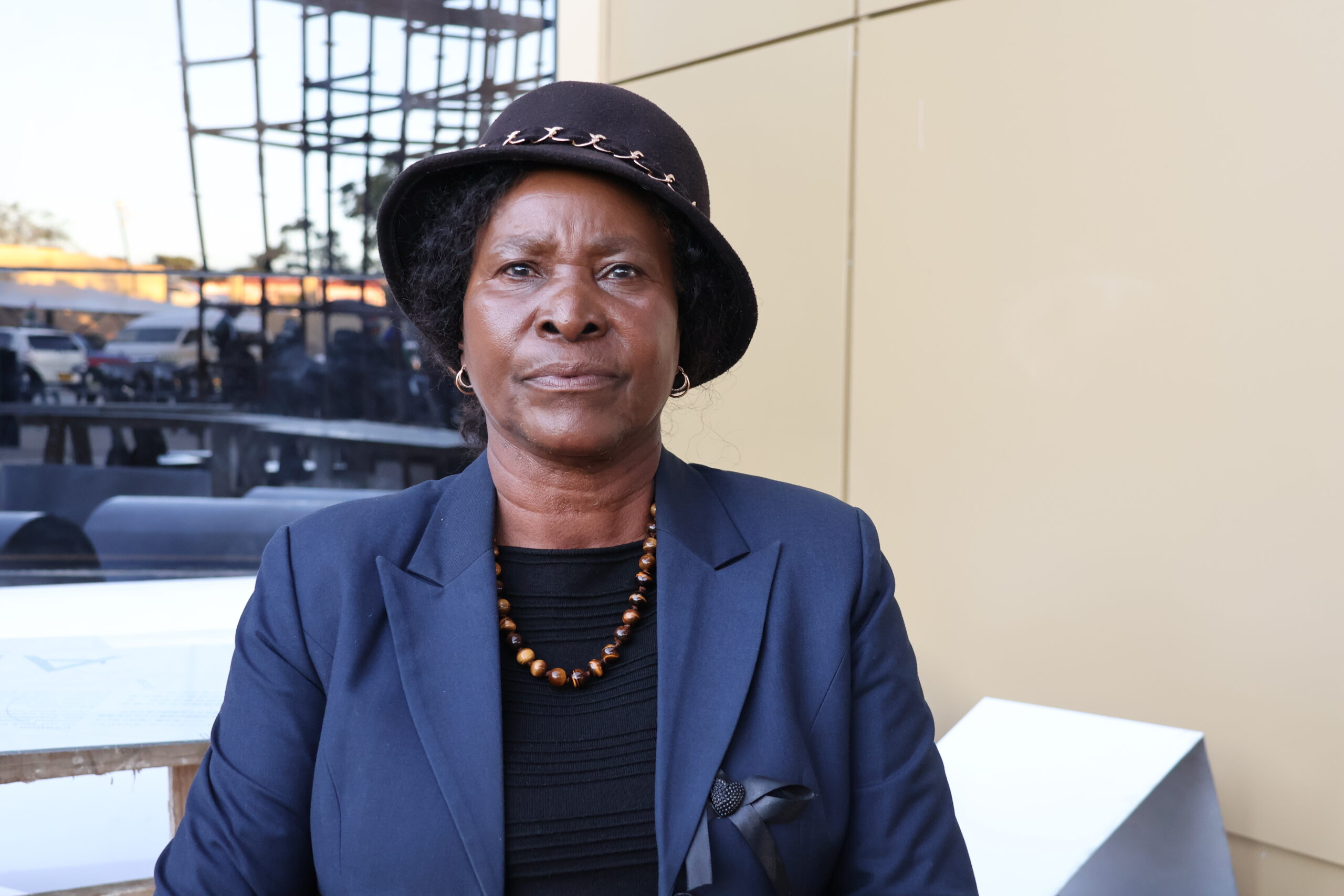

Eba Kandovazu
At 18 years, Selma Simon, now 65, witnessed the brutal killing of her family, friends and comrades in cold blood.
It is an experience that has traumatised her for life.
For Simon and hundreds of others, 4 May 1978 began as just another morning at an exile camp in Cassinga, southern Angola.
The South African Defence Force targeted the camp, which was inhabited by exiled South West Africa People’s Organisation (Swapo) sympathisers and their families. The South African apartheid regime launched an airstrike, and deployed paratroopers on Cassinga camp. It is reported that 165 men, 294 women and 300 children were killed.
Simon said many of the men had gone for training, while the women and children remained, going about their day. Minutes later, a helicopter appeared out of nowhere, followed by many others carrying armed South African apartheid regime forces.
“We were just on our way to our assembly point for the roll call when we saw a lot of helicopters approaching from the northern side of the camp’s skies to the southern side. Many of us thought the helicopters were bringing us food at the camp because we were experiencing hunger at the time. In a matter of seconds, bombs and gunshots were fired at us, and chaos erupted. These choppers were flying around firing from the sky,” she told Nampa in an interview.
The killings, Simon added, went on for the entire day from morning to evening. Days before the massacre, a helicopter had been seen flying overhead the camp every day for about three days.
“We were informed that it was the enemy’s chopper,” she said.
Hundreds of South African soldiers also landed at the camp by parachute.
“I do not speak Afrikaans, but when the soldiers landed, they kept uttering these words in Afrikaans: Swapo is a bloody fool, take them on, take them on, forward, forward,” Simon recounted.
“Luckily for us, we had Cuban troops nearby to assist us. However, the South African regime planted bombs on the walkway. Sadly, the first batch of Cuban soldiers who came to assist us were bombed, and they died. It is said that 16 Cuban soldiers died that day. The Cubans took alternative routes in the forest to assist many of us,” she narrated.
While attempting to flee the camp, Simon said she came face to face with a crocodile guarding its newly-hatched eggs on a bush as she crossed the river.
“I observed a lot of creatures which appeared to look like lizards. I did not pay much attention to them, until I saw the big crocodile. I then realised that danger was near. It was a mother, nursing her young ones. I ran for my life. I then got to the other side, but I was met with horror again. There were bodies of the Cuban troops who were going to assist us. It was horrible; a bloodbath,” she said.
Many people survived because they fled into the forest, as the regime primarily targeted the camp.
“We thank God because if those South African soldiers had fired into the forest, many of us would have been dead. We survived because we crawled through the forest, and swam through the river—a very deep river—but we survived. After we crossed the river, we were hungry, and sought refuge from Angolan citizens. This was day two after the attack. We went into their fields and ate their sugar canes; we ate raw mealies to survive,” Simon stated.
Nampa also interviewed 47-year-old Rachel Amundaba, whose mother Maria, a survivor of Cassinga, was pregnant with her at the time she crossed the river.
Her mother was married to late Colonel Dr Eloby Amundaba.
“My mother is traumatised to this day. My mother was six months pregnant when the massacre happened. I was later born in July. Every Cassinga Day, my mother breaks down and cries. As a family, we comforted her, and we sought therapy for her. She says she is reminded all the time about the bombs, the cries of her comrades and innocent children,” Amundaba said.
Not knowing how to swim, her mother survived miraculously. That river had snakes and crocodiles.
“It was just by the grace of God,” she continued.
A candlelight vigil was held on Sunday at the Swapo Party headquarters in Windhoek.
Speaking at the occasion, 48-year-old Lucretia Ndeumane, who was one year and three months old at the time of the massacre, delivered a speech on behalf of the survivors.
“On this day, we also remember and pay tribute to the Cuban internationalist forces who died at Cassinga, defending us. It was thanks to the bravery of the Cuban internationalist forces who were stationed at Chamutete that the massacre at Cassinga was stopped. The Cuban combatants came to our rescue at Cassinga, despite heavy bombings of their convoy by the South African planes. Sixteen Cuban soldiers died that day as they fought heroically to stop the massacre of our compatriots at Cassinga. That was a true spirit of solidarity, and we will never forget the people of Cuba,” Ndeumane said.
For her part, President Netumbo Nandi-Ndaitwah paid tribute to the heroes of the liberation struggle.
“Cassinga Day is a stark reminder of the cruelty of the apartheid South African occupation regime. It was on this day that innocent refugees, mostly women and children, were viciously and inhumanely attacked by a minority regime intent on crushing the will of our people,” she added.
The attack, rather than breaking their spirit, strengthened the resolve of liberation fighters to fight for justice, dignity and independence, Nandi-Ndaitwah said.
-Nampa