
The African Development Bank (AfDB) has approved a US$10 million loan to Hyphen Hydrogen Energy, marking a critical milestone for Namibia’s ambition to become a global leader in green hydrogen and green ammonia production. While this financial injection is modest in size compared to the project’s staggering overall value of more than US$10 billion, the funding is strategically significant: it helps unlock one of Africa’s most ambitious renewable energy developments and sends a powerful signal of international confidence.
The loan is drawn from the Sustainable Energy Fund for Africa (SEFA), a multi-donor special fund designed to catalyse private-sector investment in renewable energy and energy efficiency. In Hyphen’s case, the money will be used to finance detailed front-end engineering and design studies, often the riskiest and hardest-to-fund phase of large infrastructure projects.
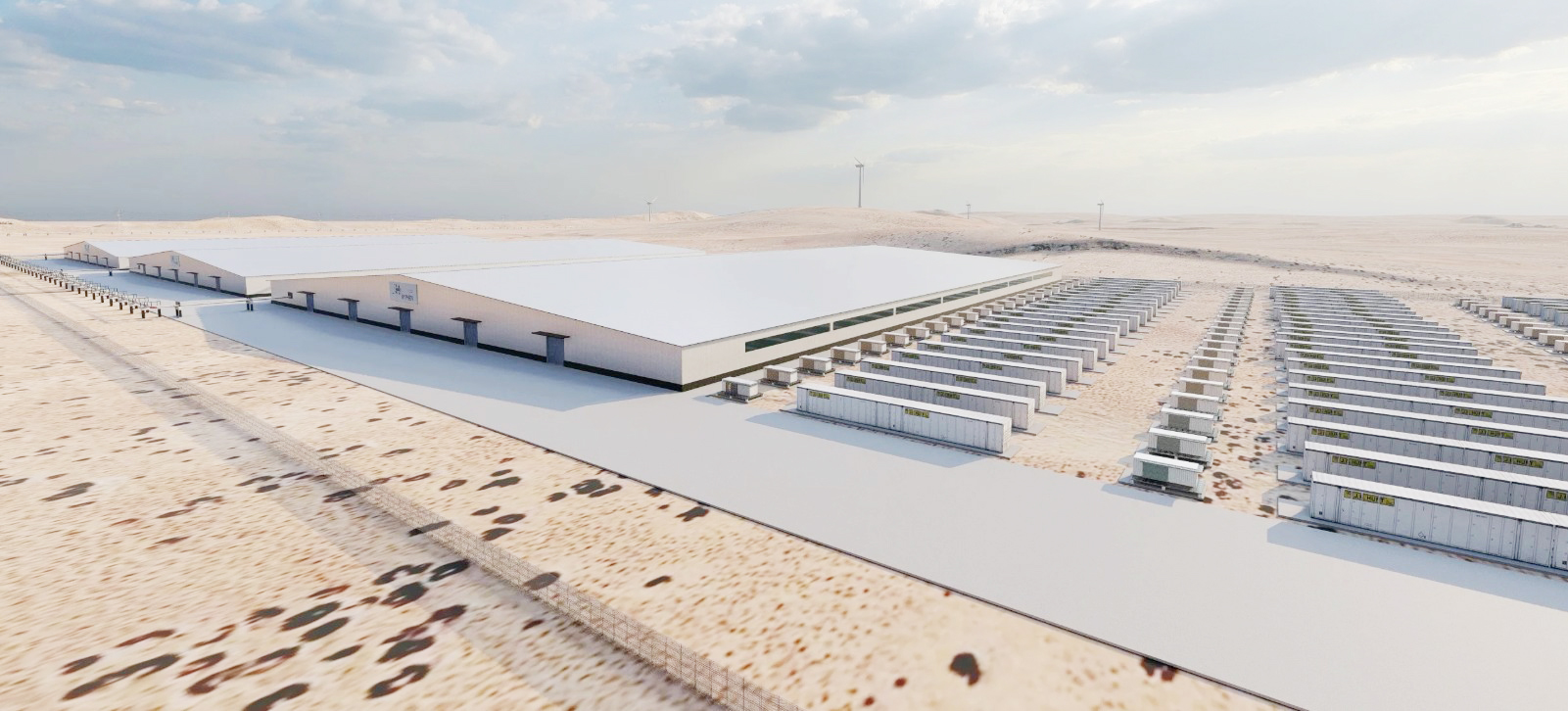
These studies will cover solar and wind generation, battery energy storage systems, electrolysers for producing green hydrogen, and desalination infrastructure critical to operations in Namibia’s arid south.
By de-risking this early stage, the AfDB hopes to crowd in billions of dollars in private financing needed to turn the project into reality.
Hyphen’s green hydrogen and ammonia project, located near Lüderitz in southern Namibia, is unprecedented in scale for the continent. The first phase alone includes 3.75 gigawatts of renewable energy generation, large-scale battery storage, 1.5 gigawatts of electrolyser capacity, and extensive supporting infrastructure, desalination plants, pipelines, transmission lines, and upgraded port facilities. All components, the developers say, will be built to the highest environmental and social standards under a 40-year concession agreement with the Namibian government.
Once fully operational, the project is expected to produce up to two million tonnes of green ammonia each year for export to international markets seeking low-carbon alternatives to fossil-fuel-based products. In climate terms, the impact is profound: the project could avert up to five million tonnes of carbon dioxide emissions annually, the equivalent of taking more than one million cars off the road.
The scale of the renewable rollout is equally striking. At 7.5 gigawatts, the project’s planned renewable energy capacity would be more than ten times Namibia’s current installed electricity capacity, fundamentally reshaping the country’s energy landscape.
But beyond exports and emissions, the project promises tangible local benefits. Through desalination, it is expected to supply three million litres of clean water per day to the water-scarce Lüderitz region. Economically, the project is projected to create around 15 000 jobs during construction and 3 000 permanent positions once operational. Ninety percent of these jobs are reserved for Namibian nationals, with at least 20% specifically targeting young people, an important intervention in a country where youth unemployment exceeds 38%.
In a media statement Moono Mupotola, AfDB country manager for Namibia and deputy director general for southern Africa, framed the loan as part of a much bigger vision.
“This is about far more than energy infrastructure,” she said.
“This is about demonstrating Africa’s capacity to lead the global energy transition, create quality jobs for our youth, and build prosperity while protecting our planet. Namibia is showing the world that Africa is not just participating in the green economy, we are defining it,” she added.
Hyphen Hydrogen Energy CEO Marco Raffinetti welcomed the decision as a decisive vote of confidence.
“The African Development Bank’s approval of this pre-investment facility represents strong confidence in Hyphen’s project and in Namibia’s ambition to develop one of the world’s most transformative green hydrogen projects,” he said. “This facility will partially fund the technical design phase as we move toward a final investment decision.”
From the AfDB’s perspective, the intervention is designed to punch far above its financial weight. “SEFA’s intervention is catalytic,” said Daniel Schroth, AfDB’s director for renewable energy and energy efficiency.
“By supporting these essential pre-investment activities, we are unlocking billions in project financing. This is a strategic, high-impact development project,” he added.
The Hyphen project is also a flagship of Namibia’s Southern Corridor Development Initiative and is expected to have a demonstration effect across Africa. For countries rich in sun and wind but short on large-scale green industrial projects, Namibia’s gamble could become a blueprint—showing how renewable resources, smart policy and international finance can converge to reshape economies and redefine Africa’s role in the global energy transition. – ebrandt@nepc.com.na