

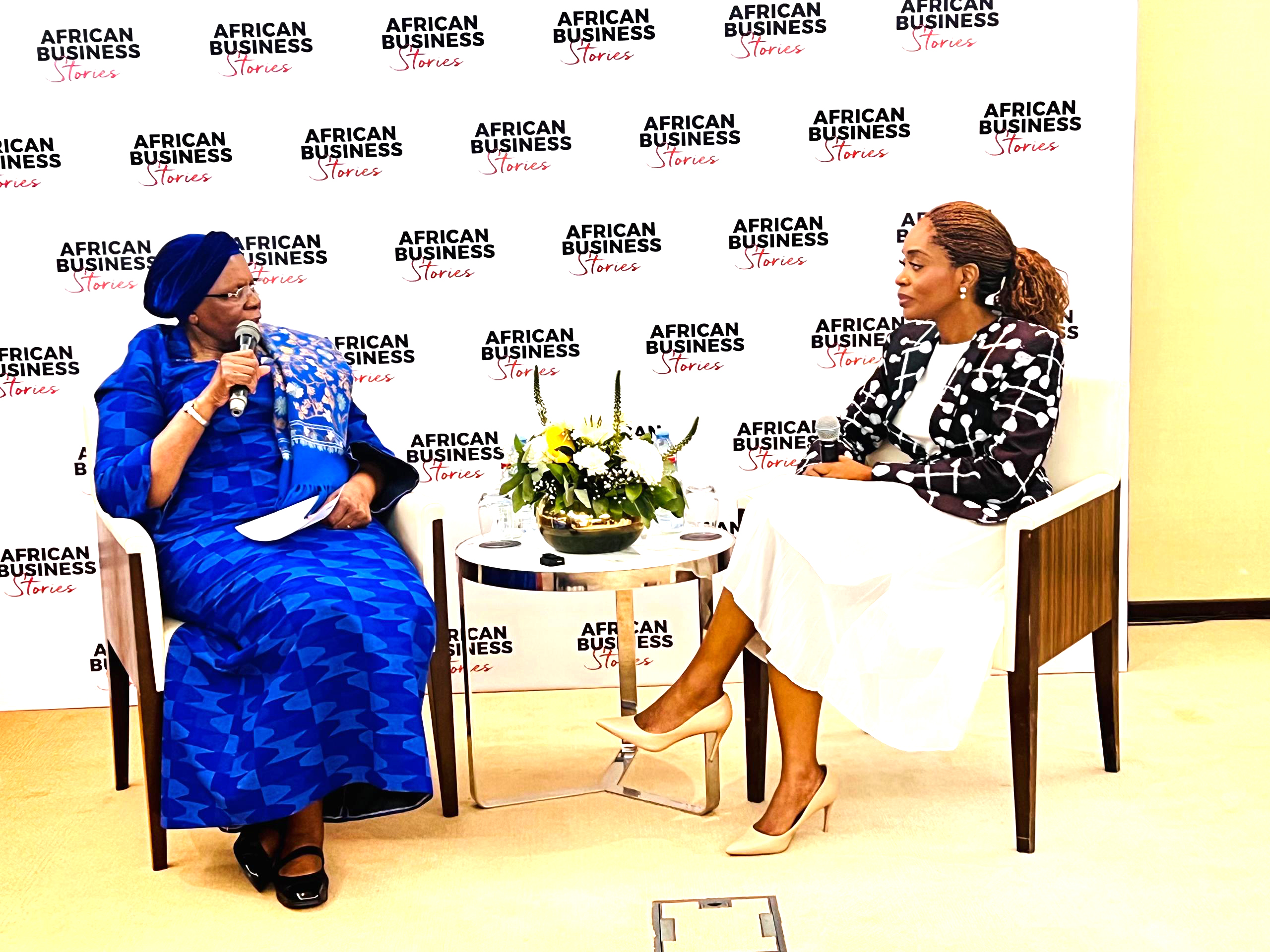

LUANDA, ANGOLA – President Netumbo Nandi-Ndaitwah has called on African nations to shift from being raw material suppliers to becoming global leaders in industrialisation, innovation and food security.
Speaking at a high-level breakfast dialogue in her honour in Luanda last week, the continent’s only sitting female head of State laid out a powerful vision for African self-reliance, warning that the time for action is now.
“We cannot continue to allow our young people risk their lives going into the high sea… We must find a way to process within the continent and export finished goods,” she told a room full of business leaders, politicians and development thinkers.
The breakfast was hosted by Akaego Okoye, founder of African Business Stories and convener of the ABS Roundtable Series and featured direct engagement between the President and key African voices from the private and public sectors.
Deadline
President Nandi-Ndaitwah admitted that the African Union’s “Silencing the Guns by 2020” goal had failed but stressed that continental ambitions such as Agenda 2063 remain alive.
“Yes, the deadline has passed, but we will not give up… We want to see Africa industrialised. We still have time, but we must start in earnest.”
She revealed she was part of a panel of 11 eminent Africans appointed by the AU to review how the union could become more effective — experience she now intends to use to reform regional systems from her current post.
Can Africa lead?
Gwen Inguenia, Vice President for Public Policy at Mastercard, posed a direct question to President Netumbo Nandi-Ndaitwah: whether Africa should continue to “catch up” or aim to lead.
“In conversations about digital technology, people always say, ‘Africa must not be left behind.’ But that sounds patronising. Are there areas where Africa can lead?” she asked.
President Nandi-Ndaitwah’s reply was confident and specific, saying, “Africa is ready to lead in energy and food security. We must stop being just consumers. We need to invest in science, technology and innovation.”
She stressed that the future belongs to African youth with skills and ideas, not just access to foreign education.
“The next generation of billionaires in Africa will come from agriculture,” she said.
Stereotypes
Rodas Kaposo Fernandez, an Angolan Member of Parliament and former oil and gas lawyer, raised two issues: division among African women in politics, and the perception of corruption linked to African success.
“Men are our children, but women don’t help each other enough, and anytime an African is wealthy, people say it’s from corruption,” she said.
Nandi-Ndaitwah acknowledged the competitiveness of politics but urged women not to internalise the notion that they are their own worst enemies.
“Politics is power, and power is never freely given. That’s why women must stop doubting each other. We must ignore this idea that women don’t support one another.”
On corruption, she was candid: “Corruption is real and it’s a cancer. Even if you accumulate wealth through corruption, you don’t enjoy it. You don’t sleep. I want to sleep peacefully.”
Global ready
The President said her administration is focused on transforming Namibia’s economy through value addition, job creation and by strengthening local entrepreneurs to compete globally.
“We accept that there is poverty, and we are not hiding from it. But we are tackling it by growing the economy and helping people help themselves by creating employment.”
She said foreign investors are welcome, but only under laws that ensure Namibians benefit.
“We have amended the foreign investment law, and we’re finalising policies on oil, gas and green hydrogen. Upstream Oil and Gas is now under my office. It’s a new industry and must be overseen with care.”
Reimagined
A human capital expert asked about Namibia’s decision to introduce free tertiary education by 2036.
Nandi-Ndaitwah said education remains central to the country’s development agenda.
“Education is not another thing—it is the main thing. That’s why public universities are already funded, and we are removing the burden from students who graduate into debt without jobs.”
She explained that funding will go directly to institutions, cutting out inefficient student loan administration systems.
When asked by Akaego Okoye how she envisions her presidency shaping the continent, Nandi-Ndaitwah said her focus will go beyond borders.
“Namibia is part and parcel of Africa. Everything we do is a building block for the continent’s prosperity.”
She cited her decade-long experience as foreign minister as a strong foundation for continental engagement:
“I’ve worked with almost every African leader. Now, I have the opportunity to implement what we discussed. I’m ready to work with them.”
Throughout the dialogue, Nandi-Ndaitwah called for a renewed sense of confidence and urgency across Africa, particularly among women and youth.
“We are not waiting for sympathy. Africa is rising, and we must lead ourselves forward.”
President Nandi-Ndaitwah emphasised that Africa’s future lies not in following, but in leading—on its terms, with its people at the centre.