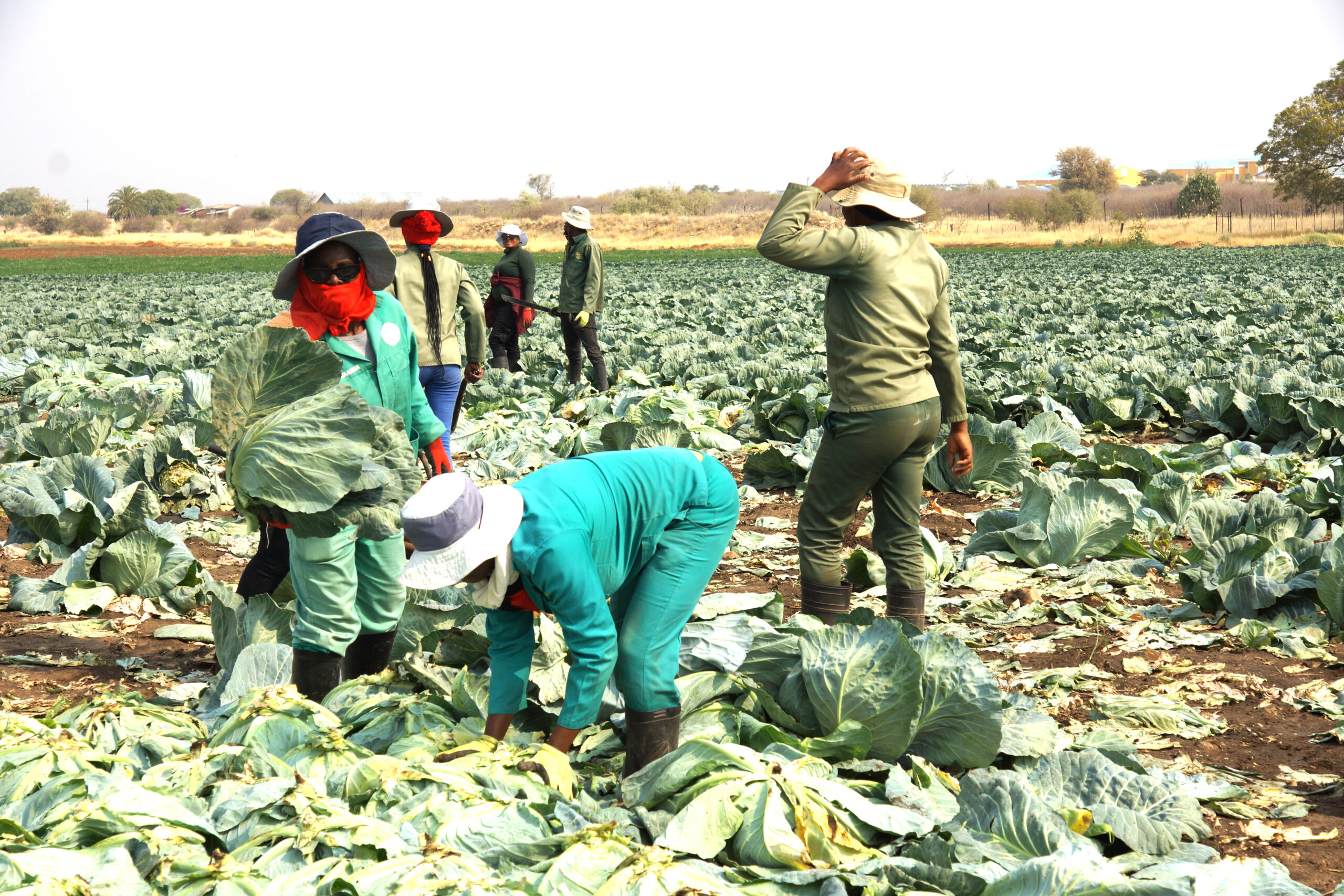

The Agricultural Bank of Namibia (Agribank) has reaffirmed its commitment to empower and upscale smallholder crop farmers countrywide through a strategic collaboration with the Agro-Marketing and Trade Agency (AMTA).
The two institutions will work together to strengthen and expand collaboration within the agricultural sector, particularly in the areas of support to small scale farmers who do not have access to the market and through capacity-building initiatives.
The agreement was reached during a recent stakeholder engagement, where it was agreed to formalise their partnership through a Memorandum of Understanding (MoU), which will focus on supporting smallholder farmers through the provision of farming inputs, enhanced market access, and capacity-building programmes.
The parties also committed to promoting the financing of value-addition projects, with a particular emphasis on commodity-specific value chain development.
The relationship between Agribank and AMTA is of strategic importance and one that will serve the long-term needs of the country’s crop farmers in remote areas with no access to the mainstream markets.
AMTA was created and mandated to consolidate various government initiatives of enhancing food production and crop diversification, horticultural production and marketing, including fresh produce business hubs, mahangu development, rice production, strategic food reserves infrastructure (silos) and overall value addition.
Meanwhile, Agribank on the other hand plays a pivotal role in promoting the growth and development of agriculture through affordable and innovative financing to farmers at all levels of production in both communal and commercial areas.
Through institutions such as Agribank and AMTA, the country has seen relative development in the value chains of livestock, fish and crop subsectors, where production, processing, marketing, financing and distribution activities occur at all associated economic spheres and the benefits of employment creation, skills and technology development and transfer are enjoyed by most.
Agriculture is the backbone of Namibia’s economy, playing a critical role in the livelihoods of its people, as a significant 70% of the population relies on agriculture for their income and sustenance, making it one of the largest employers in the country.
Resilience
Despite the country’s vast deserts, arid landscapes, and semi-arid regions, agriculture remains the primary sector providing employment, food security, and economic stability.
Farming is not just an economic activity in Namibia; it is deeply ingrained in the culture of many Namibian communities. Traditional farming practices have been passed down through generations, and many rural households have relied on agriculture for sustenance and income for centuries.
These cultural ties to agriculture play a major role in the high levels of employment in the sector, as farming is often seen as a lifelong commitment. Moreover, the availability of communal land in rural areas encourages the practice of subsistence farming, which is still widespread in Namibia.