


Rudolf Gaiseb
The Namibian Institute of Public Administration and Management (Nipam) has deepened the talk on Artificial Intelligence (AI) adoption, with public and private sector executives pondering on the opportunities, risks and limits of AI in executive leadership.
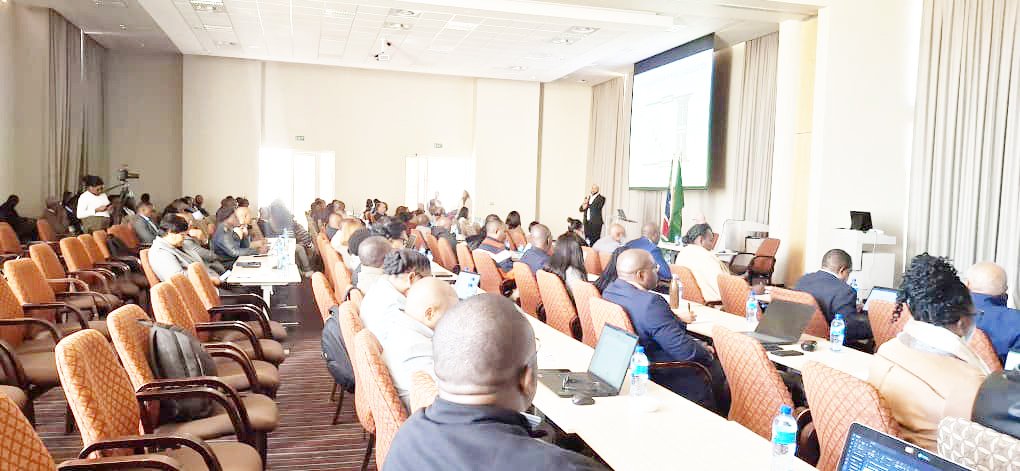
Nipam hosted the Executive AI seminar last week, attended by industry leaders, board members, directors and public servants, among others. The seminar equipped executives and professionals from both sectors with practical knowledge on how to effectively use AI in their day-to-day work.
Facilitators discussed ethical considerations involved and urged AI’s responsible use.
Revival Media founder and business strategist Shanwill van Wyk highlighted that as Namibia seeks to adopt AI in its processes, AI adoption will expose the strengths and weaknesses of the executive.
This, he said, means AI could automate inefficiencies, and if this culture is rushed, AI will not slow people down but may help them make rushed decisions at scale.
“If there is confusion in the institution, AI will not automatically produce clarity. It may produce a very polished version of confusion. If communication is poor, AI may help people write longer emails, faster,” stated the researcher.
Van Wyk stressed that if governance is weak, AI does not become governance but becomes another tool operating inside weak governance.
“So, the question is not only, ‘Can AI help us? ‘ The question is, what will AI multiply when it enters our environment?” he said.
Furthermore, in contrast to these systems, the strategist also urged executives to consider the human operating system, which is how leaders think, how they respond, how teams communicate, and how truth moves through the organisation, as well as how decisions are made, how systems function, and how purpose is carried out. He further warned that AI adoption must not bypass self-discipline, human values and relationships with employees and must not jeopardise institutional purpose and mandate.
“If we are willing to lead with clarity, self-mastery, trust, structured process, and purpose, then AI becomes something powerful, not a replacement for human intelligence but an assistant to govern human intelligence,” he said. Van Wyk said in the future jobs may be lost to AI but only if people “stop thinking”.
On one hand, Revival Media founder and co-founder Deon Barnard got more practical.
He pointed out that as technology improves, AI proficiency will become an essential requirement for future job applicants across various sectors.
He highlighted that in some parts of the world where governments are already increasingly integrating these tools into their operations.
For instance, according to Microsoft’s AI Diffusion Report, for the first quarter of 2026, 70.1% of the UAE’s working-age population now uses AI-powered tools and services. This places the United Arab Emirates as the first country in the world to cross a 70% artificial intelligence adoption rate.
“We are the last generation that will lead humans in procurement. We are the last generation that will only use humans in terms of hiring people because there are actually tools now that are hiring humans. There are AI tools and AI agents that want humans to work for them,” he said.
Additionally, the expert cautioned that premium artificial intelligence subscriptions, which are paid versions, offer stronger data security and privacy protections compared to free versions. On the other hand, Nipam executive director Haroldt Murangi, also speaking said that AI is no longer a concept of the future but is already shaping how institutions operate, how decisions are made, how services are delivered, and how communication and information are managed across the world.
“If we fail to understand and adapt to these developments, we are facing the risk of being left behind,” he underlined.
The seminar was necessary to help participants understand AI can be utilised responsibly and effectively within the work environments, from report writing, research, policy development, communication, planning, data analysis, customer service, and improving productivity and decision-making processes, he mentioned.
After the seminar, Nipam intends to develop a structured three to five days AI training course, specifically tailored for the public sector.
“Our aim is to ensure that public servants across different levels are empowered with the necessary knowledge and skills to utilise AI tools ethically, efficiently, and strategically in improving public service delivery,” he added.