


Heather Erdmann
Globally, Alzheimer’s remains one of the pressing health challenges, although it is rarely spoken about.
Alzheimer’s disease is a progressive brain disorder that impairs memory, thinking, and daily functioning. It is the leading cause of dementia, accounting for 60 to 70%, and affects one in three people worldwide.
According to the World Health Organisation (WHO), an estimated 900,000 people aged 65 or older develop the disease each year. By the age of 85, the risk increases significantly. Women are particularly at risk, making up about two-thirds of all patients.
Imagine feeling lost in your own body. One day, you forget where you placed your keys, and the next you no longer remember the faces of your loved ones. This is the harsh reality of Alzheimer’s disease, a neurocognitive disorder and the most common type of dementia. Alzheimer’s is often called the “undignified disease”, slowly stealing memories, independence, and identity.
Behind the scenes, occupational therapists across the world are working tirelessly to restore dignity, step by step, together with the support systems surrounding patients.
Alzheimer’s develops gradually, usually in three stages. In the early stage, symptoms may include memory lapses, struggling to find words, or losing track of dates. The middle stage often brings confusion, wandering, difficulty recognising familiar people, and challenges with basic tasks. In the late stage, patients may lose the ability to communicate, walk, or eat without help.
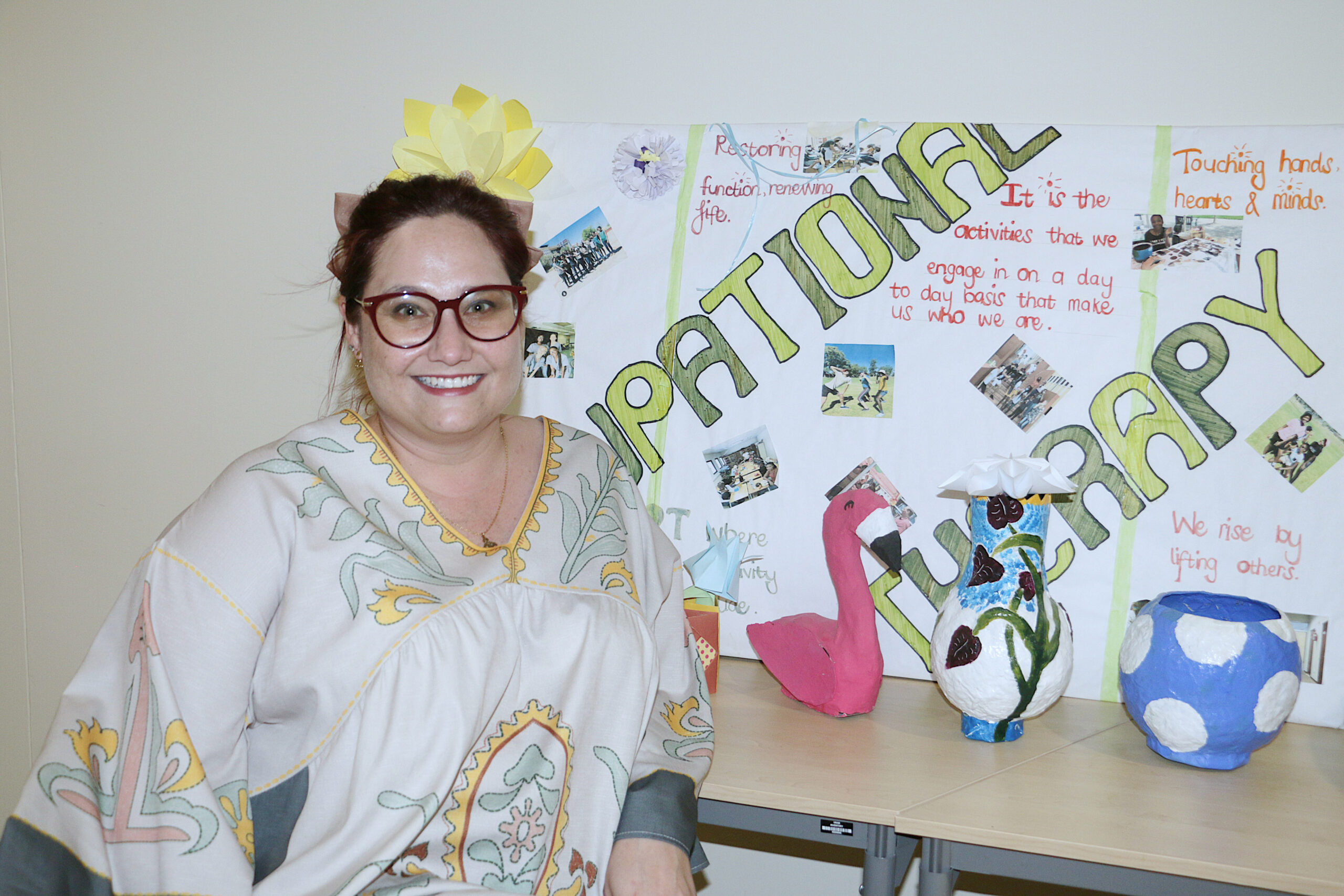
Leading an awareness campaign is Karlien Burger, an occupational therapist and assistant lecturer at the University of Namibia (Unam), where she trains the next generation of occupational therapists (OTs). She also serves as an executive member in charge of promotions for the Namibian Association of Occupational Therapists (NAOT), coordinating campaigns to raise public awareness about the profession. Previously, Burger worked at a psychiatric hospital in Johannesburg, gaining firsthand experience with patients requiring specialised care. Today, she supervises students at Windhoek Central Hospital, ensuring their practical training aligns with the country’s healthcare needs.
“Families should look out for repeated forgetfulness that disrupts daily life, changes in mood or personality, difficulty completing familiar tasks, or getting lost in familiar places,” Burger explained. “These are not normal signs of ageing – they may point to dementia or Alzheimer’s.”
Namibia is not spared. According to WHO data, Alzheimer’s and dementia accounted for 176 deaths in 2020, representing just over 1% of all deaths in the country. The age-adjusted death rate stands at 18.25 per 100,000 people, placing Namibia 79th in the world. Yet the real number may be higher, as dementia often goes undiagnosed – up to 75% of cases worldwide are missed.
Access to professional care remains limited. “According to the WHO’s 2024 Systematic Assessment of Rehabilitation Situation in Namibia, there are 80 occupational therapists registered with the Health Professions Council of Namibia (HPCNA), with just 10 working in State hospitals and 70 in private practice,” said Burger.
Families also deeply feel the impact. “One of the hardest realities,” Burger noted, “is that loved ones must learn to grieve the living person – the mother, father, or partner who is still physically there, but whose memory and personality slowly fade.”
Once referred, occupational therapists focus on helping patients and families adapt daily life. “Adult-proofing” the home is a crucial step: removing hazardous items such as loose rugs, labelling remotes or cupboards, and creating safe spaces for movement. Memory aids, photographs, and reminders can help patients stay oriented.
“The goal is not just safety,” Burger emphasised, “but also preserving independence and dignity for as long as possible.” She stressed that Alzheimer’s is not just a medical condition, but a community disease. Neighbours, shopkeepers, and local friends all play a role. If someone is lost or confused, the community can alert the family or provide support, creating a safety net around the patient.
As part of their mission, the Occupational Therapy Department at Windhoek Central Hospital is running an awareness campaign for Alzheimer’s. They are focusing on TV and radio interviews, as well as Instagram Live sessions, using these platforms to educate families on recognising early symptoms, seeking occupational therapy, and adapting homes to make daily life safer and more meaningful.
Through these efforts, the hospital’s OT department hopes to remind Namibians that Alzheimer’s is not only about forgetting, but also about remembering that care, compassion, and practical intervention can make all the difference – and, most importantly, that no one has to face this journey alone.
In the end, Burger insists, even in the hardest times, there can still be magical moments.
-herdmann@nepc.com.na
Photo: Heather Erdmann