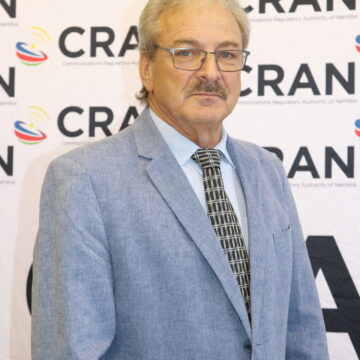
The Communications Regulatory Authority of Namibia (CRAN) last week held a public consultative meeting on the proposed Market Study on the determination of dominant position in the telecommunications sector, and the regulations prescribing fees for spectrum licences, certificates and examinations. Speaking at the public consultative meeting acting CEO of the Authority Jochen Traut said the...
Author: Maihapa Ndjavera (Maihapa Ndjavera )
Private sector the driver for effective and efficient policies
Minister of Industrialisation and Trade, Lucia Iipumbu, says the state needs to be fully aware of the private sector’s needs, its potential as well as any major obstacles if it wants to develop and execute policies effectively and efficiently. Iipumbu made the comments yesterday when officially launching three projects under her ministry, supported by GIZ-Promotion...
CRAN confirms city’s telecommunications licence
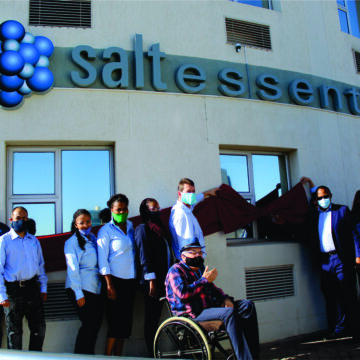
The Communications Regulatory Authority of Namibia (CRAN) yesterday confirmed the issuance to the Windhoek City Council of a Class Comprehensive Telecommunications Service Licence, with additional licence conditions imposed. The licence is effective from 24 July. CRAN hosted a public hearing on 15 July on the application for reconsideration submitted by Paratus Telecommunications (Pty) Ltd on...
Economists warn corruption is pulling Namibia backwards
The thorny subject of corporate corruption is pulling Namibia backwards; hence, it needs to be prioritised and addressed without fear or favour, warned Lameck Odada, an economics lecturer at the Namibia University of Science and Technology (NUST). Odada said entities entrusted with duties to investigate and prosecute corrupt individuals need financial support from the government...
Clean water no longer a pipe dream …Venaani donates to centenarian
Popular Democratic Movement leader McHenry Venaani has pooled resources together to assist a 100-year-old woman from Mupini village in the Kavango East region with potable water. Venaani, who is on a week-long working visit to the two Kavango regions, this week donated water pipes and tap, as well as paid a connection fee for the...
Foreign currency reserves controlled to benefit domestic economy – BoN
Clarifying the practice of forex trading in Namibia, the central bank has reminded prospective traders that the exchange or conversion of the Namibian Dollar into any foreign currency is heavily regulated to control the use of the country’s foreign currency reserves in the best interest of the economy. This comes after a local lawyer, Kadhila...
Cost of construction remains stagnant
The annual percentage change in the producer price index (PPI) for manufacturing of cement, lime and plaster was stagnant during the first quarter of 2020, compared to the 9.2% deflation recorded during the same period last year. The PPI measures the rate of change in the prices of goods and services bought and sold by...
Structural interventions needed for sustained growth
Governor of Bank of Namibia, Johannes !Gawaxab, said the country needs to dedicate time to dissect growth constraints to the domestic economy and then devise and implement the necessary strategies to overcome them. While delivering his maiden governors address last week at the 30th anniversary of the bank, he said the Namibian economy needs structural...
Agriculture, manufacturing and services are key to transformation – analysts
Economic analysts in the country believe the agricultural sector will be the most suitable platform for transformation to fight the adverse financial impact of the Covid-19 pandemic. Speaking to New Era, Omu Kakujaha-Matundu, a senior lecturer at the University of Namibia (Unam) said the country needs to set agricultural and industrial production goals and work...
Local electricity generation increase …adequate rainfall propelled Ruacana turbines
Local generation of electricity increased, both year-on-year and quarter-on-quarter, in the first quarter (Q1) of 2020, mostly due to high rainfall. The local generation of electricity increased significantly by 82%, year-on-year, to 778.2 million kilowatt-hours. According to the Bank of Namibia’s Q1 quarterly bulletin, the significant increase was due to an adequate inflow of water...