

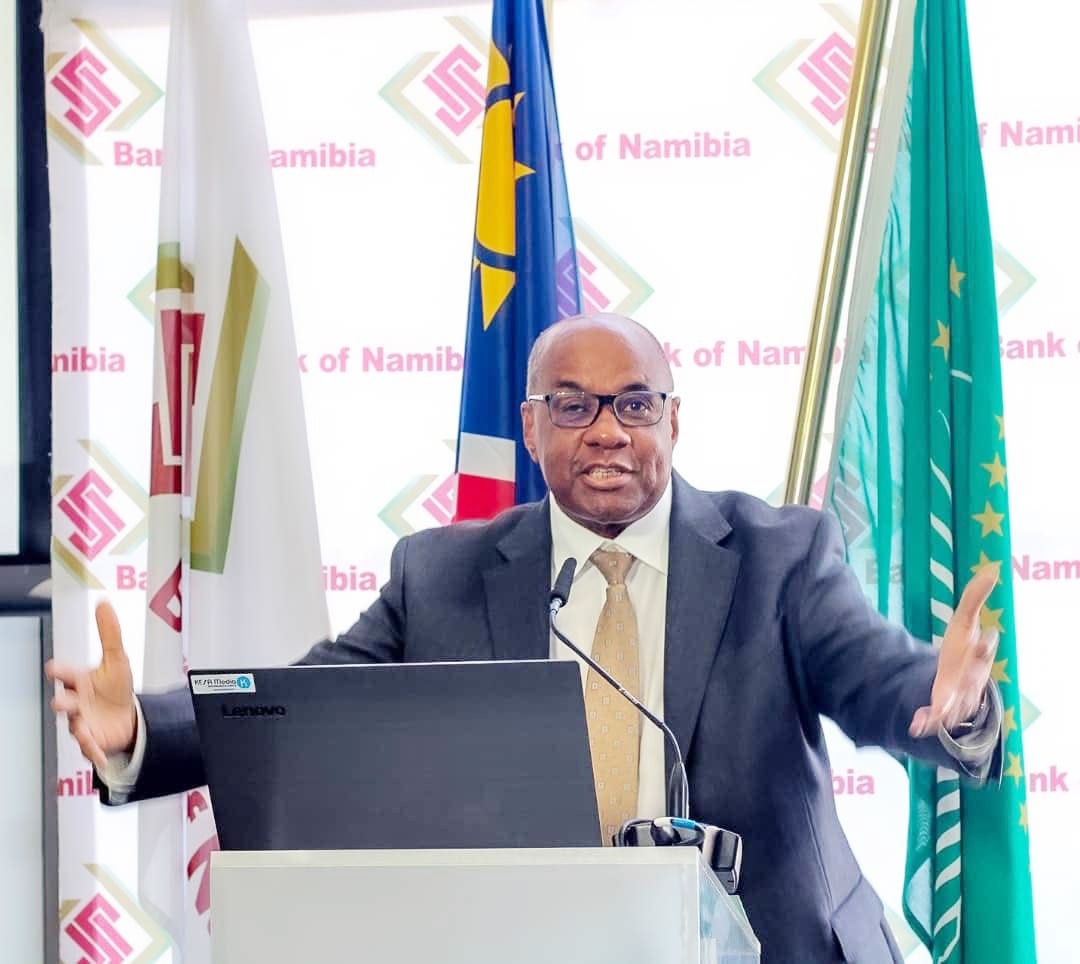

The Bank of Namibia (BoN) yesterday held the repo rate steady at 6.75%, in a decision that signals caution amid growing economic pressure in Namibia and abroad. This marks the third consecutive hold by the central bank, despite mounting calls for relief in the face of weak household credit growth and elevated borrowing costs.
While the move was widely expected, First National Bank Economist Helena Mboti said the decision reflects the BoN’s careful balancing act between external pressures and domestic economic fragility.
“Following the South African Reserve Bank’s rate cut of 25 basis points to 7.00% on 31 July, we expected Namibia to stay put. The narrowing gap between our rates and South Africa’s signals reduced room for manoeuvre,” Mboti stated.
Despite stronger corporate credit demand, especially in the mining and manufacturing sectors, household borrowing remains sluggish, with credit growth at just 2.4% year-on-year in June. In contrast, corporate credit rose by 10.6% over the same period, indicating that Namibia’s recovery is being led by capital-heavy industries that contribute little to job creation.
“The uneven nature of private sector credit growth is concerning. It highlights a disconnect between economic growth and the financial wellbeing of ordinary Namibians,” she said.
She added that BoN’s latest Financial Stability Report supports this view, showing that much of the credit growth in 2024 came from large exposures, primarily in the mining sector. These large corporations account for the bulk of new credit, while small businesses and households continue to face high borrowing costs.
Although inflation has eased from 4.2% in March to 3.7% in June, BoN remains cautious. Instead of cutting the repo rate, the central bank is turning to regulatory tools to improve lending conditions. Among these is a push for local banks to lower their lending margins in line with other Common Monetary Area (CMA) countries, which could reduce borrowing costs by 25 basis points by year-end without touching the repo rate.
During yesterday’s announcement, central bank governor Johannes !Gawaxab noted that domestic economic activity expanded during the first half of 2025, albeit at a slower pace compared to the corresponding period in 2024. The expansion primarily reflected improved economic activity in the mining, tourism, wholesale and retail trade, transport and communication sectors, as well as the crop farming and electricity subsectors. Meanwhile, activity in the diamond mining subsector remained weak.
Annual inflation eased to 3.6% on average during the first seven months of 2025, relative to 4.8% during the same period in 2024. The deceleration is primarily attributed to lower inflation in the categories of housing and alcoholic beverages, augmented by the deflation in the transport category. Since the last MPC meeting, however, inflation stood at 3.5% in July 2025, unchanged compared to the May 2025 print, although it ticked higher to 3.7% in June.
Turning to the external sector, BoN noted that Namibia’s merchandise trade deficit has narrowed by 28.2% to N$12.8 billion during the first six months of 2025, compared to the same period in 2024. The narrower trade deficit was due to a substantial rise in export earnings, predominantly from uranium and gold, compared to the moderate increase in import payments.
The stock of international reserves remains adequate, rising to N$58.1 billion at the end of July 2025 from N$57.4 billion as at the end of May 2025, aided by SACU receipts.
This level of foreign reserves translates to an estimated import cover of 3.8 months, which is considered adequate to sustain the currency peg between the Namibia Dollar and the South African Rand and meet the country’s international financial obligations.