


Rudolf Gaiseb
From negotiating with South Africa to eliminate colonial-era debt to reducing Namibia’s dependence on the primary sectors through Vision 2030, Founding President Sam Nujoma will be remembered for his instrumental transformation of the financial fraternity.
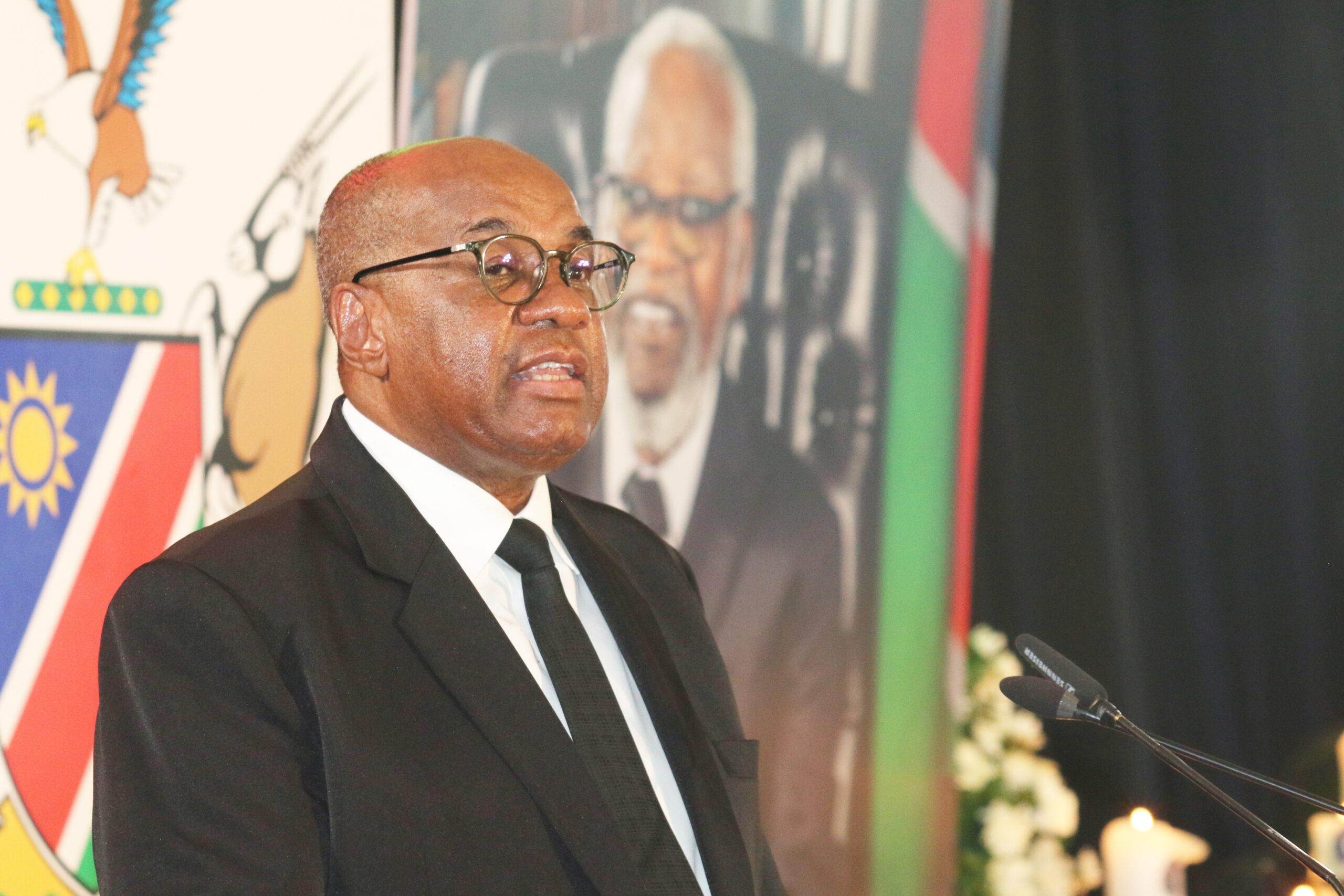
During a memorial service on Tuesday, Bank of Namibia governor Johannes !Gawaxab lauded Nujoma’s visionary leadership, which contributed to a strong economy.
“From the early days of independence, he championed an economic philosophy that balanced stability with progress, ensuring that Namibia was free and equipped to build a prosperous future. His leadership laid the foundation for financial resilience, ensuring that key economic institutions were established, fiscal discipline was maintained, and long-term strategies were put in place to sustain growth,” he said.
He reminisced that post-independence Namibia was able to build strong institutions, and maintain fiscal prudence.
This was methodical and prudent, safeguarding a robust and sustainable fiscal position.
Meanwhile, Namibia joined the Common Monetary Area (CMA) in 1992 under Nujoma’s leadership.
By being a member, Namibia gains access to a larger and more stable monetary system, which, according to the World Bank, is capable of efficiently allocating resources, managing financial risks, maintaining employment levels close to the economy’s natural rate, and eliminating relative price movements of real or financial assets that will affect monetary stability or employment levels.
Putting this to the test, a few years later, the Asian financial crisis hit in 1997 through to 1999. He remarked that although Namibia and South Africa emerged relatively unscathed from the turmoil of late 1997, pressures on these economies intensified in May and June 1998, leading to a considerable decline in the South African equity markets.
“This was followed by a marked increase in yields on long-term bonds and a significant depreciation of the Rand, which was predominantly circulating in Namibia, despite increases in domestic interest rates and central bank intervention in the exchange markets. At the same time, most will recall interest rates, particularly the prime lending rate, which went as high as 24% – compare that to 10.5 % today,” he narrated. !Gawaxab praised the late Nujoma for masterfully harmonising the aspirations of Vision 2030 with the realities of execution, reminding the nation that progress requires both a dream and a commitment to action.
“His transformational leadership promoted an environment where opposing truths could co-exist, allowing Namibia to evolve and thrive in its journey towards prosperity,” he underlined.
The central bank governor added:
“Bank of Namibia owes an immense debt to the founding president. In the late 80s, Dr. Nujoma secured assistance from the Swedish government to set up the central bank and design the macroeconomic architecture. He directly engaged then-Swedish Prime Minister Olaf Palme for this purpose.”
Nujoma consistently underscored the importance of true independence as being intrinsically linked to economic self-sufficiency, which is underpinned by strong institutions designed to promote sustainable development, he said.
BoN has recorded that today Namibia comprises nine authorised banking institutions. These institutions are categorised as seven commercial banking institutions, a branch of a foreign banking institution, and a representative office.
–rrgaiseb@gmail.com