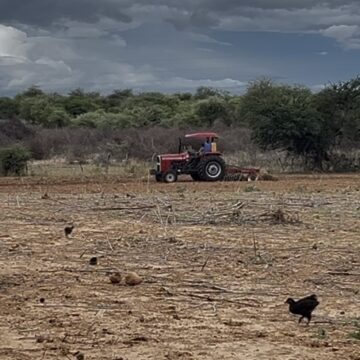
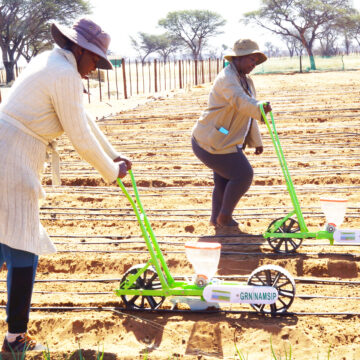
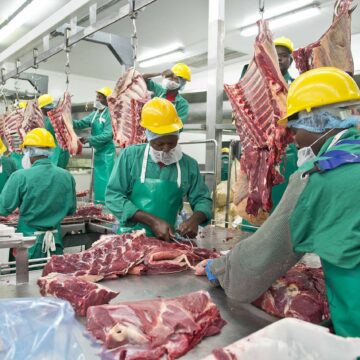
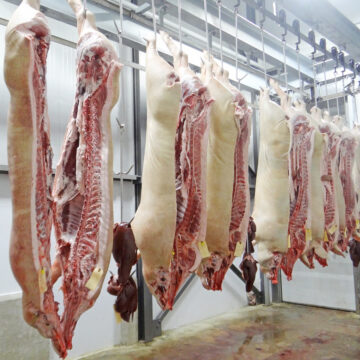
Namibia’s beef market continues to demonstrate a strong domestic orientation, with local consumption absorbing nearly two-thirds (69.3%) of total beef production between January and September 2025. Exports accounted for 30.7%, while imports represented a minimal 3.4% of total supply (4.8% of consumption), equivalent to about 6% of total consumption. This highlights the country’s continued self-sufficiency...
AgriToday
Farmers’ Kraal with Erastus Ngaruka – Farmers must know, understand grasses
In Namibia, livestock production is heavily dependent on rangeland, which supports a diverse range of forage resources, including trees, shrubs, grasses and forbs. These plants differ in growth forms, structure, life cycles, habitat preferences and uses. Cattle, sheep and goats characterise livestock farming in this country. These animals have different forage preferences and foraging habits. ...
Agri Series champions genetic diversity, sustainable agriculture
The recent sixth edition of the Bank Windhoek Agri Series brought together leading voices from government, finance and the agricultural sector at the Namibia Institute of Public Administration and Management (NIPAM) in Windhoek. This year’s focus on genetic diversity is seen as pivotal for improving quality, resilience and yield, securing the future of agriculture in...
NYS expands to fodder, poultry production …aims for self-sustenance
RIETFONTEIN – Through hard work, dedication and strategic long-term positioning, the National Youth Service (NYS) is well on its way to becoming a self-sustaining entity that will soon start contributing to about 40% to 50% of the country’s food needs. At its Riefontein multifaced production site, the NYS has now expanded operations to include both...
Feedmaster: 42 years of excellence and dedication
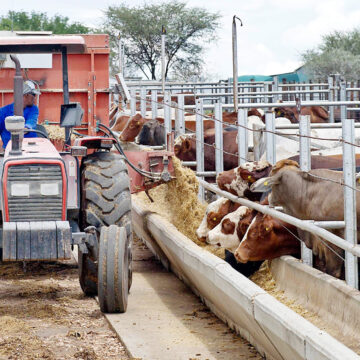
This year marks exactly 42 years of Feedmaster’s unwavering service excellence and dedication to providing Namibian farmers and producers with high-quality animal feed that has for decades enhanced the productivity of the country’s agriculture sector. Since 1983, Feedmaster, the country’s leading animal feed producer, has been the pioneering producer and leading innovator of various types...
Govt earmarks N$34m for rain-fed agronomic projects
Government, through the ministry of agriculture, is set to invest a whopping N$34 million in bolstering and implementing of strategic rain-fed agronomic programmes, which will, in the long term, boost the country’s food security efforts and create resilient value chains. The investment will be made over the 2025/26 financial year and through subsidies. The ministry...
Farm Gross Osombahe champions food security …Govt supports food production efforts
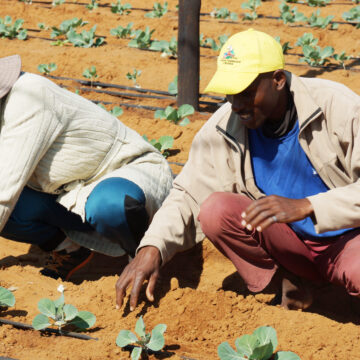
In the heart of Omaheke region, Farm Gross Osombahe thrives under the dedicated stewardship of Peter Shimii. His three-hectare horticulture project flourishes with maize, tomatoes, green peppers, sunflowers, spinach, and beans. Shimii donated his first harvest to Otjivero Combined School in Omitara, providing nutritious meals to 602 learners and inspiring the entire community. Chairperson of...
Farmers’ Kraal with Hanks Saisai – Some basics to consider during planting season
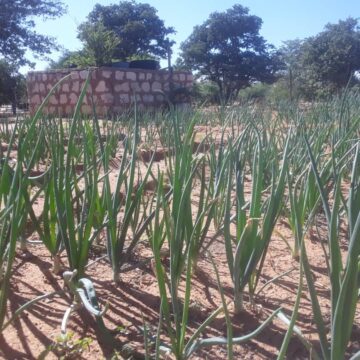
Hanks Saisai (Guest columnist) Crop farming is an agricultural activity that involves the tilling or cultivation of the land to ensure its preparedness before a farmer decides to grow plants that later mature into harvest-ready produce that can be consumed or sold. Conventionally, farmers propagate their plants using vegetative cuttings from a parent plant or...
Kavari’s golden advice to stud breeders …hails the Red Brahman
Zebaldt Ngaruka One of Namibia’s renowned Brahman stud breeders Ace Jesee Kavari said love, patience and a clear long-term vision are key to successfully breeding with stud animals. Kavari of Komboro Brahman Stud is one of the decorated red Brahman breeders in the country and is widely popular for his red Brahman bull named Boesman,...
Farming with black soldier flies in Namibia …supplementing food security
Gail Thomson Can farmers simultaneously reduce greenhouse gas emissions, cut the amount of organic waste going to landfills, increase agricultural productivity and soil fertility, and improve food security in Namibia? According to Sven Gruttemeyer of Biocycle, Yes, they can! His not-so-secret weapon? Black soldier flies that convert organic waste into useful agricultural products. This is...