
Community Policing Officer
With winter in full swing, where daylight hours are limited, and longer nights becoming part of our daily routine, this means commuting to work before the sun rises and heading home after it sets. Driving in the dark comes with its own set of challenges especially when drivers do not follow key safety rules.
One of the most important rules is found in Regulation 173 (1) (b) of the Road Traffic and Transport Regulations of 2001. It requires all drivers to turn on their vehicle lights between sunset and sunrise, and at any time when visibility is poor such as during bad weather.
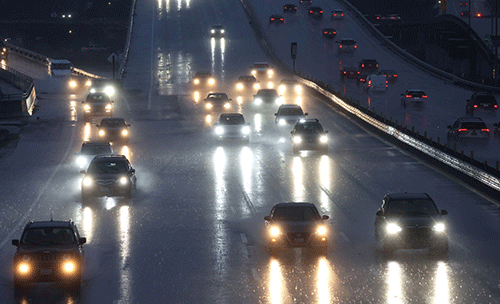
Although many areas in Windhoek have streetlights, your vehicle’s own lights are still critical. In low-light conditions whether it’s night, early morning, or during rain, headlights and taillights help others see your vehicle from a distance. That visibility is key to avoiding crashes, as it gives other drivers, cyclists, and pedestrians a clear view of your presence and movement.
Similarly, headlights help you see where you’re going by illuminating road signs and potential hazards like animals or other obstacles, giving you enough time to react safely. In the same way, indicators and brake lights are essential for signaling your intentions to other road users, helping to prevent confusion and avoid many crashes.
When drivers fail to use their lights during low-visibility conditions such as after sunset, the risk may escalate. A vehicle without lights is much harder to see, which can lead to collisions especially if other road users can not react in time. Poor lighting also means reduced reaction time for the driver, making it harder to avoid hazards on the road.
Any driver found on the public road driving without proper lighting between sunset and sunrise can be fined up to N$750. More seriously, in the event of a crash, a driver who ignored this provision may be held responsible for damages or injuries, and could face additional financial liability.
To avoid these risks, make it a habit to check that all your vehicle lights are working properly. Routine maintenance goes a long way in preventing unexpected issues on the road.
As the season continues, it is important for all motorists to stay alert and adhere to the road rules and regulations. This is one of a simple step that can go a long way in making Windhoek the safest city in Africa.
For additional clarification on this or any other police-related information, please do not hesitate to contact the Windhoek City Police at the toll-free number 061302302, or send us an SMS on 4444.