

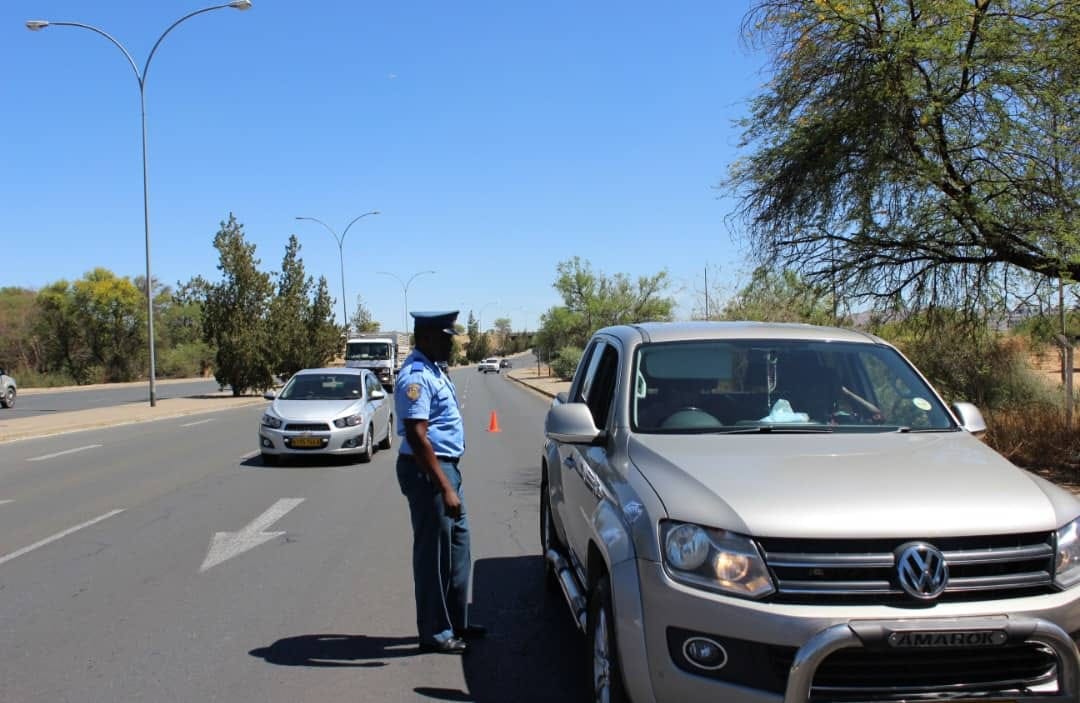

Community Policing Officer
As motorists navigate Windhoek’s city streets each day, they may occasionally be stopped by traffic officers.
During these stops, officers may ask questions or request certain actions to ensure road safety and compliance with traffic regulations.
Some motorists find it bothersome to think about getting stopped by traffic officers.
Meanwhile, others find it nerve-wracking.
In such situations, understanding the powers, duties and functions of a traffic officer is of paramount importance.
Traffic officers play a vital role in keeping our roads safe.
Specifically, under the provisions of the Road Traffic and Transport Act (RTTA), Act 22 of 1999, they are trained, authorised and appointed by the Minister of Works and Transport to enforce traffic laws, promote road safety and maintain order on the roads.
Their duties include monitoring traffic flow, conducting vehicle inspections, ensuring compliance with vehicle and driver regulations and responding to road incidents.
However, many motorists are often unaware of the duties and functions of traffic officers, which sometimes leads to misunderstandings and conflicts during traffic operations.
Drivers who are stopped by a traffic officer on a public road should be aware that, under Section 14(1)(b) of the Road Traffic and Transport Act (RTTA), Act 22 of 1999, a traffic officer is legally empowered to order the driver of any vehicle to bring that vehicle to a stop.
Additionally, the same Act further authorises traffic officers to inspect or test a vehicle and its equipment to ensure that it complies with the provisions of the law and meets the required safety standards.
The presence of traffic officers within the city, combined with the continued execution of their duties in regulating and controlling traffic, helps to reduce the congestion caused by the increasing number of vehicles in the city.
Moreover, a traffic officer is also empowered to direct and regulate traffic, and take any other actions deemed necessary to ensure that instructions given to drivers are carried out safely and effectively.
When one operates a motor vehicle on a public road, such motor vehicle is required by law to be registered and licenced.
Furthermore, the driver must have a valid driver’s licence to operate that class of motor vehicle.
In the case of government vehicles, the driver must have permission from a competent authority in the public service to operate the vehicle at that time.
For this reason, traffic officers are empowered to request documentation from any driver on a public road concerning the vehicle they are operating.
During a traffic stop, drivers are expected to provide accurate and truthful information as requested by the officer.
Providing false information or documentation is a violation of the Road Traffic and Transport Act and may result in legal consequences.
Being a law-abiding citizen includes giving accurate information to traffic police when requested.
Therefore, the first thing a driver should do when stopped by a traffic officer is to comply with instructions and remain calm.
In particular, strict adherence is encouraged when one encounters a traffic officer regulating traffic, as their goal is to facilitate the smooth flow of vehicles.
Ultimately, the role of a traffic officer goes far beyond issuing fines or controlling traffic.
At the heart of their work is the responsibility to protect the safety of all road users, a responsibility that is not solely the concern of the Windhoek City Police Service but of every person on the road.
As such, this important duty should never be taken lightly, and cooperation from motorists and the public is essential.
Lastly, when stopped by a traffic officer, remember the powers, duties and functions they are mandated to perform.
Additionally, make their work easier by complying with instructions and providing accurate information.
In case of emergencies or other traffic-related matters, contact the Windhoek City Police Service at 061 302 302/290 2239, or send an SMS to 4444.