

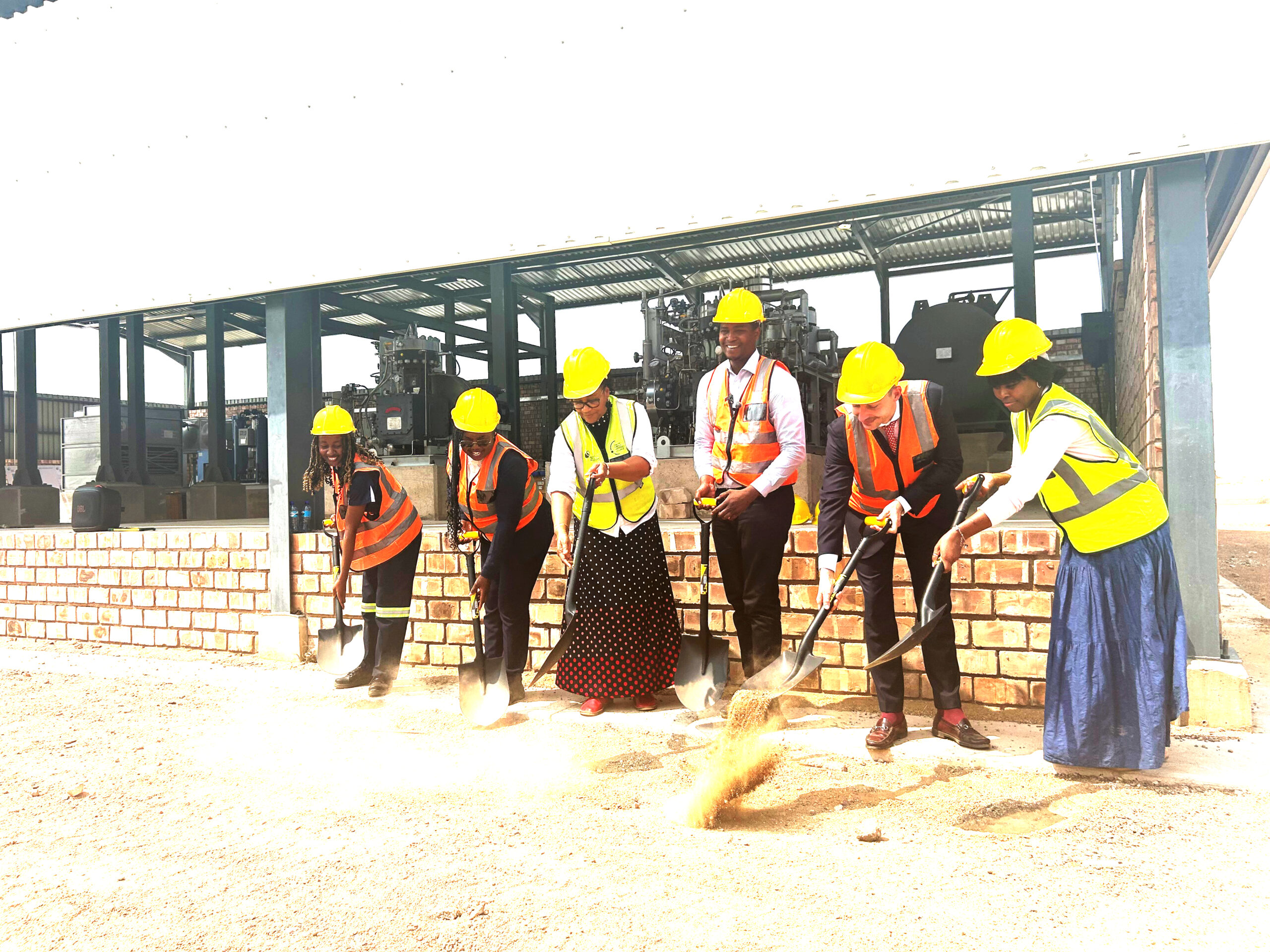

The Daures Green Hydrogen Village (DGHV) on Friday held a groundbreaking ceremony for a low-carbon fertiliser plant.
This is expected to provide an alternative to costly imported synthetic options that could significantly boost food security in Namibia and southern Africa. The event was officiated by Erongo governor, Natalia /Goagoses, who hailed the project for its high employment and skills transfer potential.
“This is a great leap in sowing the seeds for a bright future for the country and the region,” said /Goagoses, noting the project will continue to meaningfully contribute to the socio-economic development of the Daures constituency, the Erongo region, and the country. The governor also commended the project’s founder, Jerome Namaseb, chief executive officer of the Daures Green Hydrogen Village, for selecting a suitable site for the project on the fringes of the Dorob National Park.
DGHV will use renewable energy to produce a synthetic low carbon fertiliser, reducing dependency on imports and positioning Erongo as a vital hub for agricultural and industrial exports within the Southern African Development Community (SADC). Ultimately, DGHV aims that an industrial fertiliser plant, will synthesise approximately 20 000 tonnes of ammonia and 80 000 tonnes of fertiliser per year.
“This innovative plant will transform sunshine into opportunity, producing a fertiliser that will enrich our soils. It strengthens our role as a gateway, not only for Namibia but for Africa’s green future,” said /Goagoses.
Also speaking at the ground-breaking were DGHV’s international partners. This included Sven Schuppener from the United Nations Industrial Development Organisation (UNIDO), who introduced a video message from the organisation’s managing director for SDG Innovation and Economic Transformation, Gunther Beger. The project is also receiving support from the Government of the United Kingdom. The village also receives support through collaboration between the Namibian and German governments.
DGHV’s progress in addressing food security speaks directly to a call made last week by Deputy Prime Minister and Minister of Industries, Mines and Energy, Natangwe Ithete, for the domestic green hydrogen sector to make a real impact in the livelihood, access to health services and education of Namibians.
DGHV’s CEO, Namaseb, pointed out that the fertilizer plant can make a meaningful impact, particularly in Namibia, where drought is prevalent
“It’s natural for us to want to try and see how the advent of green technology may result in the opportunity for industrialisation … whilst also derisking or adding value from an agricultural context,” Namaseb explained.
It is estimated that currently around 80% of all ammonia produced globally is used to produce fertiliser, but Namibia, and Sub-Saharan Africa as a whole, has seen significant increases in the cost of fertiliser. As a result, fertiliser use in the region is low, which has an impact on food security.
“This creates an opportunity where we can look to achieve industrialisation, which should address some of the socioeconomic problems we experience in Namibia, including significantly high levels of unemployment,” said Namaseb.
DGHV makes hydrogen by splitting water from boreholes, which is converted to ammonia by way of the Haber-Bosch process, using nitrogen from the air. The entire process uses clean energy, rather than fossil fuels.
Eventually project organisers envisage supplying Namibia and the rest of southern Africa with zero carbon fertiliser. This endeavour is supported by Namibia’s strategic position as a port servicing numerous landlocked countries, such as Zambia and Botswana. Upon enquiry, Namaseb told New Era the fertilizer plant’s distance to the port of Walvis Bay is not a concerning factor.
Revenue from the nitrogenous fertilizer market in Africa was estimated at US$10.7 billion in 2024, reflecting total revenues of producers and importers. The African fertiliser market value increased at an average annual rate of 1.2% from 2013 to 2024. Driven by increasing demand, the African market is forecast to grow almost 3% in volume, reaching 33 million tons by 2035.
Analysts also anticipate a host of opportunities for companies operating in the ammonium sulfate industry as the compound has extensive applications in fertilizers, and thus helps in improving food quality. In addition to agriculture, ammonium sulfate is used for various industrial applications, including water treatment, leather processing, feed additives, flame retardants, and textile dyeing, among others. Therefore, top ammonium sulfate suppliers are placing a heightened emphasis on harnessing the available opportunities to strengthen their industry positions.
The global market for ammonium sulphate is set to reach US$13 billion by 2032, up from US$8.5 billion in 2024.