

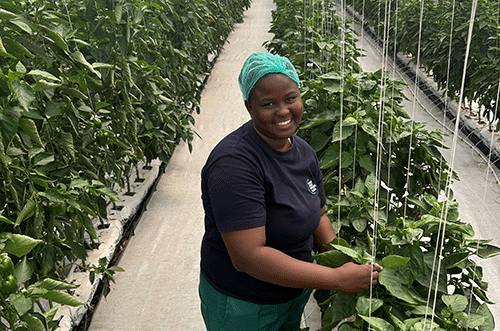

A new zero carbon fertiliser plant, which will be constructed at the Daures Green Hydrogen Village (DGHV), will provide the renewable energy project with affordable and abundant plant nourishment to boost its already successful agricultural endeavour.
This is expected to increase fresh vegetable production that is expected to eventually lead to more greenhouses, which will, in turn, lead to more presence on retail shelves.
Vegetables, including cucumbers, tomatoes and green peppers, produced at the DGHV greenhouses are already available at selected retailers in Erongo region.
These retailers include Bay Fruit and Veg, Choppies Kuisebmund, Choppies Mondesa, Choppies Walvis Bay, Daron Trading Namibia, Ethimbo Jetu Trading, Fysal Fresh Produce, Go Fresh, Protea Super Spar, Metro C&C Walvisbay, Model, Namibian Fresh Produce, Model Dunes, Model Swakopmund, Proska Investment CC, Metro Kuisebmund, Metro Swakopmund and Metro Walvis Bay.
DGHV also sells seedlings harvested at their greenhouse for the local Namibian market. These endeavours are part of DGHV’s ambition to significantly improve domestic food security while at the same time reducing dependence on imports.
“Namibia imports more than 60% of all its agricultural produce. Although a facility like this does put a dent in what could be imported, the reality is that there is a lot more work for Namibia to do to achieve food security and independence. This is just one of those projects that would assist in that regard,” said DGHV CEO Jerome Namaseb.
Speaking at the ground-breaking of the DGHV fertiliser plant on Friday, Erongo governor Natalia /Goagoses said the project can drive export growth, stimulate port activity and can positively impact regional trade.
“This plant is a symbol of progress and transformation,” she added.
She said developments such as Daures must be beneficial to the people while it contributes to the growth of the gross domestic product and to Africa’s ambitions.
DGHV will use renewable energy to produce a synthetic low carbon fertiliser, reducing dependency on imports and position Erongo as a vital hub for agricultural and industrial exports within the Southern African Development Community.
Ultimately, DGHV aims that an industrial fertiliser plant will synthesise approximately 20 000 tonnes of ammonia and 80 000 tonnes of fertiliser per year.
“This innovative plant will transform sunshine into opportunity, producing a fertiliser that will enrich our soils. It strengthens our role as a gateway – not only for Namibia but for Africa’s green future,” said /Goagoses.
– ebrandt@nepc.com. na