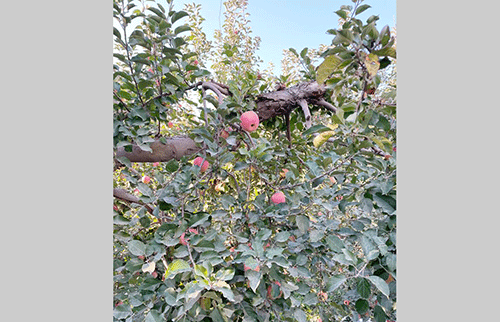

AKSU – Aksu has earned a reputation for producing sweet, juicy, large, and fragrant apples; however, little is known that this land of orchards was once a desert.
Aksu is in China’s Xinjiang Uyghur Autonomous Region.
A recent trip to Aksu provided me and over 20 other African journalists and editors with an opportunity to see firsthand how what once was barren land has been transformed into a plantation that not only feeds residents but also serves as the economic backbone of Xinjiang.
What was mind-boggling was that until the late 1980s, most of this area was barren wilderness.
Being from Namibia, I am familiar with deserts, and as a resident of a country with semi-arid climatic conditions, like most Namibians, I have not been spared the adverse effects of climate change.
But not once has it ever crossed my mind that one day, Namibians could irrigate parts of the Namib Desert, using desalinated water from the Atlantic Ocean. This dream, which had until now been a mere mirage in my subconscious mind, is indeed possible, if looking at what Aksu has achieved in less than 40 years is anything to go by.
Aksu spans a total area of 131 700 square kilometres, two-thirds of which consists of desert areas, including the Gobi Desert. Today, the once-desolate wasteland of endless forests and orchards is now lush and thriving.
“Aksu has moved from just planting trees and ecological protection to producing food and sustaining families,” said one orchard manager, speaking through a translator.
“We will build a better place where people can live even more harmoniously.”
The most fascinating fact is that the desert was only six kilometres away from the city at its closest point and was encroaching on the urban area at a rate of five metres per year. The raging winds, the encroaching sea of sand, and the extremely harsh natural environment constantly tested the survival wisdom and governance capabilities of the people of Aksu.
Today, however, a ‘Green Wall’ made up of trees has been built. The taller trees prevent sand from proliferating, while the shorter ones are for commercial purposes.
Over the years, Aksu has creatively explored a ‘forests sustaining forests’ approach.
In essence, this means utilising economic forests to support ecological forests, thereby achieving a win-win situation for both ecology and the economy.
The region has a clear agenda: realising modernised ecological environment governance systems by 2035 and building a beautiful Aksu.
Aksu has now set its sights on becoming a beautiful place with blue skies, green lands, and clear waters.