


Namibia’s green hydrogen industry has recorded major progress in the first half of 2025, positioning the country as a leading force in Africa’s ambitious clean energy revolution.
The latest government update, Traction III, states that, on green hydrogen’s mid-year review, the sector’s development is closely aligned with the targets outlined in last year’s Traction II strategy document.
The mid-year review of the Traction programme, led by Namibia’s Green Hydrogen Commissioner James Mnyupe, revealed that the sector has recorded major progress aligned with the goals outlined in the Traction II strategy.
Over N$2.08 billion has already been committed to green hydrogen initiatives, including pilot projects, commercial developments and technical consultancy services.
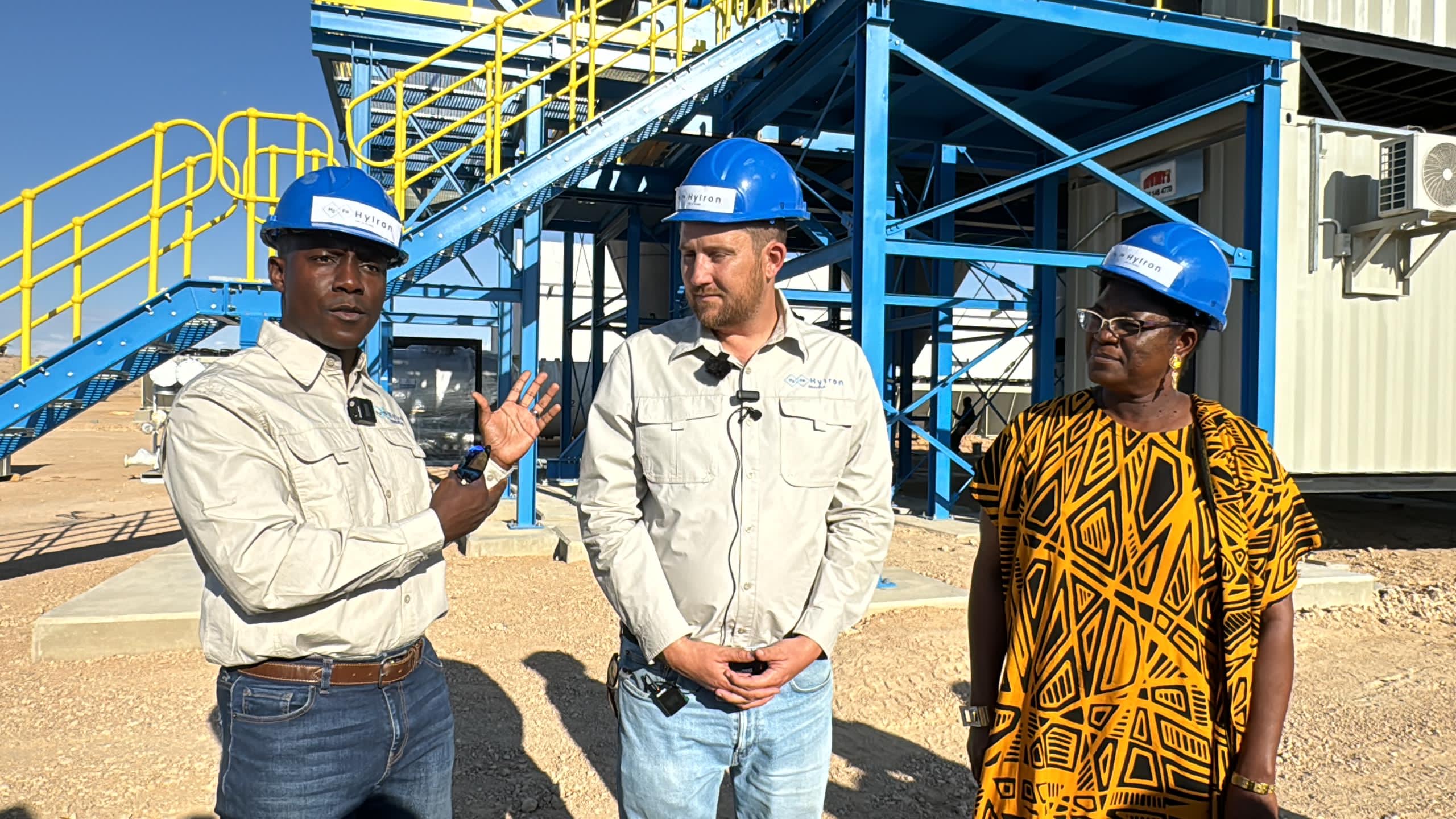
A standout achievement this year was the commissioning of the HyIron-Oshivela facility near Arandis, which on 12 March began producing sub-Saharan Africa’s first green hydrogen-powered iron. Officially inaugurated on 11 April, the plant features a 12 MW electrolyser, the largest in the southern hemisphere.
It represents a breakthrough in Namibia’s renewable-powered industrial production.
“This facility puts Namibia firmly on the map as a green industrial pioneer in Africa. It is not just a technical achievement, but one that delivers tangible socio-economic impact,” he said.
He added that, the growth of the green hydrogen sector is already being felt across the country.
Over 800 Namibians have secured employment across early-stage and pilot projects.
In addition, approximately N$170 million has been injected into local small and medium enterprises.
This is a step in realising the government’s localisation and value-chain development agenda.
“Efforts to ensure integrated infrastructure planning have also gained momentum. With N$3.6 million in support from Germany’s Federal Ministry for Economic Affairs and Climate Action (BMWK), Namibia is developing a best-practice study to coordinate infrastructure across key parastatals, including NamPort, NamWater, NamPower and TransNamib. The study, set for completion by June 2025, covers critical areas such as pipelines, desalination, rail, ports and energy corridors,” said Mnyupe.
Meanwhile, there is a new concept for a green industrial park taking shape within the !Nara Namib Industrial Zone near Walvis Bay.
Developed in partnership with the Environmental Investment Fund and the United Nations Industrial Development Organisation (UNIDO), the park will provide green baseload power and shared infrastructure to de-risk industrial scale-up with the potential to replicate the model across the country.
The facility offers concessional capital at a competitive 1% USD interest rate for eligible decarbonisation projects.
Notably, Namibia’s application to access global clean industrial financing was ranked 3rd out of 26 countries, highlighting the maturity of work undertaken since 2021 by both the government and the private sector.
Mnyupe noted that, looking ahead, the Green Hydrogen Programme, in collaboration with its technical partner Ninety-One, is developing a comprehensive investment plan aligned with the upcoming National Development Plan 6 (NDP6).
This plan aims to unlock targeted capital for public and private sector projects focused on sustainable industrial transformation.
“Significantly, Namibia, through an application prepared by the Programme and supported by the finance ministry, has been selected to develop an investment plan for the Climate Investment Fund’s Industry Decarbonisation Programme (CIF-IDP),” he said.