

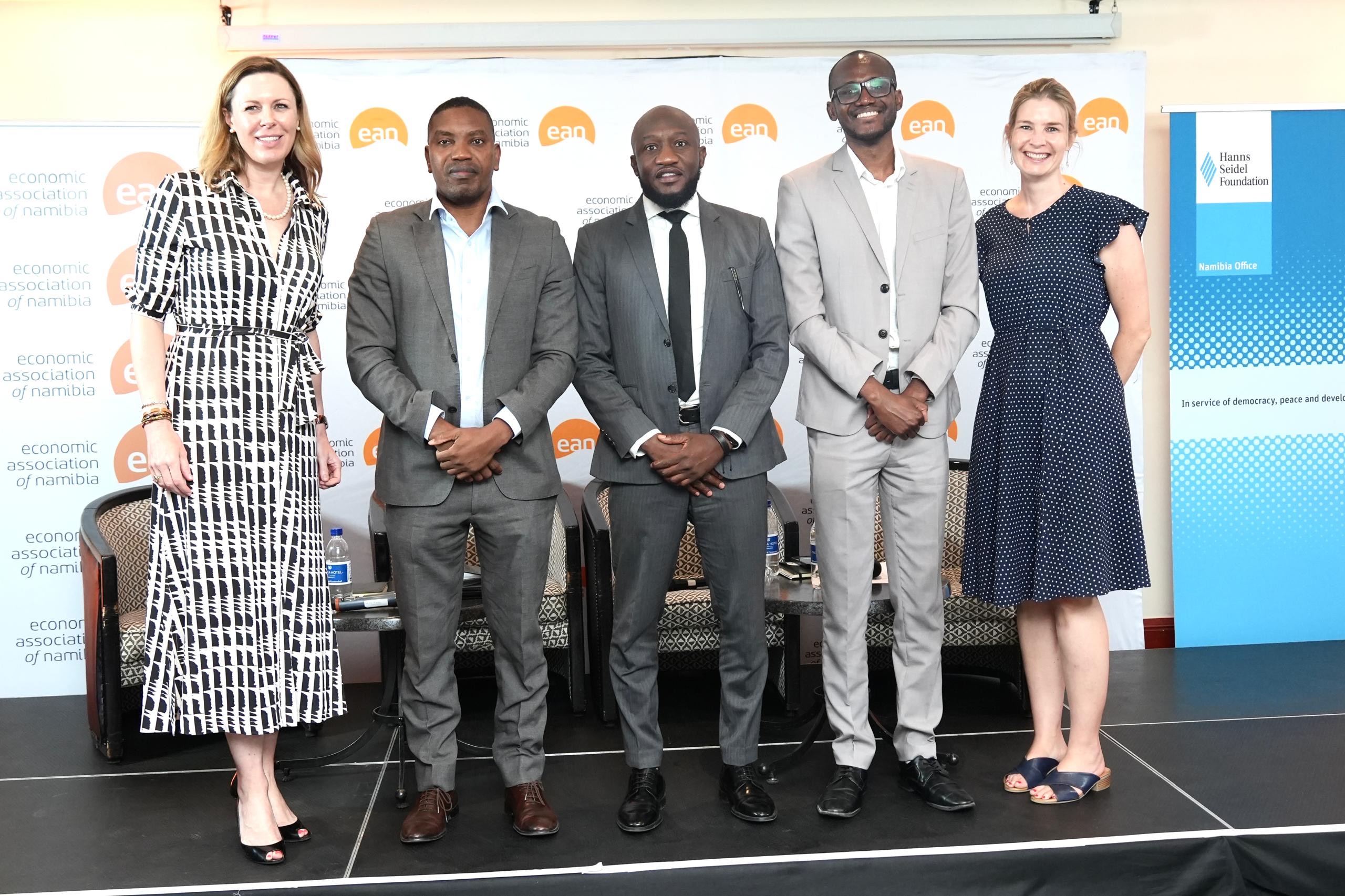

In an era where Venture Capital (VC) and Private Equity (PE) have accelerated business growth, created jobs and fostered innovation across the world, the Economic Association of Namibia (EAN), in partnership with the Hanns Seidel Foundation (HSF), recently hosted a public discussion under the theme ‘Investing in Potential: How Venture Capital & Private Equity Can Drive Namibia’s Economic Transformation’.
Attended by private sector leaders, investment professionals and members of civil society, the discussion explored practical ways in which venture capital and private equity can support the growth of Namibian enterprises and help diversify the economy while ensuring strong governance and meaningful developmental impact.
The public dialogue explored the role of venture capital and private equity and institutional frameworks needed to attract and sustain investment as well as identify opportunities for collaboration among government, investors and entrepreneurs.
“Access to finance remains one of the most significant barriers to business growth and economic diversification in Namibia. While traditional instruments, such as bank loans, are crucial, they often do not cater to the needs of high-growth as well as innovative and early-stage businesses.
“Venture capital and private equity, therefore, offer alternative financing mechanisms that can unlock private investment, drive entrepreneurship and foster innovation across multiple sectors,” reads an EAN statement.
Globally, venture capital and private equity have played transformative roles in supporting emerging industries, enhancing competitiveness and generating employment opportunities.
The EAN emphasised that domestically nurturing a vibrant venture capital and private equity ecosystem could accelerate economic transformation, support industrialisation and foster a new generation of enterprises that contribute to inclusive and sustainable development.
In his opening remarks at the event, Jesaya Hano-Oshike, vice president of the EAN highlighted the roles of venture capital and private equity.
“Around the world, Venture Capital and Private Equity have proven to be powerful engines for innovation, job creation and inclusive growth and prove to be as they breach the gap between promising ideas and the capital required to turn them into viral businesses.
“In Namibia, where small and medium enterprises form the backbone of the economy and access to access to the capital remains limited, venture capital and private equity fill the void by providing funding and strategic guidance, governance and networks,” he stated.
During a presentation, Cacious Siboleka, manager of alternative investments, GIPF highlighted the role of private equity.
“Private equity firms acquire significant stakes to drive operational improvements, strategic repositioning and value creation through active ownership, typically exiting within 3-7 years via sale or public offering. The main difference between private equity and venture capital is that venture capital investors actively support portfolio companies through strategic guidance, network access and operational expertise, targeting substantial returns over 5-10 years,” he stated.
He stressed the importance of private equity and venture capital is for economic diversification, job creation, serve as an innovation catalyst and market access.
He cautioned of the gaps in Namibia’s unlisted investment industry, which are namely weak investor oversight and governance, deviations from global best practices, poor transparency, reporting and accountability, fragmented investor base and limited support for local fund managers.
Additionally, Nicole Maske, the director at Manta Ventures enlightened on how venture capital can drive Namibia’s economic transformation.
“Namibia has 40 000 SMEs that create 200 000 jobs and contribute 12% towards gross domestic product. In 2024, Namibia’s startup ecosystem ranked 8th in Africa and 87th globally,” she stated.
She echoed same sentiments of Siboleka, adding that through venture capital, funding early-stage innovators with high growth potential, people start building something new, usually with some risks involved.
Furthermore, Ino Harith capital director, Ferdinard Nghiyolwa shared a presentation on Investing in Potential: How Venture Capital & Private Equity Can Drive Namib.
“We need to ask ourselves ‘why Namibia’ and ‘why now?’. There are a few reasons, which are namely that Namibia is growing economy with large untapped domestic savings (pension funds and insurers).
There is infrastructure gap across energy, logistics and digital connectivity. We have young population and rising entrepreneurial activity. Lastly, there are underdeveloped private capital markets – opportunity for venture capital and private equity,” he enlightened.