


Namibia must continue to plan, structure, manage and develop an energy sector that is capable of supporting and responding to domestic development aspirations, both today and in the future.
In this regard, Namibian businesses should continue harnessing locally available resources, such as solar, biomass reserves and an excellent wind regime, for the benefit of all citizens.
This was part of the message on Friday by Deputy Minister of Industries, Mines and Energy Gaudentia Kröhne.
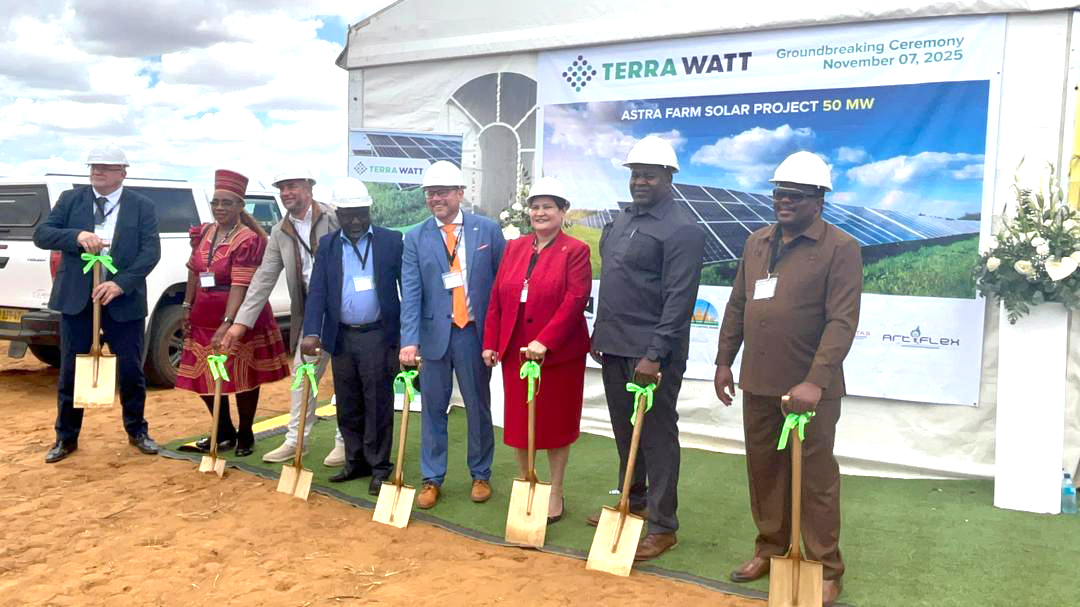
She was officiating at the groundbreaking ceremony of the Astra Farm 50MW solar power plant in Omaheke region, which Terrawatt, a Dutch engineering and project planning company with expertise in renewable energy, is developing.
“It is my great pleasure to be here today to witness the groundbreaking ceremony of the 50MW Solar Project. Before I proceed, allow me to express my sincere gratitude to TerraWatt, both its Dutch and Namibian teams, for choosing Namibia as the site of this landmark project, for placing confidence in our people, institutions and land, and for the spirit of partnership that underpins this endeavour,” said Kröhne.
“I, therefore, urge all stakeholders, especially our private sector partners, to invest in this sector. On our part, as the Ministry of Industries, Mines and Energy, we are committed to creating an enabling environment through sound, transparent and progressive policies that will help us to reach our generation targets outlined in the NDP6,” she stated.
The deputy minister reminded guests that Friday’s groundbreaking was more than the start of a construction project but rather “the beginning of a brighter chapter in Namibia’s energy journey, one that affirms that an energy-sufficient and sustainable future is attainable when we work together and bring initiatives such as this to life.
She noted that, beyond generating clean and reliable energy, the solar project will also create jobs, stimulate local economies and contribute to efforts to combat climate change.
“This project demonstrates the potential for innovative technologies to drive economic growth and improve the lives of our citizens,” said Kröhne.
She continued that the TerraWatt project marks a significant step forward in Namibia’s commitment to renewable energy and sustainable development.
Said Kröhne said that “This project is a testament to the Namibian government’s vision of transforming the energy sector and promoting inclusive economic growth. This 50MW solar park is not just a power plant. It is a symbol of transition, hope, collaboration and of Namibia’s ambition to become a leader in renewable energy on the African continent”.
She noted that, as Namibia continues to develop its energy sector, the country must prioritise sustainability and innovation.
“Renewable energy projects like this one are crucial to reducing our reliance on fossil fuels and mitigating the impacts of climate change. They also provide opportunities for economic diversification and growth,” she said.
Kröhne concluded that, as Namibia works toward Vision 2030 and achieving its national development goals, energy remains the most critical input for development.
“It is no coincidence that our Sixth National Development Plan (NDP6) identifies energy as a priority infrastructure for achieving our socio-economic goals,” she said.
-ebrandt@nepc.com.na