
Hanks Saisai (Guest columnist)
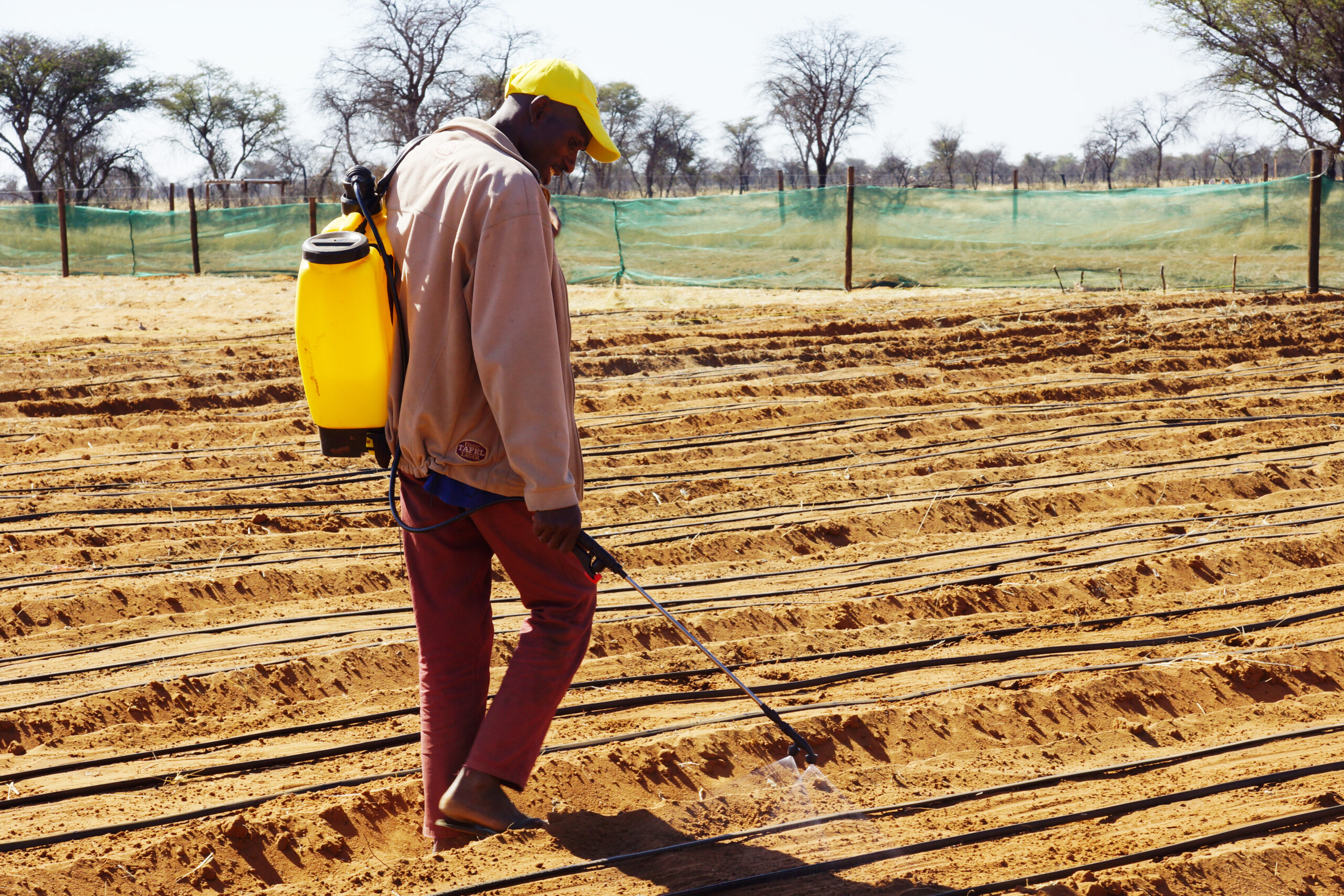
Crop farming is an agricultural activity that involves the tilling or cultivation of the land to ensure its preparedness before a farmer decides to grow plants that later mature into harvest-ready produce that can be consumed or sold.
Conventionally, farmers propagate their plants using vegetative cuttings from a parent plant or buy seeds that are sown into the soil to grow new plants. To this end, seeds are an essential input resource that a farmer must procure to grow crops successfully.
Moreover, when purchasing seeds, there are key considerations that must be taken into account. The first factor one must consider is the cultivar of the specific crop one intends to grow. By definition, a cultivar is a type of plant that people have bred for desired traits. These are reproduced in each new generation by methods such as grafting, tissue culture, or carefully controlled seed production.
For instance, if a farmer chooses to grow maize, there are numerous cultivars available on the market to select from. To this end, it is always advisable for the farmer to buy a maize cultivar that suits their local weather conditions.
Such conditions range from sporadic rainfalls, drought, and occasional overcast conditions that may have a significant effect on the growth rate of crops. Secondly, a crop producing farmer should understand the importance of knowing the right season in which the seeds are to be sown to achieve optimum germination and emergence rates in the crop field or garden. If one opts to buy the Glory of Enkhuizen cultivar of cabbage, the back section of the seed packet will clearly stipulate that this type of cabbage can be grown in spring, summer, autumn, and winter, making it an all-year-round crop.
However, if one opts to buy Star 5522 hybrid onion cultivar seeds, they will notice that the recommended sowing seasons for this crop are autumn and winter. Therefore, it may not achieve optimum germination and emergence rates when planted during spring and summer. On the other hand, if one buys the Zama Star cultivar maize seeds, the seed packet indicates that this crop is intended for summer growth only to achieve optimum yield potential.
The third aspect to consider, also indicated on the back of most seed packets, is the ideal growing conditions for that specific cultivar. Most seeds will indicate whether to grow them directly under full sunlight, semi-shade, or under shade net conditions for good growth rates. The Glory of Enkhuizen cultivar of cabbage seeds prefers to be grown under full sunlight or semi-shade conditions.
In contrast, the Star 5522 hybrid onion cultivar seeds are preferably grown under full sunlight conditions.
Similarly, Zama Star cultivar maize seeds prefer to be grown under full sunlight conditions. A fourth consideration is the sowing method a farmer will use to ensure that the seeds germinate into seedlings that grow into mature crops. Starke Ayres seed packs will guide a farmer on the specific sowing method to use for each crop.
To this end, seeds can be sown in seed trays and later transplanted into seedbeds or directly into the seedbeds until the crops are harvested.
For instance, the seed packet label of the Glory of Enkhuizen cultivar of cabbage seeds indicates that these seeds can be sown in seed trays or directly into the seedbeds without affecting the germination and emergence rates.
Additionally, Star 5522 hybrid onion cultivar seed packs will inform a farmer that they prefer to be sown directly into the seedbeds. Zama Star cultivar maize seed packs will recommend sowing the seeds directly into seedbeds or crop fields for better germination and emergence. The fifth consideration is the spacing recommendations for growing crops. Under the spacing parameters, one must know the recommended sowing depth for each crop at the time of sowing the seeds. The Glory of Enkhuizen cultivar of cabbage seeds, for example, is to be sown at a recommended depth of 1 centimetre (cm).
The recommended spacing between rows is 60cm. Finally, the space within a row (spaces between cabbages growing in one row) is 35cm. Similarly, Star 5522 hybrid onion cultivar seeds are to be sown at a recommended depth of 1cm. However, the spacing between rows is recommended at 15cm and 7cm within rows. On the other hand, the Zama Star cultivar maize seeds, which require a recommended sowing depth of 2cm, are ideal. The spacing between the rows is 90cm and 30cm within a row. Furthermore, it is essential to keep the crop field or seedbeds moist after sowing seeds by irrigating them daily. Moreover, the farmer must know that after sowing the seeds, germination (when the seed responds to the presence of moisture and warm soil temperature and begins to develop a root system) and emergence (when a small plant grows out of the soil) will occur after seven to 14 days, as indicated on most seed packs.
Finally, a farmer who grows crops must keep in mind the importance of the growing period (the duration it takes for the crop to reach maturity). This is indicated on the seed pack. In the case of the Glory of Enkhuizen cultivar of cabbage seeds, these take about 90-95 days (about 3 months) to reach maturity.
In conclusion, success with crop production relies on numerous factors.
However, from a management perspective, a farmer must be familiar with the various considerations that need to be taken into account from the start of each growing season until the harvesting stage to achieve success in their crop venture.*Hanks Saisai is Agribank’s technical advisor on crops and poultry.