
Max Henrich
OMUTHIYA – Following several days of consistent rainfall, Oshikoto region governor Sacky Kathindi has urged all farmers in the region to prepare their fields promptly and to plant sufficient crops to ensure family food security and potential surplus.
Speaking to Nampa on Friday, Kathindi said that the abundant rainfall in northern Namibia is a positive sign for a prosperous planting season.
“It is vital that we begin ploughing and planting while the rains are reliable and the soil is moist, regardless of field sizes or locations. Acting early maximises our chances of a bountiful harvest in this rain-fed agricultural zone,” he emphasised.
Despite ongoing challenges with limited access to clean water for human and livestock consumption in parts of the largely dry region, the governor stressed that recent rains have rejuvenated the land, providing essential moisture for crop production and reviving hope for improved yields among subsistence farmers.
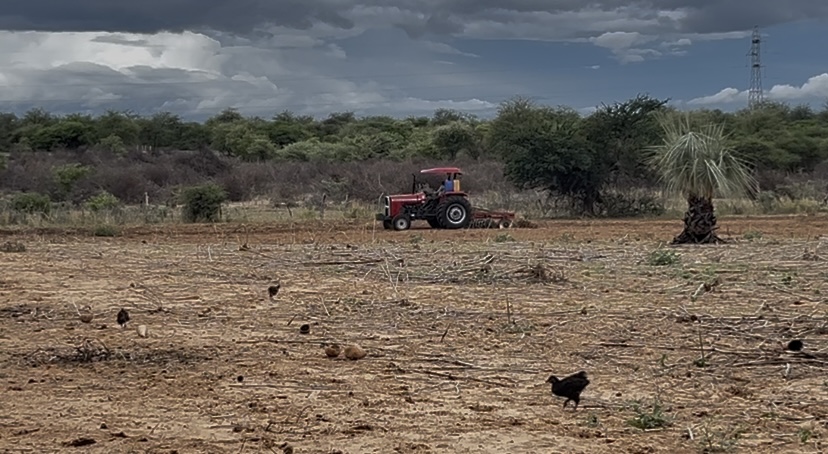
Smallhold farmers in Cham-Cham village in the Nehale Lya Mpingana constituency and surrounding villages in the region, have begun ploughing their fields, marking the start of the planting season.
In an interview with Nampa on Saturday, farmer Mateus Shipoke explained his decision to commence ploughing early, taking full advantage of the favourable soil conditions created by the recent downpours.
“The tractor is preparing the entire field, and I plan to sow a variety of drought-resistant crops, including maize, pearl millet (mahangu), sorghum, beans, groundnuts, and a few watermelons,” he said, highlighting the importance of diverse cropping for food security and household sustenance in this semi-arid region.
His partner, Selma Simon, expressed enthusiasm about starting fieldwork ahead of schedule. She has already begun harvesting wild spinach (ombidi), a nutritious indigenous leafy vegetable that thrives naturally in the fields during the rainy season and is highly prized as a traditional delicacy among communities in northern Namibia.
“The emergence of this wild spinach, which grows abundantly without cultivation, is a clear indicator of sufficient soil moisture and promising rainfall patterns, ideal for crop germination and growth,” she noted.
Simon added that in nearby Oshivelo, some residents have started harvesting frogs that appear after heavy rains, selling them to passersby as a seasonal source of income and protein – another traditional sign of a productive wet season.
Farmer Gideon Andreas from Okapanda village in the Oniipa constituency told Nampa that he chose to begin land preparation early to ensure his fields would be fully ready when the main planting season begins, leading to healthier stands and potentially higher yields.
“The timing feels perfect – the rains have arrived and been steady so far. There’s no reason for my family to delay getting the crops in the ground,” he said.
He added that this season he intends to allocate more land to maize than to mahangu (pearl millet), as maize is a key staple food and a favourite in his household. -Nampa