
Gail Thomson
Can farmers simultaneously reduce greenhouse gas emissions, cut the amount of organic waste going to landfills, increase agricultural productivity and soil fertility, and improve food security in Namibia?
According to Sven Gruttemeyer of Biocycle, Yes, they can! His not-so-secret weapon? Black soldier flies that convert organic waste into useful agricultural products. This is not your ordinary housefly. The black soldier fly (scientific name: Hermetia illucens) is a large, black fly that occurs widely in warm, tropical parts of the world including northern Namibia.
If provided with enough food and optimal growing conditions, it’s entire life cycle from egg to breeding adult lasts only 18 days. The fly carries no diseases that are transmittable to humans, and the brief adult stage cannot bite.
The black soldier fly is taking the world by storm as a means of turning organic waste into livestock feed and organic fertiliser using minimal water and electricity inputs.
The fly larvae has a voracious appetite and will consume anything from rotting fruit to manure and dead animals, even processed foods like pizza. Towards the end of its larval stage, the fly turns into a 3cm long prepupa that is packed with protein, calcium and other nutrients.
Since each adult produces 200-600 eggs, only a few pupae need to be kept replenishing the adult population. The rest are baked in an oven and dried in the sun to be used as a key ingredient in chicken, pig or fish feed, or high-quality pet food.
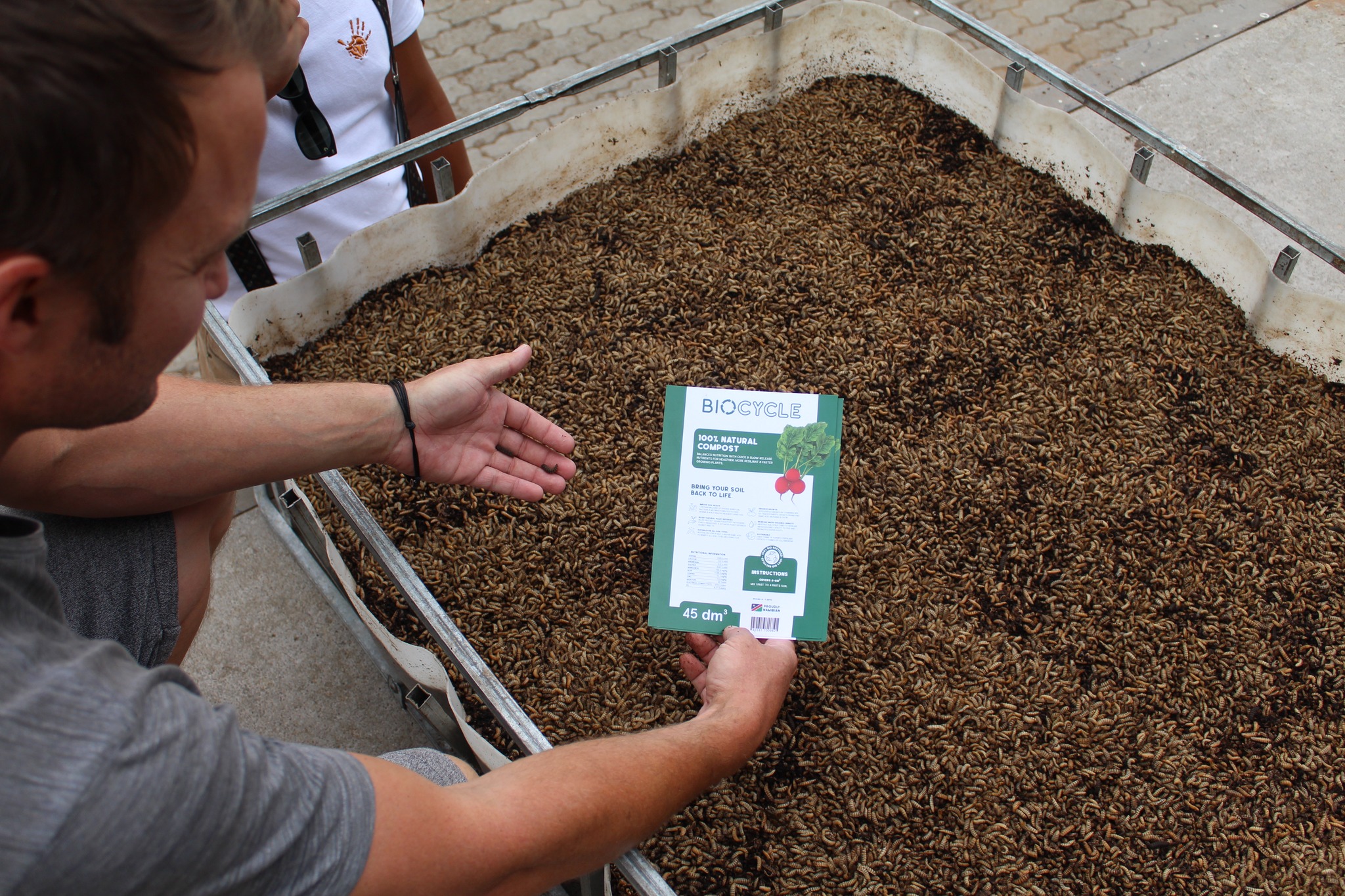
The fly itself is not the only useful product, however, as it converts the organic waste into ‘frass’ (insect poop) that promotes plant growth and pest resistance. It can be applied directly on planting beds or mixed with soil to increase its water retention capacity and overall soil health.
Innovation
From his small warehouse on the outskirts of Windhoek, Sven Gruttemeyer and his team of 10 staff members at Biocycle use black soldier flies to turn 60 tonnes of organic waste into 6-8 tonnes of feed and fertiliser per month. None of the flies’ outputs are waste products.
He obtains his waste from the distribution centres of fresh fruit and vegetable shops, which are obliged by law to destroy food that is no longer fit for human consumption. The plastic packaging the food is recycled into plastic piping in Okahandja.
Waste from local breweries are nutritious food source for larvae, as the spent grain left behind after beer production is highly digestible and nutritious. The only food that must be purchased is wheat bran, a by-product of pasta production that is used to feed newly hatched larvae.
This process is relatively labour intensive, as each step of the fly’s short life cycle must be carefully managed, which is good news in a country with high rates of unemployment. Each stage is kept in its own room within Biocycle’s well-organised warehouse.
Development phase
The adult flies are provided with suitable places to lay their eggs, which are then hatched and harvested by hand. Each batch of tiny larvae is carefully weighed and transferred into 2 litre ice cream containers of pasta wheat bran.
Five days later, the larvae are big enough to transfer into crates containing a mix of spent grain from the brewery and food waste. After another week of growth, they become prepupae.
Only 1% of the prepupae are transferred back to the adult fly room to pupate and complete their lifecycle by turning into adults and laying more eggs.
The highest value of Biocycle product is produced by baking the remaining 99% of the prepupae in a large oven for a whole day. This product is exported to the USA via South Africa as an ingredient in dog and cat food that is high in protein and low in allergens.
While black soldier flies are farmed in the USA, Biocycle’s product is competitively priced. Accessing this lucrative export market is important for Biocycle’s long-term financial sustainability, and more export markets will be explored in future.
The livestock feed is produced by killing the prepupae initially in the high temperature oven (heated to over 180 degrees Celsius to ensure a quick death) and then taken out to dry in the sun for a few days.
The protein content of this product is so high that a mixed feed requires only 5% of it to provide enough protein and calcium for chickens, especially laying hens. This product is sold locally to chicken and pig farmers and will be a key input to aquaculture (fish farming) when this sector is further developed in Namibia.
A small army of black soldier flies is on the march in Namibia. These little insects are a promising all-in-one solution to multiple environmental and agricultural challenges in a way that creates jobs and boosts national food security.
– conservationnamibia.com