

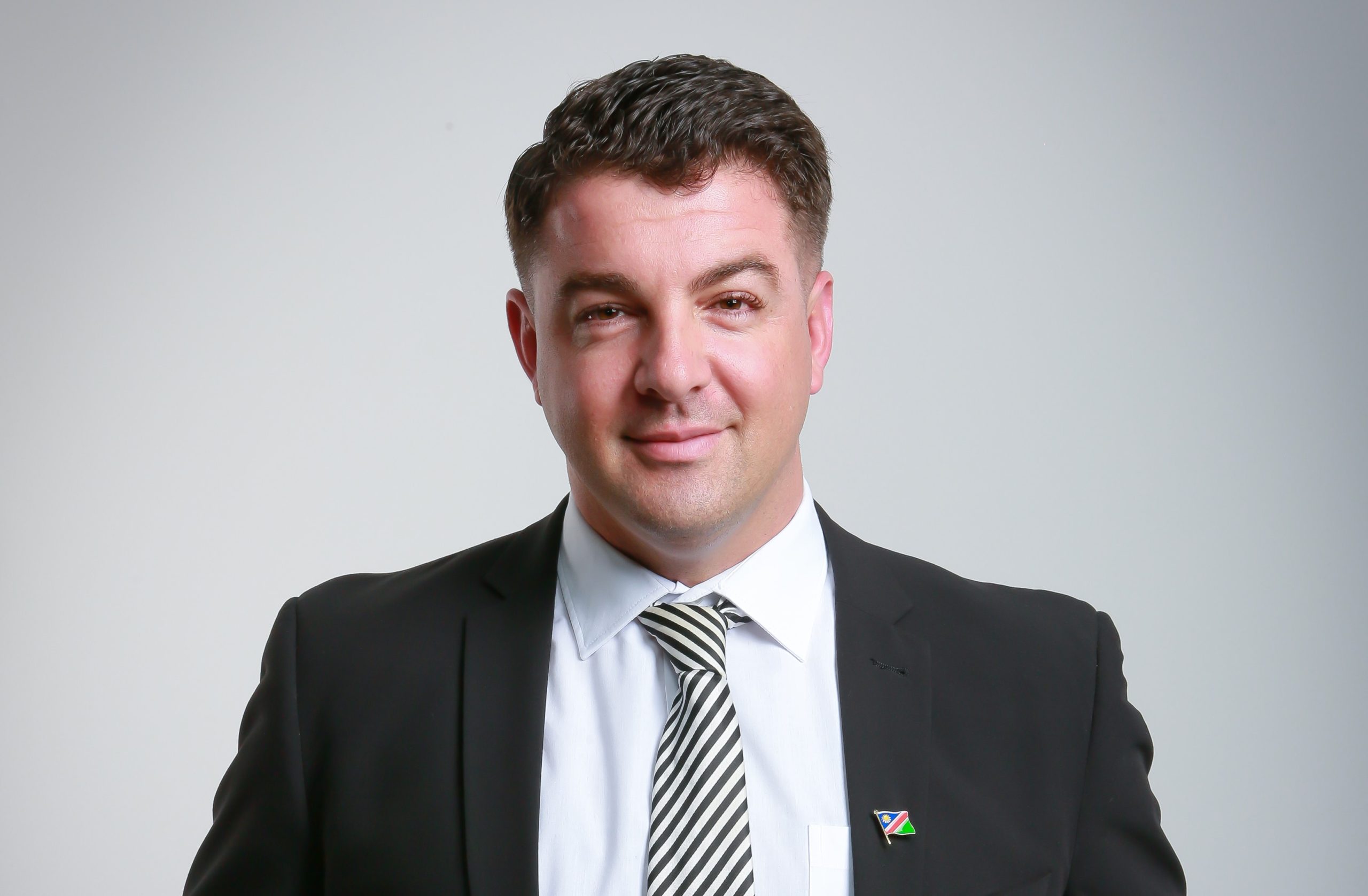

Rudolf Gaiseb
The education ministry has reaffirmed including students at private tertiary institutions in the government’s free education initiative.
Education deputy minister Dino Ballotti said funding should focus on the student – not the private institution.
Speaking at a meeting for the free education task force on Thursday, he highlighted the significance of an inclusive funding model.
“We must consider models such as Namibia Students Financial Assistance Fund] NSFAF previous grant-based funding approach and critically explore whether certain high-demand or priority courses could initially be funded at 100% as part of a phased roll-out,” he said.
The task force is assigned to develop a clear report that will outline how the ministry envisions introducing free tertiary education in public institutions.
Ballotti stated: “The public, especially students and parents, seek to understand what this directive of free tertiary education in public institutions entails, what it does not cover, and how the government intends to implement it”.
He said non-tuition costs, accommodation, meals, transport and study materials will remain the responsibility of the student.
In her maiden state of the nation address, President Netumbo Nandi-Ndaitwah confirmed the implementation of free tertiary education in public institutions, with a clear instruction to remove tuition and registration fees.
The idea has been criticised by civil society and student movements, such as the Students’ Union of Namibia (SUN), which recently stated that no consultations had been held with unions, tertiary institutions, and parents since the “hasty announcement”.
“Policies that directly affect students must not be imposed from the top down. We reject tokenistic decisions that are politically convenient but lack clarity, implementation plans and fair resource allocation,” SUN spokesperson Johannes Malapi wrote previously.
The suggestion for an inclusive, transparent and fair funding model they called for has now been echoed by the deputy minister, a framework that treats every student equally, regardless of which institution they attend.
“Every Namibian parent pays tax. Therefore, every Namibian student, whether at a public or private, or foreign-accredited institution or not, deserves funding. Education is a right, not a privilege tied to a single institution,” he added.
The National Task Force on Free Education, which held its first deliberative session on Friday, is responsible for steering the roadmap.
The members include the education ministry, the University of Namibia, the Namibia University of Science and Technology, the National Commission on Research, Science and Technology, the Namibia Qualifications Authority, the Namibia Students Financial Assistance Fund, the Namibia Training Authority, the National Council for Higher Education, the Namibian College of Open Learning and other institutions.
The members will be co-opted occasionally.
Ballotti said free education is not a matter of policy alone, but it requires robust planning, fiscal prudence, stakeholder collaboration and a pragmatic approach to implementation.