


Molley Weyulu
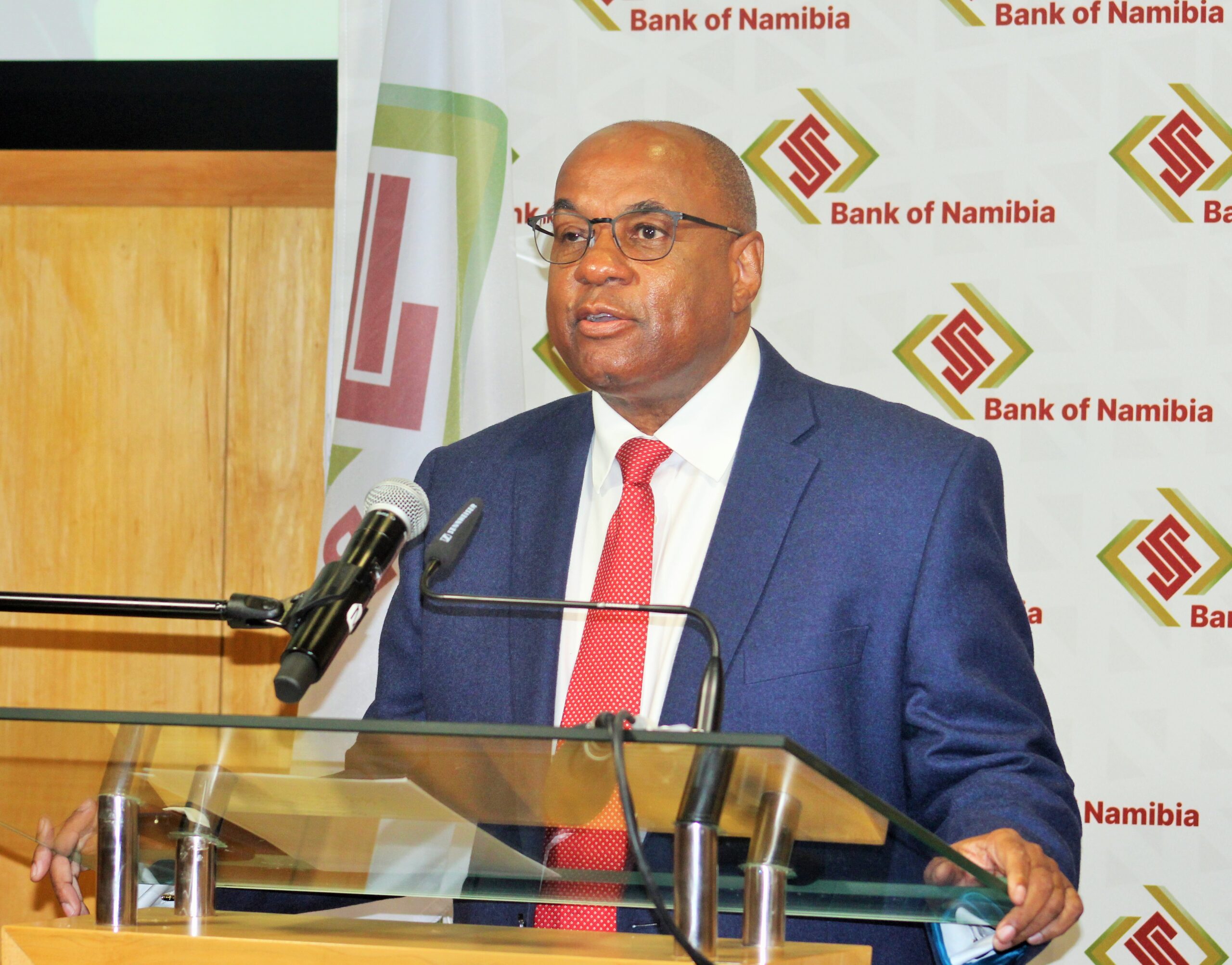
Bank of Namibia (BoN) governor Johannes !Gawaxab on Monday reaffirmed Namibia’s commitment to inclusive financial reform.
He said the country’s financial system is strong and well-positioned to drive transformation without risking stability.
Speaking at the launch of the Namibia Financial Sector Transformation Strategy in Windhoek, !Gawaxab said key indicators such as capital adequacy, asset quality, liquidity and profitability remain strong.
“Our commitment to transformation is anchored in a robust financial system. The implementation of the 2.5% capital conservation buffer in 2024 further enhances resilience. This foundation allows us to pursue transformation confidently,” he said.
!Gawaxab acknowledged areas of concern.
A review of progress from 2011 to 2021 revealed that transformation across ownership, management and skills development remains slow.
“Ownership and control remain a persistent challenge, with performance at just 20% against a 25% target,” he said.
He added that skills development lags furthest behind at 35% compared to a 60% goal.
Despite these gaps, one area has outperformed expectations.
“Enterprise and supplier development has been a standout success, surpassing its target by more than twentyfold. This exceptional performance underscores a critical truth: where commitment and accountability align, transformation is not only possible – it is powerful,” he said.
!Gawaxab stressed that the transformation agenda is not the bank’s alone but a shared national mission.
“It is a national blueprint, crafted in partnership with the finance ministry, the Namibia Financial Institutions Supervisory Authority, financial institutions and civil society,” he said.
Looking to the future, !Gawaxab highlighted the Bank’s Strategic Plan for 2025-2027, which prioritises digital transformation.
This includes launching an Instant Payment System in 2026 and participating in regional integration efforts through Project Sunbird.
“We are not merely adopting digital tools.
We are pioneering homegrown solutions that can serve as models across the continent,” he said.
“The path will remain challenging, but it is a journey we must walk with purpose. If we act with clarity, commitment and unity, an inclusive financial future is within reach,” he said.
-Nampa