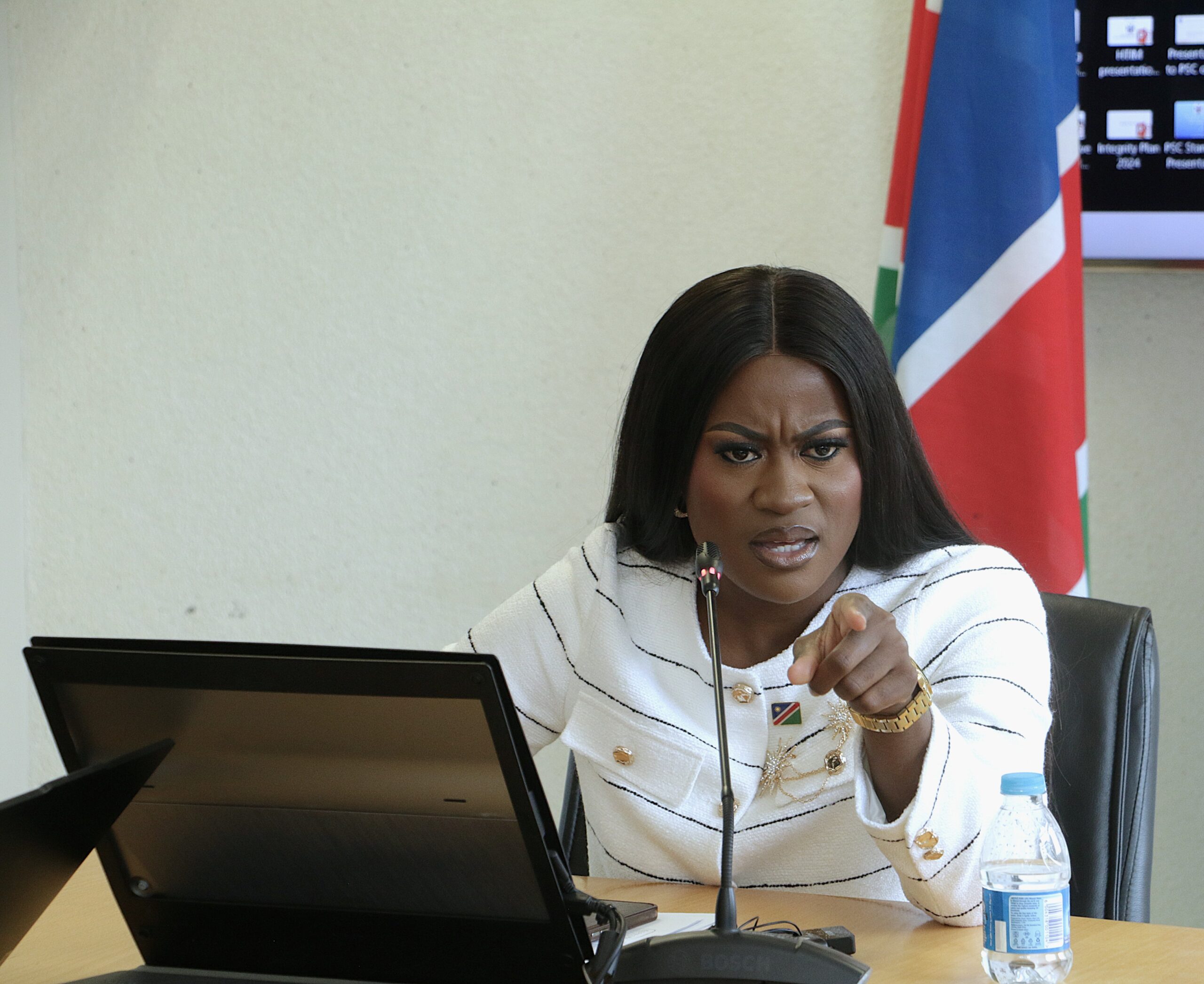

Lahja Nashuuta
Namibia’s Ministry of Health and Social Services has eliminated the use of middlemen in procuring medicines and clinical supplies, opting to purchase directly from international manufacturers and wholesalers instead.
Health Minister Esperance Luvindao says this strategy is already paying off, with savings of more than N$221 million recorded in the first phase.
“We engaged 41 pre-qualified manufacturers and wholesalers, who submitted offers for hundreds of essential medicines and clinical products,” Luvindao said this week. “The evaluation of these offers shows potential savings of about N$221 494 485.81 compared to the weighted average intermediary prices.
Compared to the maximum benchmark typically applied during intermediary-led emergency procurement, the savings are even greater.”
The minister stressed that direct procurement guarantees the same quality of medicines at lower costs. “We are achieving better value for money, which means more stock of the same quality for the benefit of our public health system and our people,” she said.
Luvindao explained that the reform is being implemented under the emergency provisions of the Public Procurement Act of 2015, designed to save both time and money. This approach allows the ministry to secure large quantities of urgently needed medicines faster while stabilising stock levels across the country.
“By going directly to the source, we can secure the best possible prices, quality and quantities, while ensuring stability in the supply of essential medicines over the long term,” she said.
Beyond cutting out middlemen, Luvindao said the ministry is also tackling inefficiencies in warehousing and distribution. Currently, fragmented storage facilities expose the supply chain to theft, stock losses, and transport risks. “Our warehousing infrastructure is outdated and scattered, which undermines efficiency,” she conceded. “We are now consolidating operations into one secure, access-controlled facility to improve accountability and accelerate distribution nationwide.”
Planned upgrades include track-and-trace barcoding to monitor medicines from central warehouses to patients, electronic dispensing tools to reduce errors and improve service speed, and an integrated financial management system to tighten oversight of procurement and spending.
“These technologies will strengthen accountability while making our supply chain more reliable and responsive to patient needs,” Luvindao said. The government also plans long-term procurement contracts, reducing reliance on costly emergency purchases. “With long-term agreements, both suppliers and the ministry gain clarity. Suppliers understand our needs, while we understand their production capacity and lead times. This creates stability, efficiency, and better service delivery,” she explained.
Addressing confusion about Letters of Credit, which some suppliers require, Luvindao said these are not advance payments but standard guarantees of payment. “A letter of credit is a bank-issued guarantee to the manufacturer, assuring payment once goods are delivered and verified. In compliance with the State Finance Act, the ministry does not make advance payments. Payment is only made after inspection and confirmation of quality,” she said.
Luvindao asserted that the reforms are aimed at ensuring Namibia’s health system is more cost-effective, transparent, and sustainable.
“Through these changes, we are cutting unnecessary costs, improving infrastructure, and strengthening accountability. Our ultimate goal is to ensure uninterrupted access to life-saving medicines and clinical supplies for every Namibian who needs them,” she said.
Experts, politicians weigh in
Former health minister Bernard Haufiku welcomed the reform, noting that direct government procurement is not new. “During my tenure, direct procurement from accredited manufacturers or pooled procurement through agencies like UNICEF or UNFPA was always my position. It’s one of the fastest ways to ensure cost savings and prevent stock-outs in hospitals,” he said.
Haufiku recalled that in 2017, the ministry purchased antiretrovirals directly from Cipla Medpro’s manufacturing plant in Uganda, saving the treasury N$63 million compared to local suppliers. He emphasised that the reform is not intended to sideline local suppliers but to ensure a hybrid system: essential medicines like ARVs, diabetes, and hypertension treatments can be sourced directly, while other products may involve local suppliers.
Affirmative Repositioning MP Job Amupanda welcomed the decision but cautioned against creating new avenues for corruption.
“We are happy the government is finally listening to superior logic, because the state has been bleeding for so long,” he said. “But removing middlemen must not mean bringing in ‘fixers’ who manipulate the relationship between the state and manufacturers. We want an institutionalised system that defines how direct procurement will work, free from political interference. Even direct deals can breed corruption if not managed well,” Amupanda warned.
Popular Democratic Movement (PDM) parliamentarian Winnie Moongo described the decision as commendable and long overdue. “This is a significant step in the right direction. Procuring supplies directly from manufacturers is a smart move that reduces inflated costs often added by middlemen,” she said. Moongo added that the savings should be reinvested in the health sector: “These funds could strengthen under-resourced areas such as staffing, infrastructure, and community health programmes. Ultimately, this strategy can improve service delivery, ensure medicines are affordable and accessible, and make taxpayers’ money work better for all Namibians.”
Governance analyst Frederico Links described the policy shift as positive but said it must be part of broader reforms across all sectors of government procurement. “Back in 2017, when the Public Procurement Act was launched, then finance minister Calle Schlettwein said the new system would eliminate middlemen and tenderpreneurs. We supported that vision. Unfortunately, the clearing out did not happen, and the system came to resemble the old Tender Board structure. The real question now is whether there is political will to follow through this time – not just in the health sector, but across all procurement. Middlemen are not only a problem in health, but throughout Namibia’s public procurement landscape,” Links said.
Lilani Brinkman, IPC’s Shadow Minister of Health and Social Services, also welcomed the reform but urged legal caution. “In light of the persistent shortages of medicines, direct procurement is a viable strategy.
However, the Ministry must carefully consider the legal and regulatory implications under the Procurement Act. A thorough review may be needed to allow more flexible and responsive procurement processes,” she argued. Seasoned author and Nust lecturer Tileni Mongudhi highlighted that direct procurement has been proposed before. “The main reason was that middlemen kept failing – wrong quantities, poor quality, and late deliveries. This led to years of medicine shortages, not because government lacked funds, but because suppliers didn’t have the capacity,” he said. Mongudhi recalled cases where chronic patients were left without medicines. “When diabetics or hypertensive patients miss treatment, their conditions worsen, sometimes fatally. That’s why the government decided enough is enough. Direct procurement can ensure steady supply.”
He also proposed a hybrid model: “Essential drugs should come directly from manufacturers, but non-critical items like equipment, bedsheets, or consumables can still be sourced from local suppliers. This ensures supply stability while supporting local businesses.”
Mongudhi stressed that the reform could strengthen supply chain efficiency and reliability, ensuring uninterrupted access to life-saving medicines for all Namibians.
– lnashuuta@nepc.com.na
Photo: Heather Erdmann