

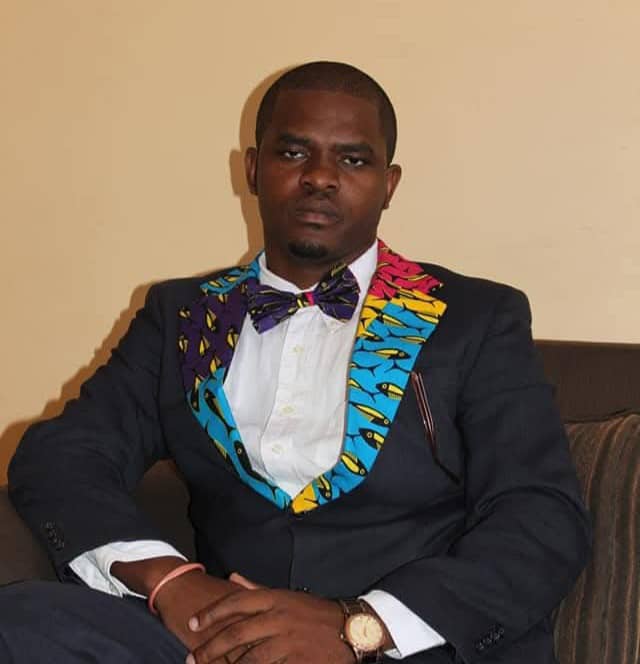

Matheus David
Edward Tenete
Appearances can be deceiving. Seeing a man standing on the pulpit or a boy carrying a Bible from church often evokes a sense of admiration – respect that comes with dedication to the word of God and the power of the sermon. At least this is the image many see.
Yet, little do people know that behind these faces are troubled souls, some carrying deep-rooted emotions. For some, suicide once seemed the only way out.
A Pastor’s confession
On the occasion of the International Day of Suicide Prevention, Pastor Anton Ngabwe of the Council of Churches in Namibia (CCN) made a heartfelt confession while urging people battling suicidal thoughts that “there is hope.”
He shared his own painful journey, revealing he had attempted suicide twice: once before joining the ministry and once after becoming a pastor.
“I even bought a gun to take my own life,” he confessed. His turning point came when his mother intervened, asking him: “Who benefits from your suicide?”
That message anchored him in faith, hope and self-worth.
Since then, he has become a counsellor, community speaker, and founder of the movement Men with Manners, which educates boys and men in resilience and positive masculinity.
He also serves on the mental health board under the Ministry of Health and remains active with the CCN. Ngabwe says it is important that Namibia, as a nation and community,
begin to change the narrative in terms of language and care. He urged people to be mindful of what they share on social media, as it may affect others negatively.
“Namibia ranks among the countries with the highest suicide cases on the continent. As a nation, we must change the narrative — not just in policy, but in how we speak, how we love, and how we support one another,” Ngabwe emphasised.
According to reports, from August 2022 to June 2023, Namibia recorded 623 suicides, representing a death rate of 21 per 100 000 population. Notably, 82% of these victims were men, with financial pressure cited as a major contributing factor.
“If a man doesn’t meet a certain financial status, society often looks down on him. We must replace judgment with hope and support,” he urged.
To those battling depression, anxiety, financial stress, or relationship troubles, Ngabwe offers a passionate message: “There is hope. You don’t need to give up on your life. Clinics, pastors, counsellors, and social workers are available and often free of charge — just reach out.”
This year’s event was organised by the Ministry of Health and Social Services and it was commemorated under the theme “Changing the Narrative,”
The Jeremiah Mushunina story
“When I came from church I decided to just end my life because the situation was not getting better,” 26-year-old Jeremiah Mushunina told Nampa in a recent interview about his first attempt to commit suicide.
Mushunina, who hails from Onhuno in Ohangwena region, was just 12 years old when he first tried to end his own life by hanging. Fortunately, his sister saw him in time and called neighbours for help.
Mushunina however attempted to commit suicide again in 2022, before making another attempt in 2024. He narrated that his troubles began when his father abandoned him and his mother when he was about 12 years old. Without a father figure, he was exposed to negative influences like marijuana abuse, which resulted in him dropping out of school at a young age. Just a teenager at the time, Mushunina decided to relocate to Windhoek to pursue his dream of becoming a musician, but that did not work out.
To survive in Windhoek, he became involved in criminal activities such as robberies and theft as well as sex work before realising he was doing wrong.
“I was depressed,” Mushunina said after realizing the life he was leading was not easy for a rural boy.
To sustain himself and his two young children, a boy and a girl, he now runs a tuckshop at his home village where he established the Youth Destiny Organisation to dissuade the youth against committing suicide and not to give up on life.
His organisation is yet to be formally registered and is currently not operational.
“If you are going through a lot, you don’t need to commit suicide. Just talk about your problems,” he said while encouraging the youth to speak up when facing hard times.
Mushunina’s story highlights an issue faced by many young people all over Namibia.
According to the World Health Organisation (WHO), Namibia has one of the highest rates of suicide in Africa.
WHO also says around the world, suicide was ranked the third leading cause of death in young people aged between 15-29 in 2021.
The Namibian Police Force (NamPol) reports that in July, a 14-year-old boy committed suicide in Windhoek’s Otjomuise area by hanging.
A few months before that ordeal, tragedy struck a home in Otjiwarongo when a 15-year-old boy hanged himself.
In December 2024, a 16-year-old girl survived a suicide attempt after an argument with her boyfriend.
Clinical psychologist at the One Economy Foundation, Gregorius Amadhila, recently told Nampa that trends in teenagers’ mental health, suicide and relationships with caregivers over recent decades indicate that suicide among teenagers is rising, citing it as a huge concern.
He explained that teenage suicide is mostly caused by a complex mix of environmental, social and psychological factors including bullying, peer pressure, abuse and mental health disorders like depression.
“Since the family is usually the primary source of emotional security, identity and support for young people, particularly teenagers, family conflicts can be a significant emotional trigger for suicide,” Amadhila added.
He advises guardians to be aware that young people may not always display signs of suffering. Instead, they may look happy while hiding deep emotional pain.
“That is why open, non-judgmental communication is critical. Parents are encouraged to listen more, to validate young people’s feelings even if they don’t fully understand them,” he said.
He also urged society to play a role in providing support and advised teenagers to reach out for help from a friend, a parent, a counsellor, a teacher, a pastor or a helpline.
Meanwhile, Bishop Lukas Katenda of the Reformed Evangelical Anglican Church of Namibia underscored that people must learn to distinguish between mental health and mental illness, saying some people do not know the difference.
“We must eliminate mental illness by promoting mental health. We have to foster and promote mental health, psychological health, and emotional health, so that people can deal with mental issues that may attack them,” he emphasised.
Katenda called for targeted interventions from parents, communities, schools, health institutions, and religious groups to help young people grow up healthy and resilient.
For those like Mushunina, the fight remains deeply personal.
“I am just a hustler who trusts God. I now go to church, but it’s not easy. I’m fighting hard,” Mushunina said in a firm voice.
– matheusshitongenidavid@gmail.com
– Additional reporting by Nampa