

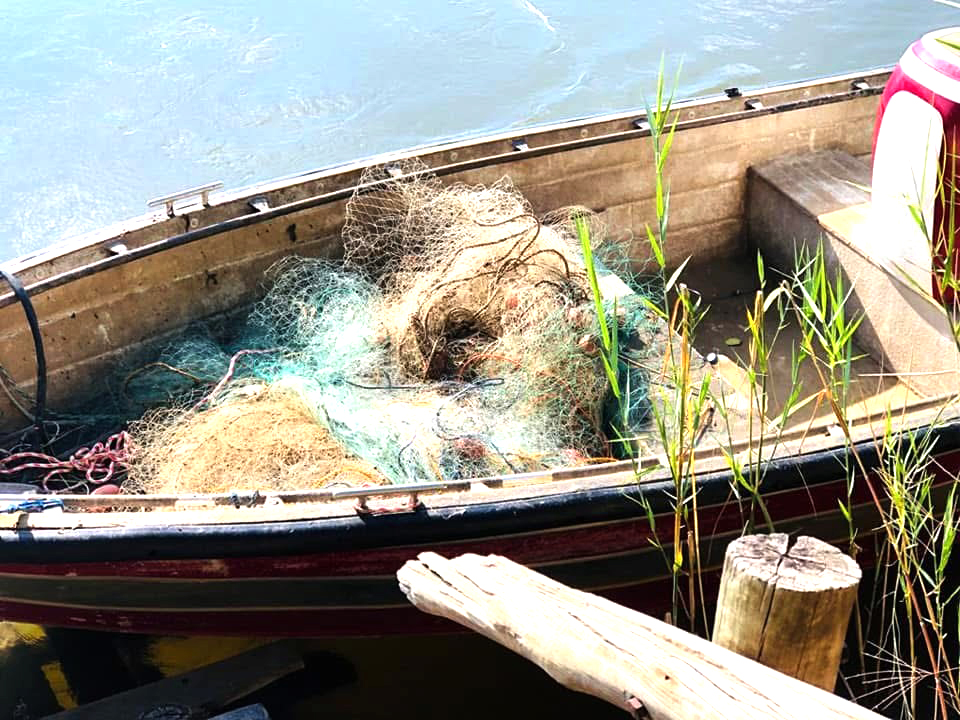

RUNDU – At least 2 823 illegal fishing nets and 2 763 kilogrammes of fish have been confiscated from illegal fishing activities in Kavango East and Kavango West since 2023.
This was revealed by Teofilus Nghitila, executive director and accounting officer for Water and Marine Resources within the Ministry of Agriculture, Fisheries, Water and Land Reform.
The ministry has been battling illegal fishing along the Kavango River, which continues to threaten the freshwater ecosystem.
The use of illegal nets daily has contributed to declining fish stocks in the two regions in recent years.
“The ministry’s officials confiscated 1 552 kg of fish and 1 973 fishing nets between 2023 and 2024, and 1 211 kg of fish and 850 nets from 2024 to 2025,” Nghitila said.
Illegal fishermen have been drag-netting the Kavango River to catch more fish for sale without permits, often using banned monofilament nets as well as mosquito nets.
During the recent state of the region address in Kavango East, Governor Hamunyera Hambyuka highlighted the problem of illegal fishing.
“To combat illegal freshwater fishing, 298 patrols were conducted, including 269 land-based and 29 river patrols, resulting in the confiscation of 337 illegal fishing gears, including monofilament gill nets, mosquito nets and throw nets,” he said.
Hambyuka added that the region is focused on promoting aquaculture, enforcing fisheries legislation, providing scientific advice for sustainable inland fisheries management and enhancing organisational performance.
Efforts from the Kamutjonga Inland Fisheries Institute (KIFI) and Rundu Regional Office are a positive step in the right direction.
“This is done in collaboration with development partners, such as the United Nations Development Programme (UNDP) and the Food and Agriculture Organisation (FAO) to promote sustainable, climate-resilient aquaculture and horticulture practices in the region,” he said.
Local aquaculture expert Hiskia Asino warned that fish stocks in the two Kavango regions have been declining in recent years, affecting livelihoods and increasing human-wildlife conflict.
He urged residents to explore alternative fish farming methods.
“Climate change, illegal fishing gear, a growing population and high unemployment are some of the reasons fish stocks in the Kavango River are becoming scarce. However, the Kavango regions have the potential to restore fish abundance,” Asino said.
He highlighted the need to value and develop existing resources to ensure food security.
“It doesn’t help to give drought relief every year to someone living along the river when they have land and water. We must empower people to produce for themselves and others,” Asino noted.
“You have water here, and you have land there. By putting a pond, stocking it with fish and managing it properly, families can feed themselves. As scientists and aquaculturalists, we have the skills to enable people to sustain themselves and improve national food security,” he added.
He highlighted how aquaculture has transformed lives globally.
– Additional reporting by NBC