

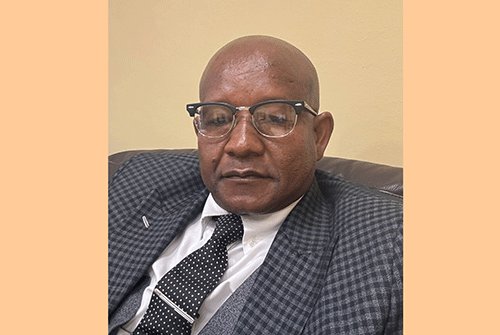

Adolf Kaure
Swapo councillor Willem Gariseb has outlined his vision for the Windhoek Rural constituency after winning the majority vote during the 2025 Local Authorities and Regional Councils elections last November.
A journalist by profession, Gariseb was sworn in as one of the additional members of the Khomas Regional Council management committee after the elections.
Speaking to New Era this week, he said through his vision presented in a five-year strategic plan (2025 to 2030), his aim is for all the constituency’s residents to benefit from sustainable development, modern infrastructure and equal opportunities.
“My vision is to transform Windhoek Rural into a vibrant, well-serviced, and economically active constituency,” he said. “The mission of championing inclusive governance, accelerating rural development, and ensuring every village, settlement, and community in the Windhoek Rural has access to essential services, economic empowerment, and a better quality of life.”
Under the theme: “Uniting our vast Rural Communities for inclusive Growth”, the five-year strategic plan is centred on five development pillars and strategic objectives, the councillor has opted to prioritise infrastructure development and basic services.
Infrastructure development and basic services
Under the infrastructure development and basic services pillar, Gariseb targets the rehabilitation of at least 200km of rural roads, to provide clean running water access to 95% of households and the electrification for the remote communities.
“I aim to close the infrastructure gap across the 23 Windhoek local authority areas within the constituency,” said Gariseb.
This will be executed by upgrading and maintenance of gravel and access roads linking remote settlements to main highways and markets.
The upgrading of solar street lights and sports fields as well as the expanding of boreholes, drilling and constructing water purification systems and rural pipelines, will also take precedence.
“I will provide electricity to remote communities of the constituencies and connect more households to the national grid and promote solar energy solutions for off-grid areas.”
The pillar will further address land ownership and title deeds for residents of the constituency and avail more farming land required for the Windhoek Rural communities as well as to increase rural sanitation facilities and waste management systems to improve public health.
Economic empowerment, job creation and youth development
Also forming part of his priority pillars is the economic empowerment, job creation and youth development pillar.
The councillor has ambitions of stimulating local economic activities to reduce unemployment and poverty.
“I aim to support farmers with training, veterinary services, and market access.”
He targets to create 1,000 new sustainable jobs in agriculture, tourism, and small business. Establishing one rural business incubation hub, an SME Incubator centre and to increase agricultural production by 20% through modern farming methods also remain key targets of this pillar.
Through entrepreneurship, the councillor will facilitate business training, micro-loans, and SME development.
Gariseb strives to do this through food for work programmes, partnering with the private sector and government to create community-based job opportunities.
The remaining three pillars are education, skills development and youth empowerment; health, social welfare and community wellbeing as well as governance, participation and accountability.
Under the education, skills development and youth empowerment pillar, Gariseb aims to ensure every child, youth, and adult in Windhoek Rural has access to quality education and training.
He aims to improve healthcare access and social support systems for rural residents as outlined in the pillar of health, social welfare and community wellbeing.
To strengthen inclusive leadership, transparency, and citizen involvement is the objective of the governance, participation and accountability pillar.
-akaure@nepc.com.na