

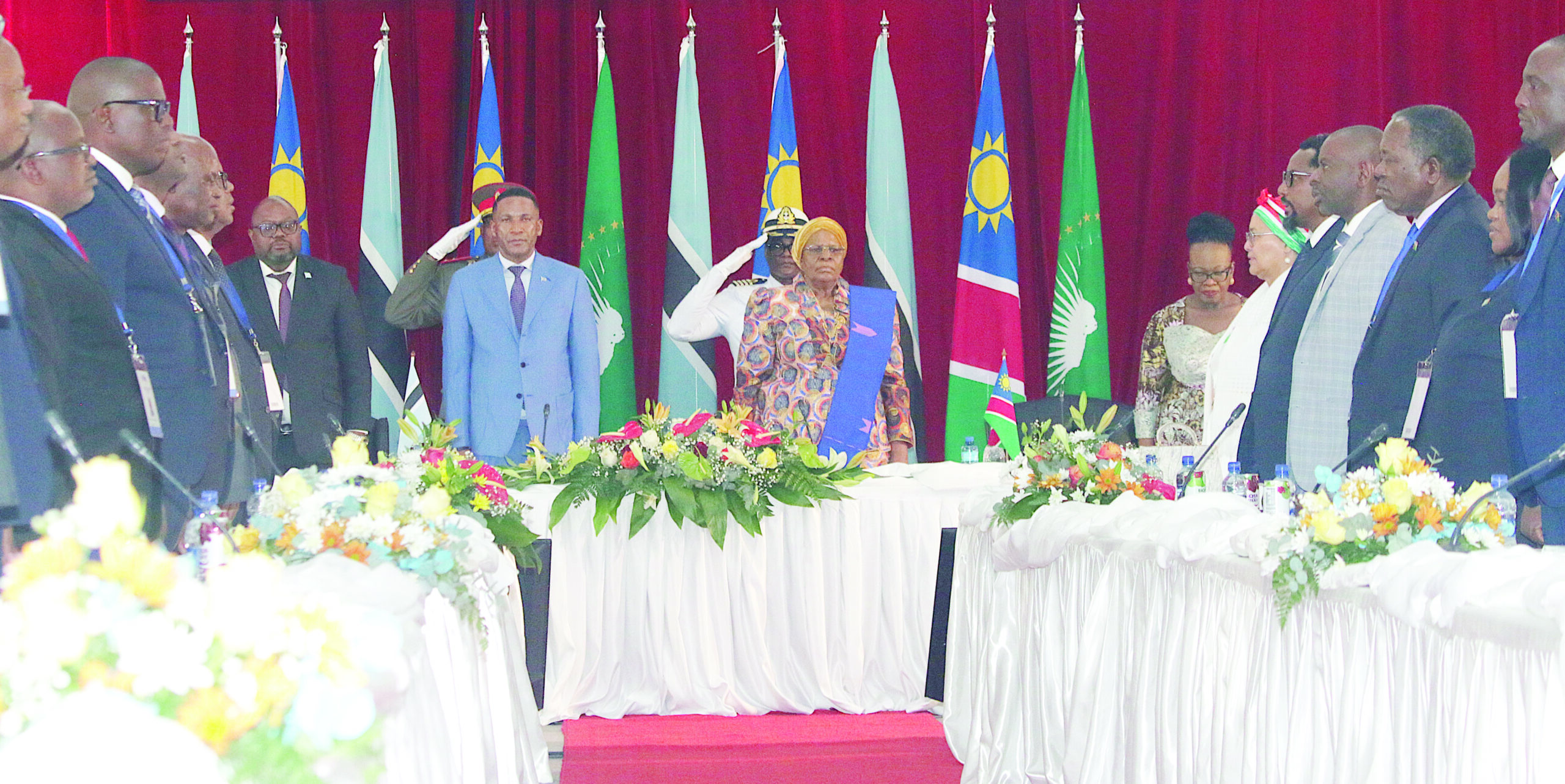

Botswana and Namibia have vowed to move beyond promises and focus on implementation, with both Presidents declaring that the success of their partnership will now be measured by results, rather than rhetoric.
The two Heads of State, President Duma Gideon Boko of Botswana and Namibia’s Netumbo Nandi-Ndaitwah, closed the Second Session of the Botswana–Namibia Bi-National Commission (BNC) in Windhoek on Friday with a strong message of urgency, accountability, and shared determination to turn cooperation agreements into tangible progress.
Speaking after five days of high-level meetings, the two leaders made it clear that the era of planning without execution is over. They stressed that the time has come to translate strategies and signed documents into measurable outcomes that directly benefit citizens in both countries.
President Boko, in his closing remarks, described the summit as part of a wider
transformation process between the two nations. He said the discussions had been “open and frank” and called on officials to ensure that the commitments made at the BNC become visible in people’s lives.
“The time now is for the translation of those words into action,” President Boko declared, urging both governments to move from planning to performance. “We have spoken, we have drawn plans, and we have laid out goals. Now we begin the march, he said.”
He likened the process of implementation to a revolution, one defined by urgency and determination, saying the two nations are “prosecuting a revolution” of political and economic change, compressed in time and clear in purpose. President Boko, who thanked Namibia for hosting the summit, said the discussions had crafted strategies for a shared future and called on ministers and officials not to delay progress. “We must embrace and confront the future we desire,” he said. In one of the most striking moments of the session, President Boko expressed deep frustration with delays caused by excessive protocol and ceremonial behaviour in government processes.
“Sometimes I get frustrated by yourselves. You are too formal. That’s why you refer to yourselves as excellencies. I’m just a boy,” he said, urging officials to break away from rigid traditions.
He reminded delegates that leaders are “all subject to human frailties, foibles and fallibilities… We are human. We are not deities.”
His message was a direct challenge to the “culture of ceremony” that often slows progress in bilateral work.
Boko demanded that the BNC focus on “objective, plausible, complementary” between the two economies and insisted that discussions must lead to measurable outcomes.
Oil, Rail and Air
In her opening remarks, President Nandi-Ndaitwah said the BNC is built on the “deep, lasting ties” between the two countries, rooted in “shared history, mutual respect, and a common vision aimed at peace, stability and prosperity.”
However, she quickly turned to economic development, stressing that infrastructure is the engine of growth.
She highlighted the critical importance of key corridors for unlocking economic potential, particularly for landlocked Botswana.
“We must prioritise the expeditious implementation of decisions related to Infrastructure Development,” President Nandi-Ndaitwah stressed. She pointed specifically to the need to enhance the capacity and efficiency of the Trans-Kalahari Corridor.
The Namibian leader underscored that this corridor, alongside the Trans-Kalahari Railway Project and the subsequent development of the Port of Walvis Bay, is crucial to the “realisation of our aspirations for regional and continental economic integration”. She implored the delegates to ensure the BNC delivers on its mandate, noting, “it is my hope that this session must lay a strong foundation… to benefit our citizens now and in the future.”
Bilateral cooperation between Namibia and Botswana is moving beyond diplomacy and into the realm of global economic strategy, as both presidents highlighted the regional and continental importance of Namibia’s emerging energy sector.
President Netumbo Nandi-Ndaitwah said Namibia’s recent discoveries of oil and gas present immense opportunities, not only for Namibia but for the entire region. She described these resources as a “regional asset”, signalling that their development must be approached through shared infrastructure and joint planning.
This set the stage for President Duma Boko’s firm call for action. Using the energy discoveries as a clear driver for accelerated development, he directly pressed technical teams to stop delaying critical infrastructure projects. “When are we starting work on the Trans-Saharan Railway? And the pipelines, oil pipelines that we must build?” he asked.
President Boko then shifted to aviation, highlighting another strategic weakness: national airlines in both countries are struggling to survive.
He questioned why two small populations—Botswana with 2.5 million people and Namibia with 3 million—should each attempt to maintain separate, failing airlines instead of working together.
“The airline in Namibia has closed down. Botswana is on the verge of collapse… What can these two countries do in the area of airline transportation? What can they do, both of them? Not in competition. Objective, plausible, complementarity. What can they do? It’s a question I throw to you,” he said.
Boko warned that whether it is a collapsing airline or a multi-billion dollar oil pipeline, the answer must be practical, joint, and complementary action — not duplication, not competition, and not delay.
Extraordinary
In her concluding remarks, President Nandi-Ndaitwah struck an equally firm tone, calling the five-day meeting “extraordinary” and a “key moment” in strengthening the relationship between the two countries.
She said the commission’s work had produced a clear roadmap for cooperation, but insisted that what matters most is its implementation.
“We must make sure that we implement what we have agreed here. There should be no excuse,” she said.
She warned that every dollar spent on travel, accommodation and meetings must yield value for citizens, reminding delegates that they are accountable to the people who sent them. “This is not our money. It’s taxpayers’ money and that’s why we must deliver as they expect, she said.”
President Nandi-Ndaitwah commended the work of ministers and senior officials who presented the commission’s final report, describing it as a roadmap that identifies both achievements and areas needing improvement.
She said the summit had produced eight new Memoranda of Understanding in energy, employment, labour, science, technology, and innovation.
“These instruments will strengthen our bilateral relations, improve regional integration, and facilitate the implementation of our flagship initiatives,” she said.
Both presidents agreed that the next stage of the partnership requires active follow-through. President Nandi-Ndaitwah said timelines have been set, and ministers must adhere to them without delay.
“Our sectoral committees must meet regularly to ensure that the decisions taken here translate into measurable progress on the ground. As Heads of State, we will play our part and give you political support. You have it,” she said.
She said the two governments would now focus on monitoring progress, ensuring that cooperation agreements produce tangible benefits for citizens.
“If anything gets in your way, come to us,” she told her ministers and senior officials.
The two leaders also emphasised the need for natural resource beneficiation, pledging to work together to ensure that Botswana and Namibia stop exporting raw materials and start processing them locally to create jobs and stimulate industrial growth.
“For too long Africa has been allowing natural resources to leave the continent unprocessed by implication exporting the labour of our young people to other continents,” President Nandi-Ndaitwah said.
“We have agreed to work together to ensure that our natural resources remain on our continent for the benefit of our people, she said.”
She added that both countries are committed to safeguarding the competitiveness of their diamond sectors and ensuring that value addition remains central to their cooperation. President Nandi-Ndaitwah reaffirmed Namibia’s commitment to the partnership and praised the spirit of good neighbourliness that characterised the discussions.
“The openness that has characterised our engagements reflects the true spirit of the Namibia –Botswana friendship,” she said.
Photo: Heather Erdmann