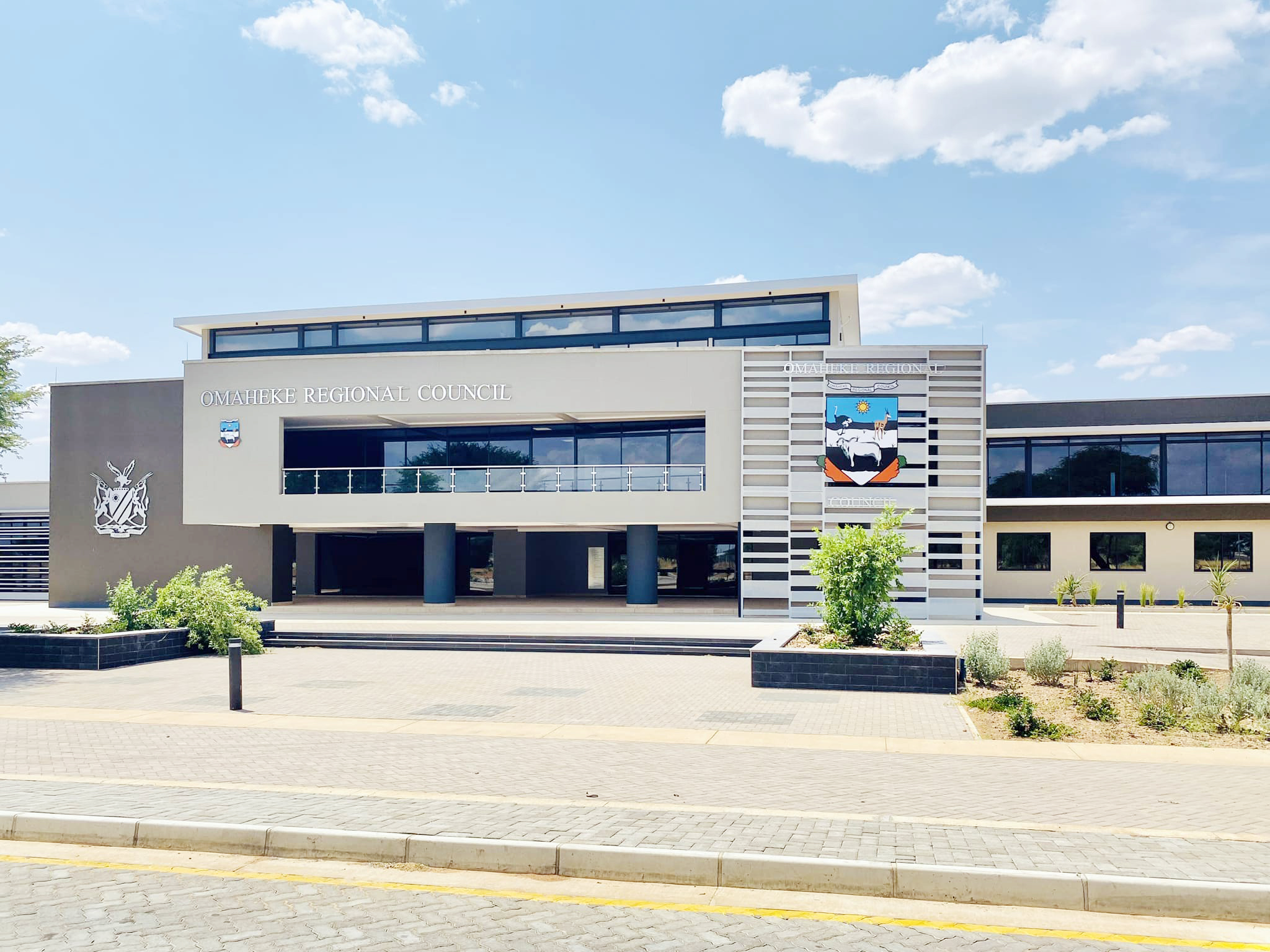

Dormant bank accounts, undisclosed financial statements, missing procurement documents, an unverifiable valuation roll, and lack of important supporting documents were some of the key mishaps that auditor general Junias Kandjeke flagged in an audit report for the Omaheke Regional Council, for the financial years 2021 and 2022.
The report, which was shared with Parliament in March this year for further scrutiny and action, also brought to the fore how the regional council was unable to provide the auditors with a valuation roll or list of the erven for audit purposes and as a result, the auditors could not verify the existence of the erven.
Another issue that Kandjeke raised is the budget allocation of N$581 700 for each of the financial periods under review, which he said was exceeded by N$361 296 in 2021 and N$500 005 in 2022, with the actual expenditure exceeding the budget by 62% in 2022 and 85% in 2021.
“This reflects a clear lack of efficiency, economy, as expenditures far exceeded planned financial limits; and effectiveness, as the funds have been moved from other priority areas. The accounts were submitted later than required by the accounting officer to the Auditor General on 05 June 2024 in terms of Section 40(1) of the Regional Council Act 1992 (Act No. 22 of 1992), instead of three months after the financial year end. The financial statements for the financial years ended 31 March 2023 and 2024 were not yet been submitted at the time of finalising this audit report,” said Kandjeke, who gave the regional council an adverse audit opinion.
An adverse audit opinion states that the financial statements do not present fairly the financial position, results of operations, or cash flows of the entity in conformity with generally accepted accounting principles and norms.
Misrepresented
The auditors also noted that bank accounts held in the name of the regional council with balances amounting to N$3 003 279 and one bank account with an overdraft balance of N$134 142 were confirmed by the respective individual banks but were not disclosed in the council’s financial statements.
The council disclosed a capital project bank account with a favourable balance of N$10 966 628, but confirmations from commercial banks indicate that the bank account is dormant and has a balance of NS3 784, resulting in a difference of N$10 962 844.
During the audit process, the auditors could also not confirm the accuracy of the levies amounting to N$727 298 received during the years under review, due to non-submission of supporting evidence apart from the bank statements.
Furthermore, through inquiries, the auditors noted that the regional council does not recognise the 5% levies from the Local Authorities as incurred, only when payment is effected, and no debtors were raised thereon.
“This contravenes Section 77(1) of the Local Authorities Act No. 23 of 1992 read with Section 33(1) (b) of the Regional Council’s Act No. 22 of 1992, which stipulates that each local authority must transfer 5% of assessment rates levied on all rateable property to the relevant regional council. The auditors were also unable to confirm if the regional council followed the requirements of the Public Procurement Act, 2015 (Act No. 15 of 2015) in its procurement processes as the necessary procurement documents and vouchers amounting to N$1 599 239 in 2021 and N$4 680 281 in 2022 were not provided for audit purposes.”
There were also several discrepancies and errors in the presentation of financial statements for both financial years under review, as notes to the financial statements did not correspond to the information on the face of the financial statements.
The auditors observed that the statement of cashflows as presented by the council did not present fairly the financial cashflows for the periods under review, and it was also discovered that the regional council recorded the purchase of a vehicle valued at N$296 654 in 2022, under “Work-in-Progress” within capital projects.
However, International Public Sector Accounting Standards (IPSAS) specifies that assets should only be classified as work-in-progress if they are under construction or development and not yet ready for their intended use.
It was also found that several bank balances amounting to N$183 632 in 2022 and N$143 689 in 2021 were confirmed by the respective individual banks, but not disclosed in the council’s financial statements, while one bank account appears twice in the financial statements and the balance of N$86 278 does not appear in the bank statement nor was it confirmed by the bank, however was disclosed for both financial periods ended 31 March 2022 and 2021.
The auditors noted material differences of N$39 513 663 for the year 2022 and N$18 464 285 for 2021 in the balances disclosed in the financial statements and the government proof of payments for the financial years under review.
The auditors further found that the council recorded funds received from the Ministry of Urban and Rural Development for capital projects under “Development Fund: Capital Projects”, an equity account, these funds should have been disclosed as revenue from non-exchange transactions in terms of IPSAS.
Revenue from non-exchange transactions requires that such funds be recognized as revenue when control over the resources is obtained; unless conditions exist that defer recognition.
Trade differences
The auditors also pointed out to credit balances on the Trade Receivables Age Analysis amounting to N$1 864 002 in 2022 and N$1 846 002 in 2021, which shows that trade receivables and revenue from municipal services are understated with the amounts indicated. The council also understated trade payables with credit balances of N$8 812 104 in 2022 and N$7 556 770 in 2021.
The audit report also brought to the fore that expenditure vouchers relating to the 2021 period amounting to N$781 551 were not provided for audit purposes, while work-in-progress capital projects vouchers amounting to N$1 695 406 from 2022 were also not provided by regional council for the audit.
The regional council was unable to confirm the accuracy and completeness of the surcharges received amounting to N$291 856 as the council did not provide the breakdown of the transactions and the approved Electricity Control Board tariffs as supporting documents.
Furthermore, the council does not recognise income when incurred and, only when it appears on the bank statement and no debtors were raised, the auditors noted.
“The auditors noted that the council did not capitalise completed projects to Property, Plant and Equipment (PPE) as required by IPSAS, which mandates that completed projects that meet capitalisation criteria should be transferred to PPE to accurately reflect the entity’s asset. Projects valued at N$18 357 854 for the 2021 period, which were closed off during that period, were not transferred to PPE.”
ohembapu@nepc.com.na