
Rudolf Gaiseb
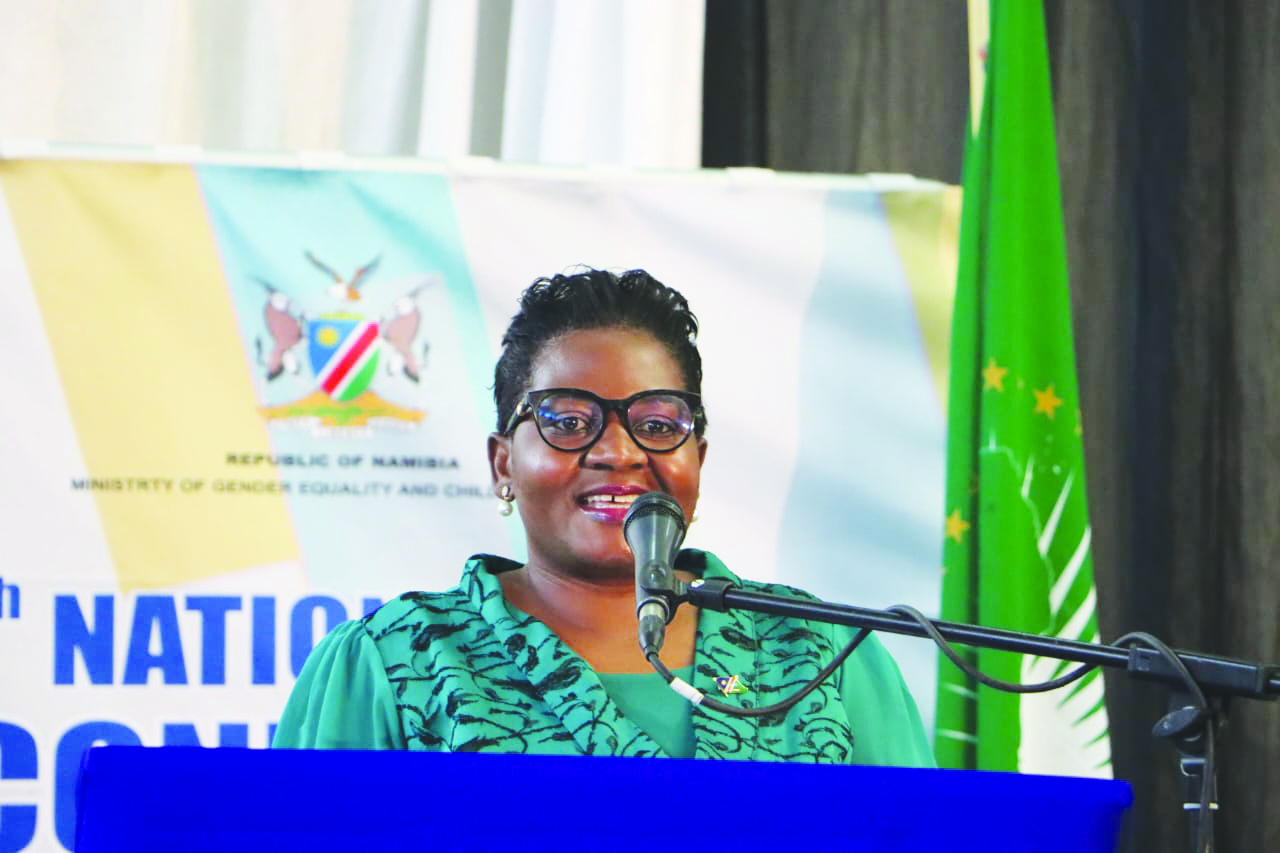
Minister of Gender Equality and Child Welfare Emma Kantema says positive masculinity encourages men to be open, kind, and supportive.
This is while conversations about stress, depression, and burnout are normalised.
The minister was speaking at the men’s conference in Katima Mulilo, Zambezi, on Monday.
Under the theme “Men as Agents of Change: Ending Gender-Based Violence and Building Safer Communities”, Kantema said that GBV in Namibia requires a multi-faceted approach that targets the underlying structural and individual factors.
The factors include deeply entrenched patriarchal norms, high rates of poverty and unemployment, and substance abuse as primary drivers.
“Equality is about men and boys, and it is about women and girls. When people respect each other as equals, workplaces thrive, families become stronger and communities grow more compassionately,” she said. The conference, aimed at celebrating men’s positive contributions to society, family, work, and community, raises awareness on issues of men’s health, mental health, and suicide prevention.
It also raised awareness on legal frameworks to address gender-based violence and promote gender equality, positive masculinity, and male role models among participants.
This, while creating a platform and a safe space for men to engage.
Kantema reminded attendees that women and children remain at the peril of GBV despite recognition that it is deeply wrong and harmful to the nation’s collective development efforts.
“For generations, boys have grown up hearing phrases like ‘be a man,’ ‘do not cry,’ or ‘real men do not show weakness.’ But what do these words really mean? Do they make men stronger, or do they make them hide who they truly are?” she questioned.
The minister urged that challenging these norms starts with awareness and the courage to unlearn what men have been taught and to admit that some beliefs, norms, or attitudes no longer serve men; they may harm them.
In efforts to level the playing field, Namibia has ratified major international and regional instruments aimed at eliminating discrimination and violence against women.
This includes the Convention on the Elimination of All Forms of Discrimination against Women, which states that women must be treated equally to men in all areas of life, such as education, work, health, politics and marriage.
“It requires countries to end discrimination against women, and to enhance equality and equity so that women have the same rights, opportunities, and freedoms as men,” she noted.
Meanwhile, 449 men committed suicide in Namibia in 2023/2024.
This was out of 542 deaths by suicide reported, of which five were girls, eight were boys, and 80 were women.
Oshana region reported the highest rate of 29.9 per 100 000. Zambezi had 16.8 per 100 000 who died by suicide.
Significantly, there are more men in prisons than women in Namibia.
She urged men to seek help, as it lessens these numbers.
“Behind these numbers are real people; fathers, sons, brothers and friends whose lives could be different if we changed stereotyped thinking and held more conversations like the one we are having today,” Kantema added.