


Lylie Joel
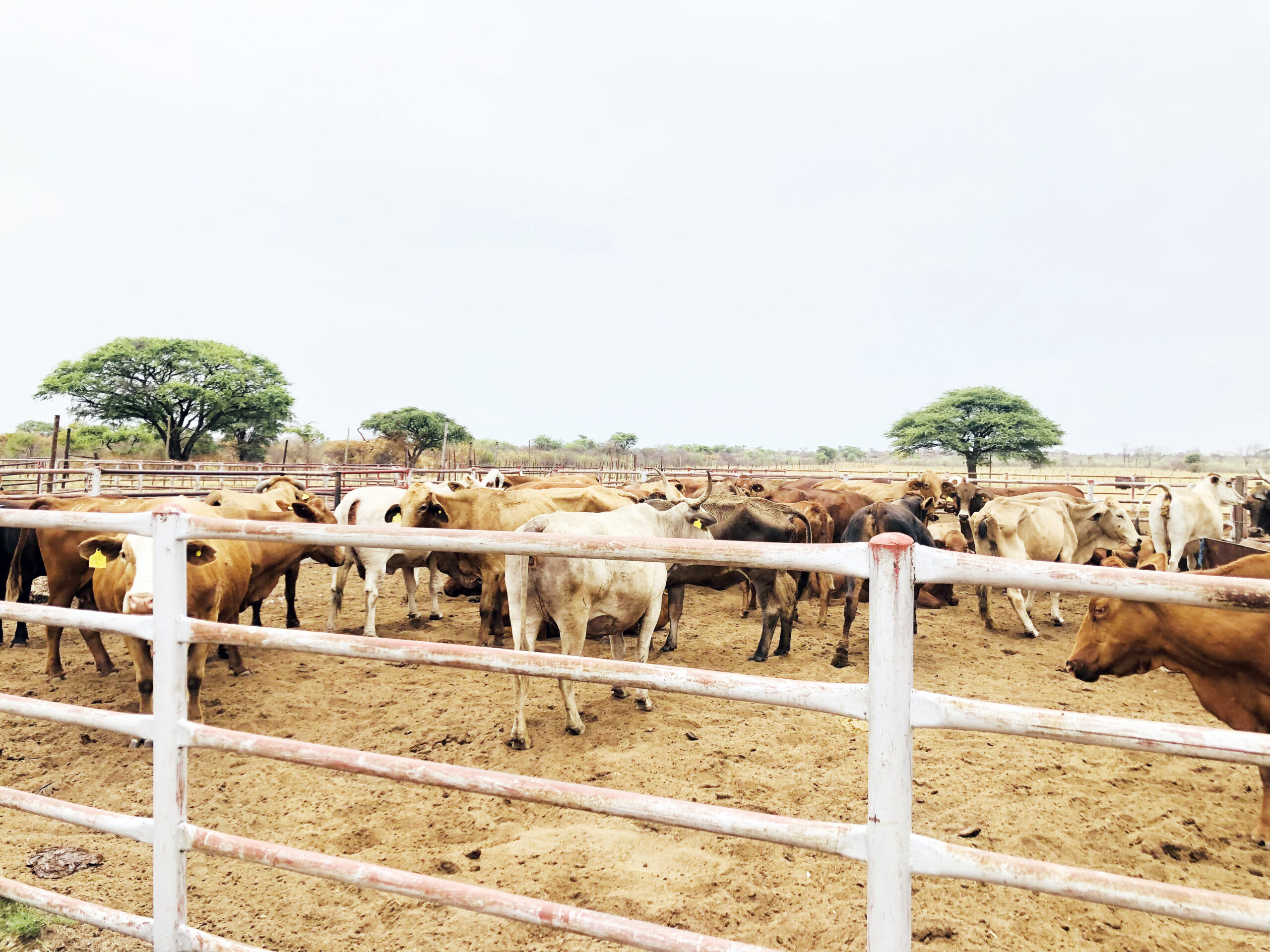
MANGETTI – The Mangetti Kavango Cattle Ranch is writing an ambitious new chapter in agriculture.
The ranch is located in Namibia’s Kavango West region.
It falls under the management of the Namibia Industrial Development Agency (NIDA).
The organisation is working to reverse years of mismanagement, including livestock deaths and financial losses.
This is by implementing new practices and attracting investment to trans form the ranch into a profitable venture.
Covering 223 000 hectares of challenging terrain, the ranch is reimagining cattle farming with a transformative vision that could reshape the industry.
A comprehensive turnaround strategy is being implemented following years of declining performance during which calving rates dropped to critically low levels.
Subdivided into six operational sections, the ranch has a theoretical capacity of 25 000 cattle but currently operates at just one-third of that, with 8 215 head of cattle.
Of greatest concern is the dramatic fall in calving rates, from 17% in 2021 to a devastating 3% in 2022.
There is a modest recovery to 23% currently, which remains well below the industry norm. The farm’s current reality presents a complex blend of opportunity and adversity.
Operations
Mangetti operates as more than just a livestock enterprise.
It serves as a critical economic engine for the region.
Positioned in a surveillance zone bordering the veterinary cordon fence, the operation has withstood unpredictable rainfall patterns and persistent wildlife interference.
The 2024-2025 season brought unexpected fortune, with 801 millimetres of rainfall, nearly double the historical average of 450 millimetres.
This meteorological windfall has energised the ranch’s expansion plans to scale operations to 25 000 head of cattle, positioning the farm as a leading beef enterprise. Mangetti’s genetic strategy centres on two robust breeds: Santa Gertrudis and Brahman, underpinned by a sophisticated production approach.
The farm has transitioned from traditional ox production to a more financially agile system, demonstrating strategic acumen in an increasingly competitive market.
Challenges
Farm manager Walter Sirongo told Nampa that the path forward is filled with significant challenges. “Human-wildlife conflict tops our concerns, with elephants routinely damaging infrastructure and disrupting operations,” he stated. Sirongo has outlined an ambitious N$68 million capital investment plan focused on comprehensive fencing and electrification systems to manage wildlife conflicts and optimise cattle operations, aiming to reach the facility’s full 25 000-head capacity. However, the breeding programme faces critical constraints.
Currently, just 93 bulls service 5 683 cows – a significant deviation from the recommended ratio of one bull per 25 cows.
This imbalance directly affects the calving rate, which remains a concerning 23%, far below the industry standard of 70%. Personnel shortages further compound operational difficulties.
With 77 permanent employees and 48 long-term contract workers spread across a vast property, the farm remains significantly understaffed.
Years of retirements without replacements have created operational gaps, hindering efficiency and productivity.
Housing
Housing represents another pressing issue.
While permanent employees have secured accommodation, temporary workers face precarious living conditions.
“Housing structures were erected for employees, but two sections were left out,” Sirongo said.
This shortage directly impacts livestock management, from breeding to theft prevention.
The proposed transformation requires a substantial capital investment of N$68 million, targeting infrastructure upgrades, logistical improvements and operational expansion.
Key strategies include electrifying productive stock areas, improving internal fencing for effective breeding management and developing alternative revenue streams through feedlot production and biomass management.
In 2024, the farm sold 1 512 cattle, with 953 processed directly through abattoirs and 559 raised in feedlots.
This year has already generated approximately N$4.9 million in revenue from 425 cattle marketed. Located within the Mangetti community and home to over 2 000 residents, the farm’s success carries broader socio-economic implications.
Beyond cattle production, the operation supports local infrastructure, including schools, veterinary services and health facilities.
Management’s vision goes beyond expansion.
Plans include improving calving rates to industry standards, developing robust partnerships and exploring special purpose vehicle (SPV) opportunities for sustainable growth.
Persistent challenges, including stock theft, inadequate infrastructure and logistical inefficiencies, have remained.
Yet, the operator is undeterred, viewing these as opportunities for innovation and strategic redesign.
The housing shortage highlights broader rural development challenges. Without proper accommodation for workers in remote sections, the farm struggles with basic cattle management.
This constraint raises wider concerns about rural infrastructure development and worker welfare in Namibia’s agricultural sector.
Mangetti Farm represents more than an agricultural enterprise.
It embodies the resilience of Namibian agriculture.
By adapting to environmental challenges, leveraging technological innovations and maintaining a long-term vision, the operation offers hope for sustainable livestock farming amidst climate change and economic uncertainties.
The success of their ambitious expansion plans ultimately depends not only on cattle numbers or market access, but on fundamental questions about rural areas’ ability to provide decent living and working conditions for agricultural workers.
Farm managers continue to negotiate everything – from transport allowances to personal protective equipment.
This is all while planning multi-million-dollar infrastructure investments to transform both agricultural productivity and rural livelihoods.
NIDA acting CEO Phillip Namundjebo said the farm is actively seeking investors to develop feedlots, fodder cultivation and biomass production at the ranch to enhance its economic viability.
“We have spent resources in supplementing best practices… We have complemented skills here. As you can see, there’s even managers who are underground trying to help with the planning for the future,” he stated.
He noted that the current cattle population ranges between 5 000 and 10 000.
Namundjebo emphasised that, with a new board and management in place, the farm is being managed entirely differently with “new energy and new best practices”.