

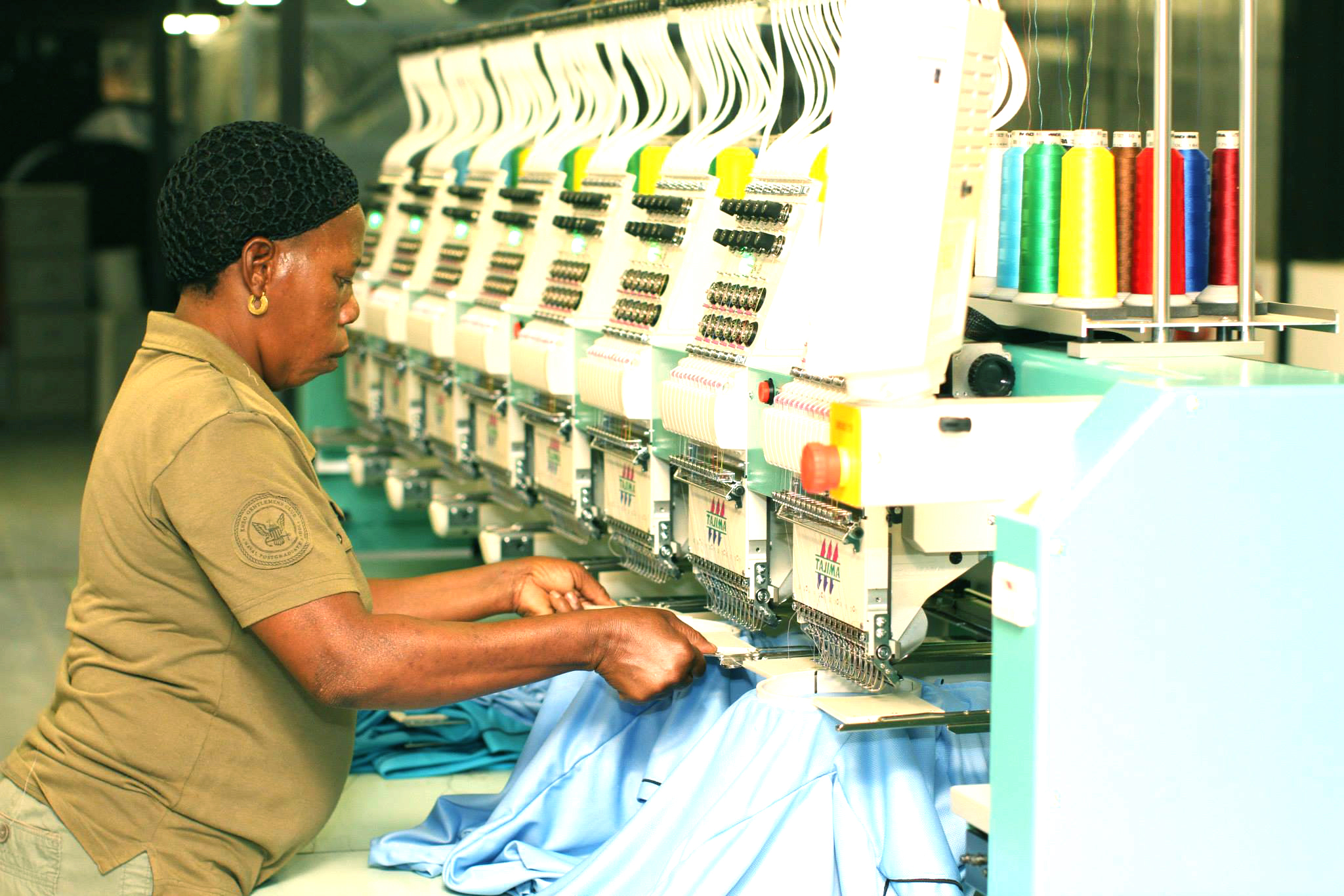

The country’s manufacturing sector is expected to create over 80 000 jobs in the next five years.
Its contribution to the Gross Domestic Product (GDP) will reach 18% during the same period.
These projections and set targets are outlined in the country’s sixth National Development Plan (NDP6), which will serve as the government’s implementation, monitoring and evaluation plan of action from now until 2030.
Under the NDP6, President Netumbo Nandi-Ndaitwah aims to establish sustainable financing programmes for manufacturers by working with financial institutions, including providing low-interest loans, grants and credit guarantee to promote investment in manufacturing.
Through building partnerships with international development finance institutions to attract foreign capital and expertise for both emerging and established manufacturers, Nandi-Ndaitwah aims to increase jobs in that sector from the current 53 491 to over 80 000 by 2030.
“Manufacturing is pivotal to Namibia’s industrialisation agenda , laying the groundwork for sustainable economic development, job creation and economic diversification. The focus is on accelerating Namibia’s transition from a raw material exporter to a producer of high-value goods,” said Nandi-Ndaitwah during the launch of the NDP6.
To achieve the set targets, she explained that promoting investment in industrial infrastructure and ventures, developing value chains, strengthening national quality infrastructure, increasing productive capacity and enhancing capabilities will be of paramount importance.
“The aim is to establish an incentive programme tailored to the needs of the industry. The strategy will include industrial rebates, subsidies and export incentives, which can make manufacturing more attractive. Additionally, developing advanced manufacturing and value chain in key industries, including sectors that can produce complex and sophisticated products, will be undertaken,” the President said.
Key targets
Through the NDP 6 , particularly in relation to economic acceleration and job creation in the manufacturing sector, Nandi- Ndaitwah vowed to accelerate Namibia’s transition from a raw material exporter to a producer of high-value goods.
The sector’s growth has proven to be conducive for economic development, as it is more sustainable and less vulnerable to external shocks, especially when compared to commodity exports.
“It will significantly boost the overall efficiency and productivity of the manufacturing sector, attract both local and foreign investments, and lead to job creation and economic growth. This enhanced infrastructure also creates an appealing environment for the development of advanced manufacturing industries, bringing in modern technologies, fostering innovation and driving sustainable economic growth,” outlined the President.
While the size of the domestic market is small, the potential of the regional markets of its membership, including the Southern African Customs Union (SACU) and the Southern African Development Community (SADC ) , ensures access to a market of over 55 million and 300 million people.
Namibia also has various preferential free trade agreements with several countries, including those in the SADC region.
The country, therefore, has the potential to engage in the production of other manufactured products that are currently not being produced, as this would potentially allow for larger market access for locally produced products.
-ohembapu@nepc.com.na