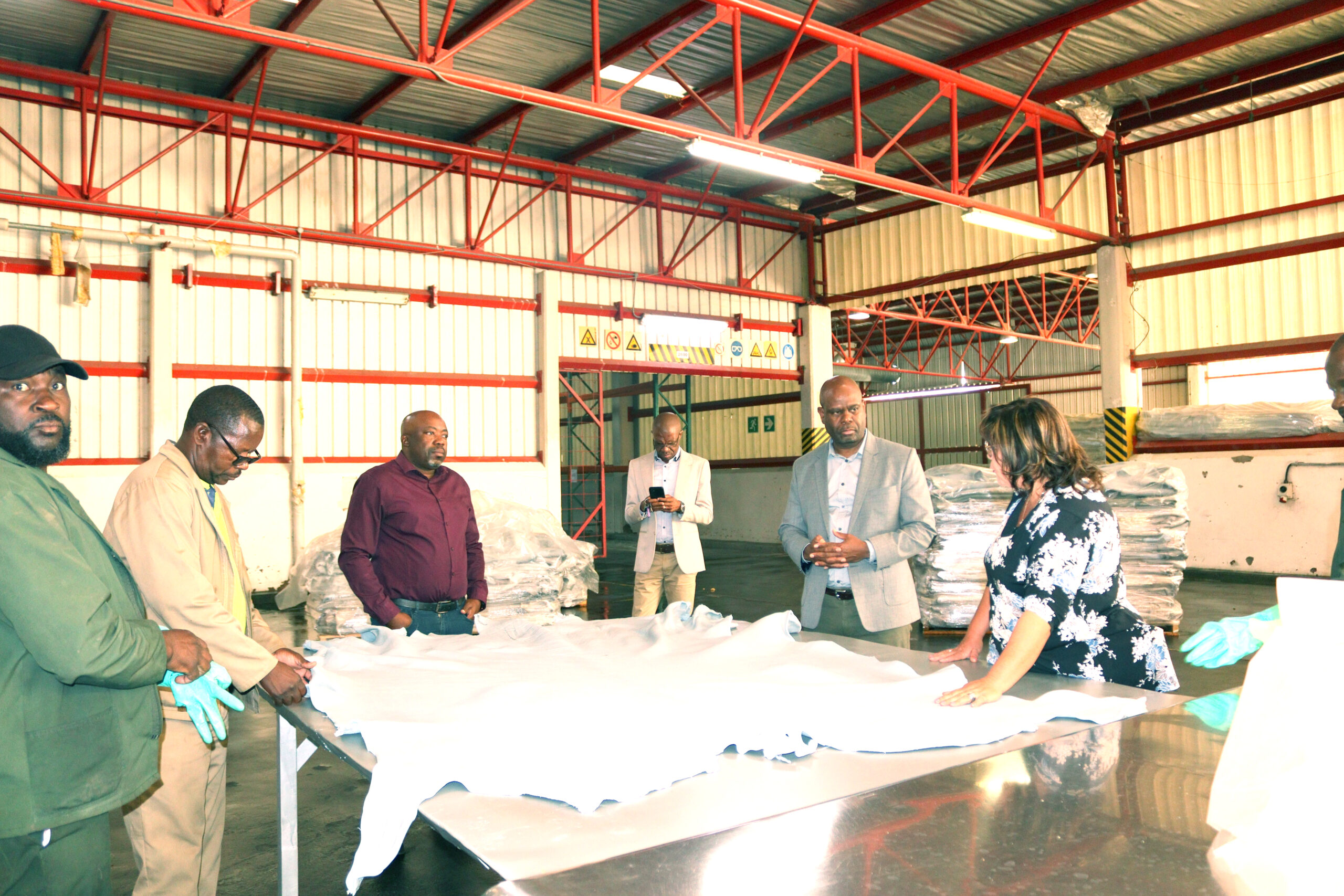

The Meat Corporation of Namibia (Meatco), the country’s largest meat and meat products processing and marketing entity, is set to make a historic breakthrough into the African Continental Free Trade Area (AfCFTA) trading framework with exports to Kenya.
On Thursday this week, Meatco will dispatch two full containers of Wet Blue Hides from its Okapuka Tannery situated some 25km north of Windhoek, to Mombasa, Kenya, in a historic first export under the AfCFTA charter.
Meatco has recently secured a Kenyan client who will process the hides into finished leather on a trial basis. This arrangement will involve the initial shipment undergoing quality verification and being traded under the AfCFTA’s non-tariff provisions.
As part of the trade protocols, the client requires the full declaration of the hides’ country of origin in line with the Certificate of Origin requirements. The consignment will depart for Kenya through the Port of Walvis Bay.
Meatco’s Okapuka Tannery has been operational since 1987 and has utilised an advanced automated process for years, which requires minimal human intervention to transform fresh and salted hides into wet-blue leather.
Wet-blue leather is produced by curing hides in chromium salts, a process that yields durable, flexible, and long-lasting leather products. The tannery source is located in various locations across Namibia, including Meatco and other local abattoirs.
Once processed, these hides are supplied to local entities, such as NAKARA, and exported to international markets in Italy and China.
Expressing his delight with Meatco’s grand entrance into the AfCFTA trading zone, the entity’s CEO, Albertus Aochamub, said the latest development is a significant milestone for both Meatco and Namibia.
He emphasised that Meatco’s entry into the AfCFTA zone will contribute to the practical implementation of a market valued at US$3.4 trillion, representing more than 1.3 billion consumers across the continent.
The African Continental Free Trade Agreement, which has 43 parties and another 11 signatories, is the largest free-trade area by number of member states, after the World Trade Organisation, and the largest in terms of population and geographic size, spanning 1.3 billion people across the world’s second-largest continent.
“There are still logistical challenges that we hope to address swiftly; however, this is a positive step in advancing our intercontinental trade aspirations and expanding the leather value chain within Africa. Our continent is endowed with vast natural resources, and increased intra-African trade will generate wealth for all participating countries,” said Aochamub.
The leather industry in Namibia is intrinsically linked to Meatco’s Okapuka Tannery, as the economic contribution of wet-blue leather to the country’s GDP surpasses that of locally produced value-added leather products – further highlighting its significance as a stand-alone product.
This economic impact highlights the significance of the tannery and its contribution to both the local and global leather markets.
Wet-blue leather represents the initial stage of leather processing and is crucial to the global leather industry, with bovine hides serving as the primary raw material.
Bright future
Aochamub added that he remains highly confident and optimistic about future market opportunities across the continent.
“I hope that more African markets will open up, enabling our hides to reach broader, more competitive markets,” he said.
This industry thrives as a by-product of the livestock sector, producing a range of goods including wet-blue leather, shoes, and exotic leather products.
In addition to its economic contributions, the Okapuka Tannery, through its products, also plays a role in promoting sustainable practices within the leather industry.
By utilising modern automation and efficient processing techniques, the tannery reduces waste and minimises environmental impact.
This commitment to sustainability aligns with global trends in the leather industry, where there is an increasing focus on eco-friendly and socially responsible production methods.
-ohembapu@nepc.com.na