

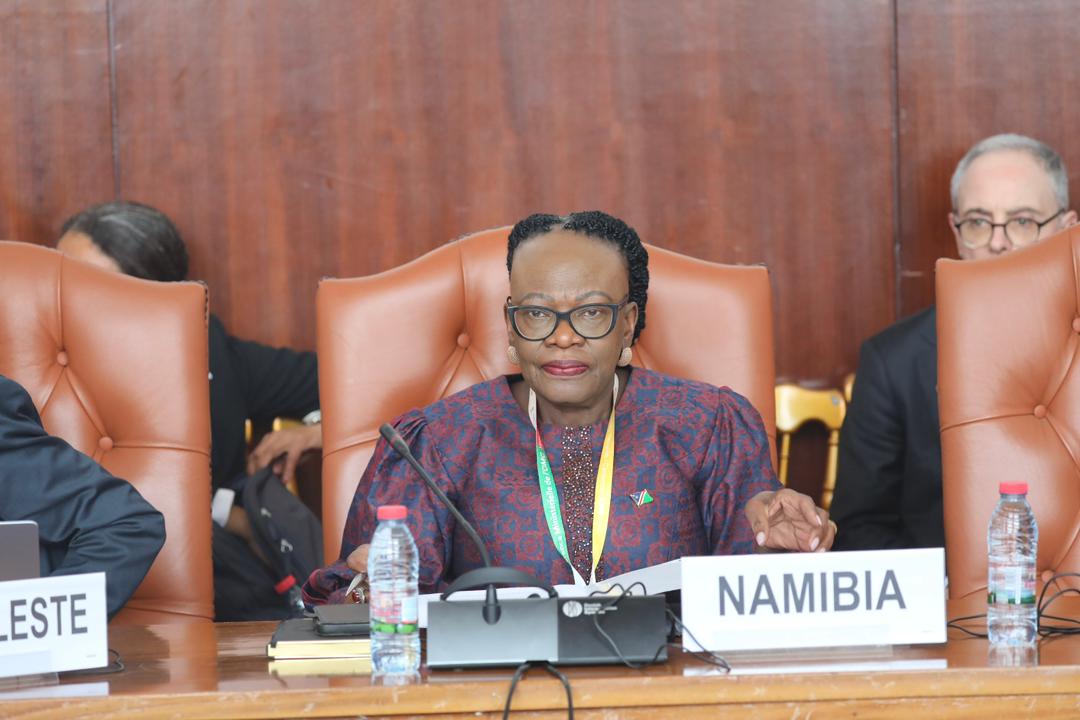

Namibia has placed food security at the centre of high-stakes global trade talks, warning that unfair agricultural rules threaten livelihoods and economic stability in developing countries.
Speaking at the World Trade Organization (WTO) Ministerial Conference MC14 in Yaoundé, Cameroon, international relations and trade minister Selma Ashipala-Musavyi said Namibia is pushing for urgent reforms to global agricultural trade that will allow the country to protect its farmers and secure its food supply.
Agriculture reform has emerged as Namibia’s most urgent concern, with direct implications for livelihoods, jobs and economic stability, the diplomat said.
“Simply put, we are here in Yaoundé to secure outcomes that advance food security, protect livelihoods, and promote fair global trade rules,” she said.
A key demand is maintaining policy space to regulate imports of staple grains such as white maize, mahangu and wheat.
“Namibia seeks to maintain the ability to regulate imports of controlled grains to maintain its local production capacity for these local staple grains,” she said.
The minister highlighted that current global trade rules often disadvantage smaller and developing economies, especially in agriculture, where developed countries continue to provide high subsidies to their farmers.
“Namibia is therefore calling for fairer global rules on subsidies, especially reducing trade-distorting subsidies by developed economies,” Ashipala-Musavyi said.
Beyond farming, Ashipala-Musavyi said food security remains a national priority, especially as Namibia is classified among net food-importing developing countries.
“Namibia further seeks stronger protection from sudden export bans that threaten food supply,” she said.
The sudden restrictions by exporting countries can disrupt supply chains and lead to price shocks, placing vulnerable populations at risk, she continued.
The minister said achieving meaningful agricultural reform at the WTO would go beyond trade and directly improve the lives of ordinary Namibians.
“These outcomes directly benefit Namibia by ensuring sustainable food supply at stable prices, protecting farmers and supporting economic growth and job creation,” she said.
In addition to agriculture, Namibia is also advocating for the restoration of the WTO dispute settlement system, which has been largely inactive in recent years.
She also warned that without a functioning system, smaller economies like Namibia are exposed to unfair trade practices by more powerful nations.
“A functional system protects vulnerable nations against larger economies and provides a legal avenue to resolve disputes without engaging in damaging economic retaliation,” she said.
She stressed that the absence of such a system weakens trust in global trade rules.
“Without a functioning dispute system smaller economies risk being marginalised in global trade, as enforcement becomes dependent on economic power rather than rules,” she said.
Namibia is also participating in the negotiations as part of the African Group, which allows countries on the continent to speak with one voice and strengthen their bargaining power.
“By negotiating as a bloc, Namibia and other African countries increase their collective bargaining power,” she said.
Meanwhile, the minister touched on emerging issues such as digital trade, saying Namibia is pushing for a cautious and development-focused approach.
She supports a two-year extension of the e-commerce moratorium to allow the country time to strengthen its policies and frameworks.
“This would provide valuable time to prepare enabling Namibia to make informed decisions aligned with its development goals,” she said. However, she maintained that agriculture remains the most pressing issue on the table.
Overall, Ashipala-Musavyi said, “Namibia wants an agriculture outcome that prioritises food security and development and not just market access.”