

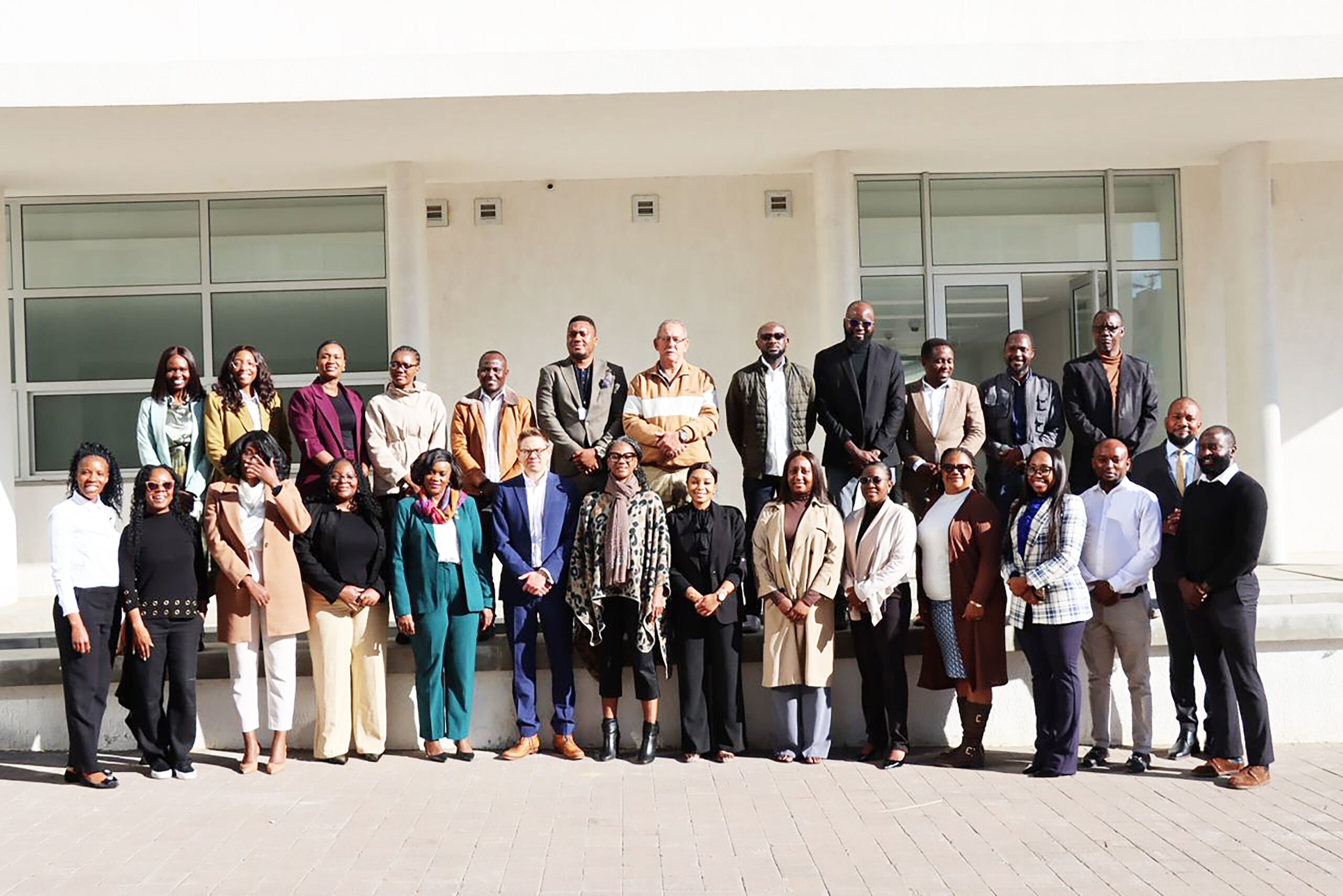

The Namibia Civil Aviation Authority (NCAA), in collaboration with the European Union and the European Union Aviation Safety Agency (EASA), yesterday kicked off a three-day workshop in Windhoek.
It is focused on advancing climate action in the aviation sector.
The meeting addresses key topics, including the Carbon Offsetting and Reduction Scheme for International Aviation (CORSIA), Sustainable Aviation Fuels (SAF), and CORSIA Eligible Fuels (CEF). The initiative forms part of the EU-CORSIA Africa and Caribbean Project, an international effort to enhance technical capacity in CO₂ mitigation among developing states.
Offsetting is an action by a company or individual to compensate for their own emissions by financing a reduction in emissions realised by another party. Offsetting and carbon markets are fundamental to global, regional, and national emissions reduction policies. They have operated for decades for compliance purposes, and for achieving voluntary emissions reductions, and continue to be an effective mechanism to underpin action against climate change, especially in hard-to-abate sectors.
Executive Director of NCAA, Toska Sem noted that, the strategic sustainable aviation is important as Namibia intensifies efforts to align with global climate goals and transition toward green energy solutions.
“This gathering is not merely a technical exchange. It is a strategic opportunity for Namibia to transform international climate commitments into locally actionable frameworks that foster sustainable aviation, green fuel innovation, and energy independence,” she said.
She added that, Namibia has voluntarily participated in the CORSIA scheme since 2017. In 2016, we submitted our first State Action Plan (SAP) to ICAO, demonstrating the intent to take meaningful steps toward aviation decarbonisation.
Over the years, they have worked collaboratively with ICAO, the European Union, and other partners to build national capacity, develop regulations, and improve the policy frameworks.
“In June 2023, the Namibia Civil Aviation Authority (NCAA) recognised the need to identify key implementors which birthed the SAP Steering Committee, composed of representatives from regulators, operators, ministerial agencies, academia, and development partners. I must admit that this committee has become the engine for holistically driving national action on environmental protection more specially in aviation,” she said.
Sem further said, the country has made substantial progress. Namibia joined the ICAO Assistance, Capacity building and Training for Sustainable Aviation Fuel acronym/alias ACT-SAF programme in June 2024, participated in the development of a continental SAF strategy under the African Union, hosted with the same EU-CORSIA Project SAP and CORSIA national trainings, and policy review sessions especially aligned with the National Transport Policy 2025–2035.
“We are all aware that Namibia is blessed with rich renewable energy resources ranging from solar, wind and biomass. The government has already declared green hydrogen a strategic pillar for national development. Sustainable aviation fuel production is a natural extension of that vision,” she said.
The Carbon Offsetting and Reduction Scheme for International Aviation (CORSIA) is the first global market-based scheme that applies to a sector. It complements other aviation in-sector emissions reductions efforts such as technological innovations, operational improvements and sustainable aviation fuels to meet the ICAO aspirational goal of carbon neutral growth.
-pmukokobi@nepc.com.na