


Rudolf Gaiseb
LUSAKA – Associate Dean of the School of Agriculture and Fisheries Sciences at the University of Namibia, Simon Angombe, said Namibia has launched a five-year Tripartite One Health National Strategy to address the country’s vulnerability to zoonotic diseases.
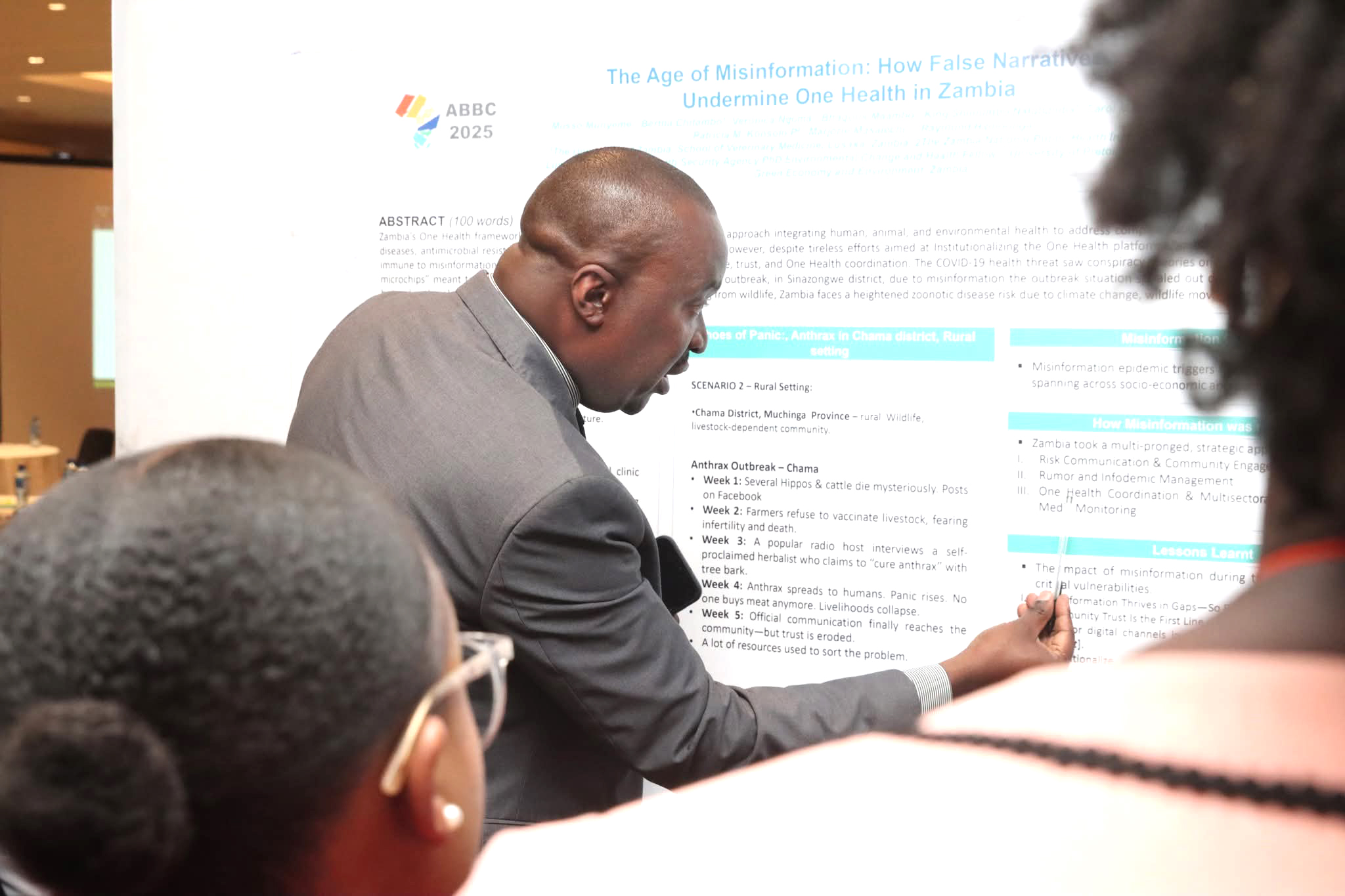
Speaking at the Africa Biennial Biosciences Communication symposium that took place 26 to 28 August 2025 in Lusaka, Zambia, Angombe highlighted that the event pushed for inclusivity, independence, and transdisciplinary collaboration to make One Health more relevant to African realities. The initiative is aimed at ensuring that the continent retains ownership of research, funding, and solutions to its health and environmental challenges.
Namibia emerged as a model for African states taking ownership of One Health. Angombe said the strategy was developed in collaboration with the ministries of Health and Social Services, Environment, Forestry and Tourism, and Agriculture, Water and Land Reform, alongside development partners such as FAO and WHO. It focuses on solutions to frequent health and environmental challenges, compounded by climate change.
“The strategy promotes healthy ecosystems to reduce the risks and impacts of emerging health threats at the human, animal, plant, and environment interface,” he said.
“Launching the Tripartite One Health strategy is a step forward in breaking silos in Africa. It adds a voice to the continent in working together on One Health.”
Angombe also highlighted Namibia’s development of One Health curricula in schools and universities. Introducing the concept at an early stage, he argued, helps build a generation that understands the interconnectedness of human, animal, and environmental health. “When you have that infusion early, you can achieve the goals set for One Health in Africa and at the country level,” he said. He acknowledged that while global partnerships remain important, the tripartite strategy reflects a deliberate step towards decolonising One Health and aligning it with national priorities.
Colonial legacies persist
Other African experts warned that colonial practices continue to shape outbreak responses. Professor Salome Bukachi from Nairobi University, pointed to forced evictions, patient isolations, and radical environmental interventions during the Sleeping Sickness epidemics of the 1900s, which resurfaced during Covid-19 lockdowns. She called for recognition of indigenous knowledge systems to make interventions socially and culturally relevant
Way forward
The symposium, themed “The War on Science: How Can We Overcome the Burden of Misinformation and Disinformation?”, emphasised that One Health can only succeed if Africans drive the agenda. Namibia’s tripartite strategy, curriculum development, and inter-ministerial collaboration signal a commitment to building a system that is both locally owned and globally connected.
Experts agreed that One Health offers opportunities to strengthen ecosystems, improve livelihoods, and prevent future outbreaks.
Success depends on governments funding their own research, decolonising education, and recognising local knowledge systems.
As Angombe noted, Namibia’s efforts are not only breaking silos at home but also contributing to Africa’s collective voice in shaping a One Health model that reflects the continent’s unique realities.
–rrgaiseb@gmail.com