


Namibian hospitals currently have about 300 vials of snake antivenom in stock, providing crucial relief amid a wider African shortage of the life-saving treatment.
Thanks to local efforts and imports, Namibia has avoided the crisis faced by other countries like Kenya, which is struggling to meet its needs for at least 100,000 vials. While Namibia’s supply is limited, it is stable, compared to other regions suffering severe shortages.
The African anti-venom crisis began in 2015 when French pharmaceutical company Sanofi Pasteur ceased production of its highly effective antivenom in favour of rabies’
treatments.
This withdrawal placed pressure on South African producers, who later failed a World Health Organisation (WHO) audit around 2019, further deepening the crisis.
In response, Namibian stakeholders partnered with Premium Serums, an Indian company, in 2021 to import antivenom currently used across several African nations including Zambia, Kenya and South Africa.
Despite this progress, Namibia still lacks effective anti-venom for scorpion stings, a growing concern.
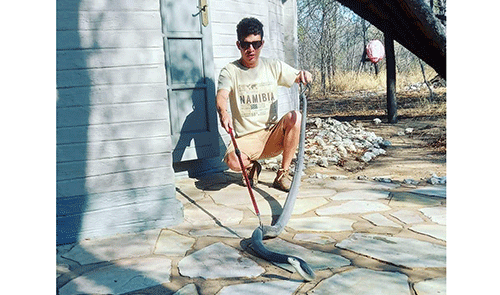
“We have a bottleneck with scorpion antivenom, and the Indian product doesn’t treat those stings effectively,” said local snake catcher Francois Theart.
In addition to securing the anti-venom supply, Namibia has implemented national snakebite treatment guidelines shared with hospitals to standardise care.
Theart emphasised that snakebite is a public health issue disproportionately affecting marginalised groups such as agricultural workers. He called for stronger government involvement, highlighting Eswatini’s success, where collaborative efforts between private organisations and the Ministry of Health have reduced snakebite deaths to zero in 2024.
The global burden of snakebites remains high. The WHO stated that up to 138,000 people die and 400,000 suffer permanent disabilities from snakebites each year, though the true figures may be much higher due to under-reporting.
Antivenom treatments, when available, can cost between US$250 and US$500 per dose—often out of reach for vulnerable populations.
A 2015 report by Doctors Without Borders warned that the world was nearing a shortage of effective antivenom, placing millions at risk in developing nations.