

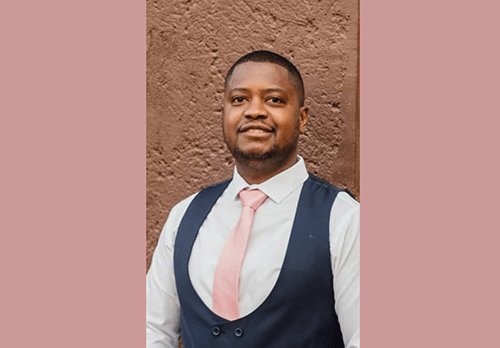

Namibia has reached a major milestone in its health sector with the qualification of the country’s first orthopaedic surgeon specialist fully trained in the country, marking a breakthrough for local medical training and patient care.
The specialist, who was born and raised in Windhoek, completed his entire orthopedic training in Namibian public hospitals under Namibian consultants before passing the College of Surgeons of East, Central and Southern Africa (COSECSA) fellowship examination in 2024.
For many years, Namibia depended heavily on foreign-trained specialists or sent doctors abroad for advanced training.
Hence, the achievement of Dr Hafeni Undari (40) shows that the country’s health system is now capable of producing high-level specialists locally, using its own institutions and expertise.
“This is not just a personal achievement, but a national milestone. It proves that Namibia can train specialists who meet international standards right here at home,” the surgeon said.
The Windhoek-born doctor has become the first orthopedic surgeon to complete full specialist training entirely within Namibia.
The specialist’s journey began in Windhoek, where he attended Mandume Primary School, Namutoni Primary School and Jan Jonker Afrikaner Secondary School.
After completing school, Dr Undari was given an opportunity by Mediclinic to train as a professional nurse in South Africa.
He later worked as a theatre nurse, where he was exposed to surgical care and orthopedic procedures. “Seeing how surgery restores movement and dignity to patients inspired me to study medicine,” he said
In 2011, Dr Undari joined the University of Namibia’s School of Medicine.
After qualifying as a doctor, he completed his internship at Oshakati Intermediate Hospital, and later worked as a medical officer before joining the orthopedic department.
His specialist training took place across Oshakati Intermediate Hospital, Katutura Intermediate Hospital and Windhoek Central Hospital, where he gained experience in trauma, reconstructive surgery and joint conditions. Dr Undari’s journey, spanning from theatre nurse to medical student to specialist surgeon, marks a milestone for the country’s healthcare system and offers hope for thousands of patients with bone and joint conditions.
He said the road to specialisation was not easy. The surgeon said Namibia’s postgraduate specialist training system is still developing, which made the process challenging.
“There were times when I had to balance heavy service delivery demands with strict training requirements,” Dr Undari stated.
He said there was also resistance and doubt when the COSECSA programme was still new in Namibia, similar to what the University of Namibia faced in its early years.
Despite these challenges, he pushed through with the support of mentors, family and colleagues.
Dr Undari credited senior orthopedic surgeons and hospital departments in Oshakati, Katutura and Windhoek for believing in him and supporting his training
He completed his orthopaedic training through the COSECSA with rotations across Oshakati, Katutura and Windhoek Central hospitals. The final fellowship examination was held in Burundi in 2024, where he represented Namibia as the only candidate.
“I feel deeply honoured. For years, Namibia relied on foreign-trained specialists or sent doctors abroad. Completing my full training locally shows that we can produce specialists who meet international standards,” Dr Undari said. After high school, he trained as a professional nurse in South Africa and later worked as a theatre nurse.
Those early experiences exposed him to the transformative power of surgical care and inspired him to pursue medicine.
In 2011, Dr Undari joined the University of Namibia School of Medicine, completing internships and rotations in obstetrics and gynaecology before specialising in orthopedics.
His registrar training exposed him to trauma cases, joint pathology and reconstructive surgery across Namibia’s hospitals. The journey was far from easy.
“Our health system is still evolving, especially regarding postgraduate fellowship training. Balancing the responsibilities of a medical officer and a registrar was demanding. There were moments of resistance and criticism, but I stayed focused on the goal. As the African proverb says, ‘You cannot climb a ladder with your hands in your pockets,” Dr Undari said.
The specialist credited his mentors, family and faith for helping him persevere.
“I could not have completed this journey without the guidance of Dr C. Mbangtang, Dr A. Voigt and the orthopedic departments at Oshakati, Katutura and Windhoek Central hospitals,” he said.
Impact
Orthopedic conditions are among the leading causes of disability in Namibia. Having locally trained specialists means patients can access timely, high-quality care without the financial and logistical burdens of travelling abroad.
Dr Undari hopes to strengthen orthopaedic services in regional and national referral hospitals, ensuring rural communities receive specialist care closer to home.
Namibia currently has only one fully trained orthopedic spine surgeon in the state sector.
The surgeon is now preparing to begin a two-year spine fellowship under Namibia’s only state-sector orthopedic spine surgeon, Dr A. Van der Horst, at the Windhoek Central Hospital.
Dr Undari’s long-term goal is to support training, mentorship and capacity building to expand orthopedic services nationwide.
“By training specialists within Namibia, we reduce the need for patients to seek care abroad and improve continuity of care. Our hospitals become stronger, and the benefits reach every corner of the country,” Dr Undari said. Once completed, he plans to serve in national and regional referral hospitals, with a long-term goal of decentralising specialist orthopedic services so that patients in rural and underserved areas can access care closer to home.
“I want to help build a strong, sustainable orthopedic service for Namibia and support the training of future specialists,” he said. The surgeon also shared a message of encouragement to young people from humble backgrounds. “Your background does not limit your future. Believe in yourself, work hard and seek mentors who support you,” he said, adding that his own journey proves that success is possible despite challenges.
-ljason@nepc.com.na