


Rudolf Gaiseb
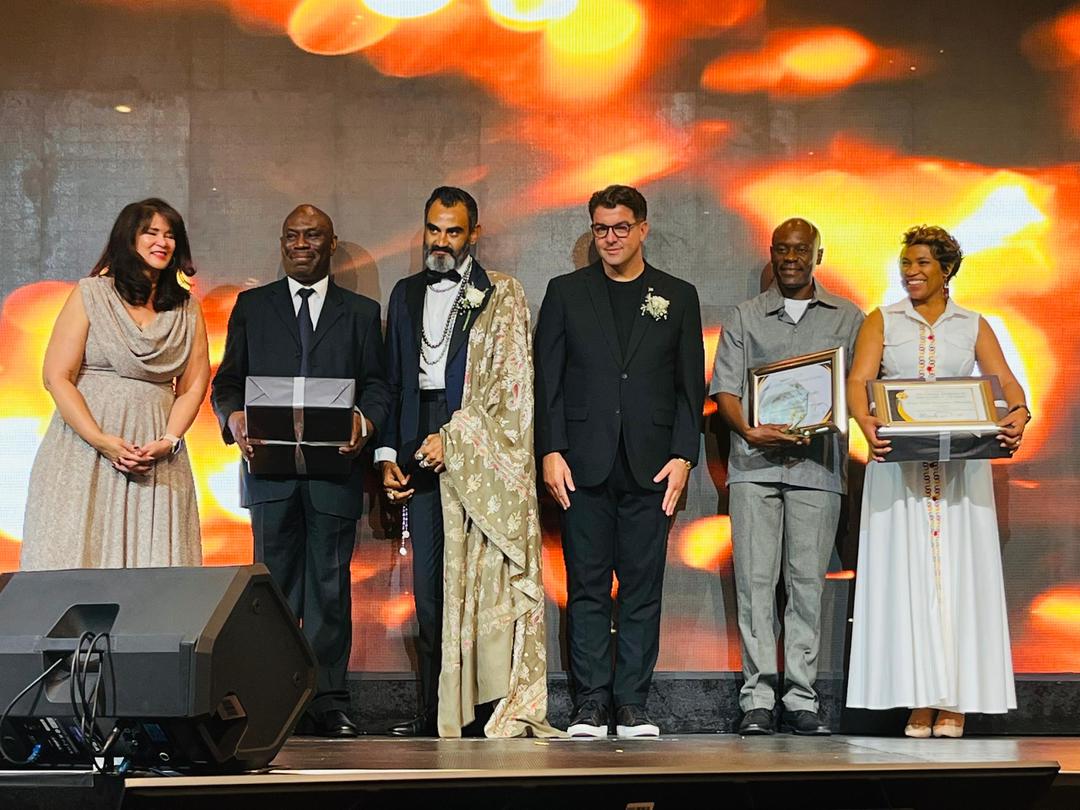
The National Commission on Research Science and Technology awarded some of its best researchers at the National Research Excellence Awards 2026 over the weekend in Windhoek.
The purpose of these awards was to promote and raise awareness of the critical role that research and innovation play in the socio-economic prosperity of Namibia by appreciating the contributions of researchers.
Speaking at the award ceremony on Saturday evening, deputy minister of education, innovation, youth, sport, arts, and culture Dino Ballotti said that the ministry will continue to support NCRST for it to fulfil its mandate.
“Research does not happen by chance. It is supported by deliberate policy choices, and it is sustained by investment. It is strengthened by institutions that provide direction, coordination and oversight. It is through these systems that researchers are able to do their work. Across the world, countries that have advanced in science and innovation have done so through strong policy frameworks and consistent implementation,” he said.
Balloti highlighted that in an era of artificial intelligence, research continues to thrive and must not exist in isolation.
Meanwhile, it was also noted that over the past decade NCRST has been able to attract external funding to award research grants at universities.
The number of postgraduate research outputs from Namibian institutions has steadily increased, while the number of research publications has also increased.
On the evening, NCRST CEO Anicia Peters said the Commission remains committed to strengthening the national research system.
“Research is the foundation upon which progress is built. It informs policy, drives innovation, strengthens economies and improves lives. As a country, we recognise that our future depends on our ability to generate knowledge and apply it effectively. This is why platforms such as the National Research Excellence Awards are important. They allow us to recognise excellence, inspire others and reaffirm our commitment to building a strong research culture,” she said.
The awardees receive certificates, trophies and prize money between N$10 000 and N$20 000.
Leading South African microbiologist and the Head of Pathology School at the University of the Witwatersrand (Wits), Bavesh Davandra Kana also spoke at the event.
He noted that Namibia sits in a region that carries some of the world’s most urgent problems and some of its most extraordinary human potential.
“The people closest to the problems are often furthest from the resources needed to solve them,” he said.
He said Namibia is an integral player in the global knowledge economy, equipped with stable institutions, trained researchers, and valuable natural resources that necessitate responsible scientific development. The NCRST acknowledges research as a vital national asset.
The winners
In this year’s awards, while there are twelve official categories, two did not receive nominations. The NCRST awards both male and female awardees in selected categories, as well as individuals and institutions where appropriate.
The Lifetime Achievement in Research Award was scooped by Laura Lee Marker. This award recognised an individual with a long-standing career of exceptional contribution to Namibia’s research ecosystem.
The Best Student Researcher Award (Master’s or PhD), best female, was won by Lydia Eloff. This award rewards exceptional student-led research aligned with Namibia’s priority needs. Immanuel Shipanga was awarded in the same category as the best male.
The Mid-career Researcher of the Year Award for best male went to Asa Romeo Asa and for best female, Rosewitha Mahale. This award honours individuals with outstanding, high-impact research contributing to national development.
The Community Impact Research Award goes to Selma Lendelvo. This award acknowledges research that directly improves communities, mainly rural or marginalised areas.
The Senior Researcher of the Year Award went to Dipti Sahu. This award honours an individual with outstanding, high-impact research contributing to national development.
The Early Career Researcher Award was bagged by Albertina Shatri. The award recognises early-career researchers showing strong potential and innovative contributions.
The Science Communication and Public Engagement Award was awarded to the Namibia Scientific Society as the best institution and to Floyd Pejarukani Tjituka as the best individual. This award celebrates journalists or media houses that effectively communicate science to the public.
Research for the Policy Influence Award was bagged by Davis Mumbengegwi. It honours research that has meaningfully shaped government policy, regulation or planning.
The Innovation and Technology Development Award went to the best individual in the category, Emmanuel Nepolo, and the best institution in the category, Namibia University of Science and Technology.
The Collaborative Research Excellence Award went to Kassian Amesho.
In addition to the awards, three outstanding students were also recognised with scholarships for a master’s and a PhD to support their academic journeys, namely Janet Haufiku, Mahupe Hamutenya and Loide Amupala.