

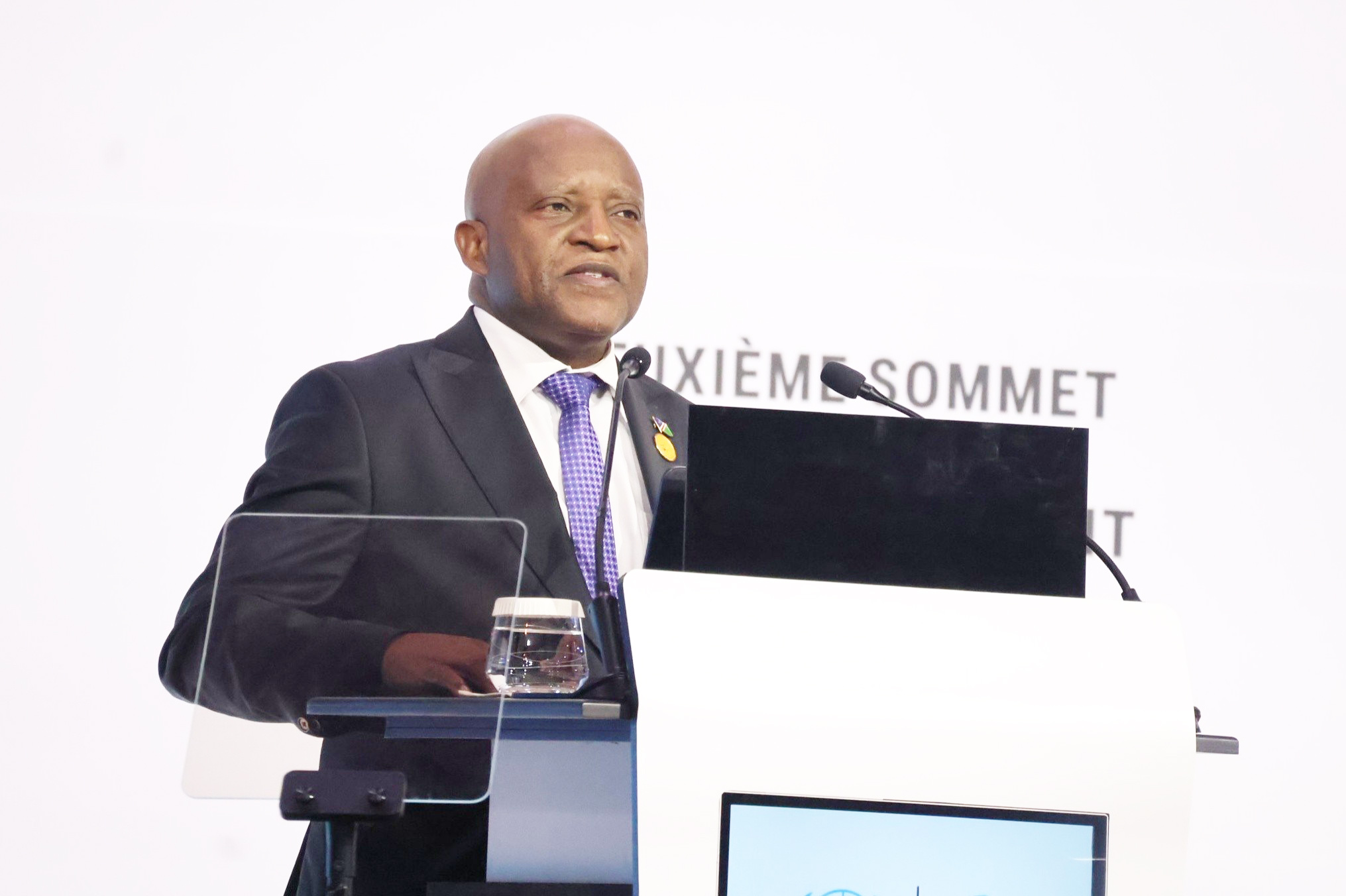

For the world, especially governments in the global south, to achieve social justice, eradicate poverty, improve service delivery and accelerate development, a renewed, unusual and cohesive way of doing things must become the new norm, Prime Minister Elijah Ngurare told a gathering in Doha, Qatar.
Ngurare was speaking at this week’s Second World Summit for Social Development in the Qatari capital, where he said that this year’s summit presents a unique opportunity for governments and global partners to recommit and better reposition themselves to address ‘present social challenges’ that impede the attainment of the Sustainable Development Goals (SDG’s).
“According to the 2025 World Social Report, 30 years after the inaugural World Summit on Social Development in Copenhagen in 1995, the world has not progressed sufficiently in the eradication of poverty, the attainment of decent work for all, the reduction of inequality, and the realisation of other SDG’s by 2030.
This reflection should be undertaken through a robust yet comprehensive approach,” said Ngurare.
The Prime Minister told the audience that when it comes to matters of social justice, poverty and service delivery, Namibia is determined to elevate the lives of its citizens through President Netumbo Nandi-Ndaitwah’s clarion call that “we are too few to be poor” and that the delivery of service to the people must be done through a “business unusual” approach.
“This must be done ethically, and no public servant or public office bearer should solicit or accept bribes in order to render such services. President Nandi-Ndaitwah, therefore, advocates for practical interventions to eradicate poverty and appeals to the collective conscience of all to do the same,” he stated.
Local context
In the context of the summit, Ngurare said that Namibia’s developmental trajectory is centred on ‘Unity in Diversity, Natural Resource Beneficiation, and Youth Empowerment for Sustainable Development’, an approach which encompasses priorities such as sustainable agriculture, quality education, health for all, decent housing, sustainable energy, tourism,
and modern infrastructure in line with the recently launched 6th National Development Plan (NDP6).
“Since independence in 1990, the government has made education and health as priority above all priorities, thus having the highest budget allocation including now in 2025/2026 financial year. In addition, Namibia has adopted the Social Protection Policy (SPP) 2021-2030, which provides a robust framework for a coherent, consistent, effective, and efficient social protection system,” he shared.
Besides aiming to address long-term poverty and lifecycle vulnerabilities, the Policy seeks to strengthen institutions in building resilience and preparedness to respond to sudden or severe crises that may impact many households simultaneously.
“Finally, Namibia reaffirms its commitment to people-centred development and respect for multilateral engagements in shaping the global discourses on social and economic development. This commitment is manifested within the framework of three pillars of the just adopted Doha Political Declaration: poverty eradication, full employment, and social integration,” he said.
“For us in Namibia, this means we must strive for rural development, informal settlement development, enough food for all, water and sanitation for all, decent work for all, road and telecommunication infrastructure in all parts of the country,” Ngurare said. – ohembapu@nepc.com.na