


Taimi Haihambo
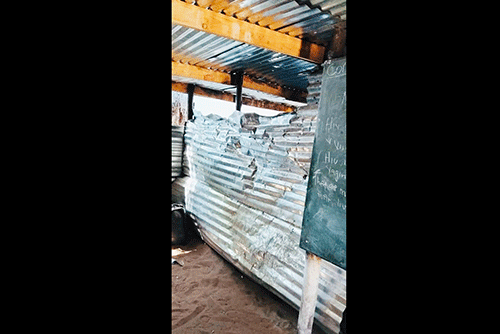
Deep in the rural settlement of the Okongo area in the Ohangwena region stands the Shatipamba Combined School, a facility in a severe state of disrepair.
From crumbling shacks to classrooms without doors or windows, learners are forced to endure the cold in winter and seek shelter in corners to avoid rainwater from flooding the rooms.
Relief teacher at the school Sevelinus Hamutenya recalled the daily challenges of working in such conditions, even sharing classrooms with goats and cows.
“One day, I left my lesson plans and documents in class, planning to continue the next day. To my shock, I found the papers eaten by goats that had simply wandered in,” he said.
Lina Vilho, a teacher from the same school, described the school as being in an alarming state, with no proper staff room.
Educators have been using an old military tent, which has now worn out and offers no protection against rain, wind, dust, cold or even extreme heat.
“With the tent no longer usable, we are squeezed into three tiny storerooms, with four teachers in one small space.
“Our life skills teacher is forced to counsel learners under a tree, an uncomfortable and exposed setting,” she said.
Once among the best-performing schools in the area, Shatipamba’s standards have dropped.
Teachers and learners attribute this to the school’s unsafe and unconducive learning environment.
Additionally, teachers cannot leave learning aids or posters in classrooms, as strong winds blow them away.
Corrugated iron sheets often loosen, posing a risk of injury to learners.
Furthermore, the school lacks electricity in most classrooms, which are not built to support electrification.
During cloudy, rainy days, rooms become so dark that learners cannot see the chalkboard.
In addition, the pounding of rain on iron roofs makes it impossible to hear lessons.
Regional education director Isak Hamatwi is aware of the dire situation.
“I went an extra mile to pledge donations toward a building currently under construction at that school, with support from community members,” he said.
He added that government development funds are insufficient to address every school in such a state.
Hamatwi noted that the education ministry is aware of the problem – it has been officially reported.