


Auleria Wakudumo
The Omusati Regional Council has announced the designation of regional councillors to oversee and coordinate line ministry programmes in the region.
This is to strengthen service delivery, accountability and effective implementation of government initiatives.
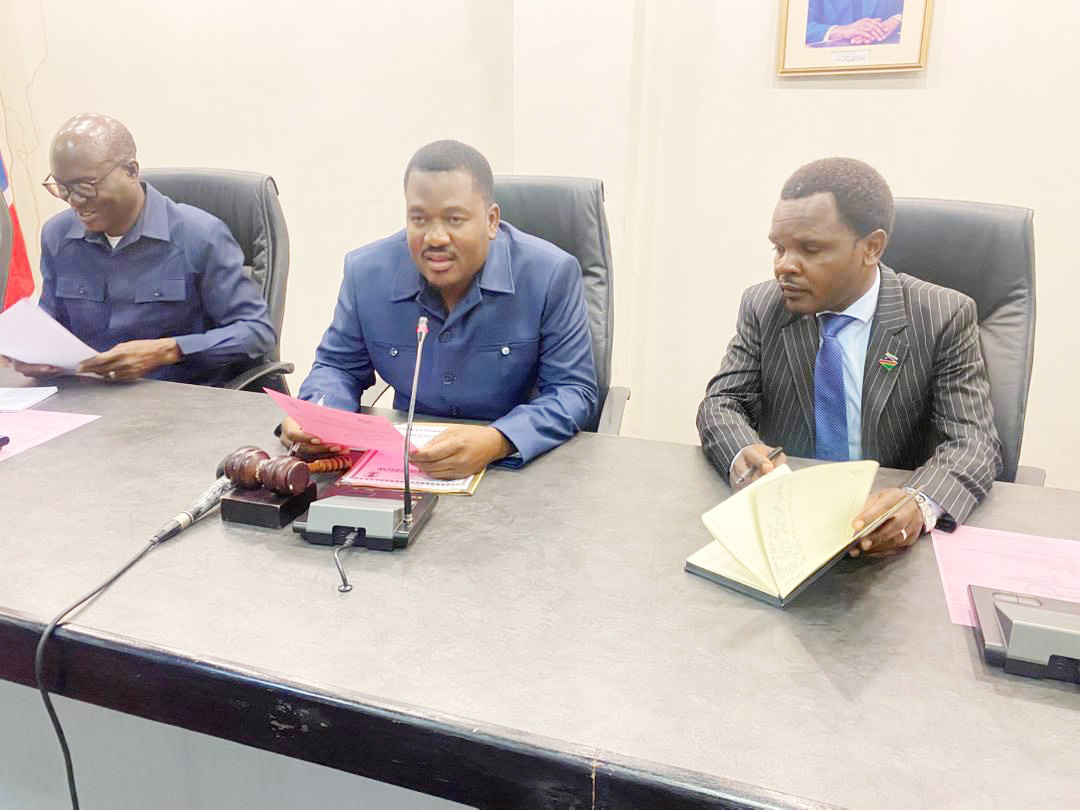
The announcement was made on Friday, during the official opening of the regional council’s sessions for 2026 in Outapi. Councillors will oversee line ministry programmes in the region for the 2025-2030 period.
Matheus Gabriel of the Oshikuku constituency was assigned the responsibility of the Ministry of International Relations and Trade and the Ministry of Finance.
Meanwhile, Irja Nangombe of te Otamanzi constituency was designated to oversee the Ministry of Home Affairs, Immigration, Safety and Security.
The Ministry of Agriculture, Fisheries, Water and Land Reform, together with the Judiciary, will fall under the purview of the Outapi constituency councillor Selma Asino.
Fabianus Paulus of the Ruacana constituency was assigned the Ministry of Justice and Labour Relations, while Laurentius Iipinge of the Okalongo constituency will oversee the Ministry of Industries, Mines and Energy.
Lysias Tomas of the Elim constituency was designated to oversee the Ministry of Works and Transport, while the Ministry of Health and Social Services will be under the stewardship of Junias Amunkele of the Tsandi constituency.
Festus Petrus of the Onesi constituency was assigned responsibility for the Ministry of Gender Equality and Child Welfare. In addition, Daniel Iilende of the Ogongo constituency will oversee the office of the President, the office of the Prime Minister, and the Ministry of Urban and Rural Development.
Hans Haikali of the Etayi constituency was designated to oversee the Ministry of Education, Innovation, Youth, Sport, Arts and Culture. Absalom Festus of the Anamulenge constituency was assigned responsibility for the National Planning Commission, while Leonard Shikulo of the Okahao constituency will oversee the Ministry of Defence and Veterans Affairs.
The chairperson of the management committee, Daniel Iilende, said the assignment of councillors to line ministries is aimed at improving coordination between political leadership, administrators and implementing agencies, while ensuring that government programmes respond directly to the needs of communities.
He said the move comes at a critical time as the region enters a new phase of development guided by Vision 2030, the National Development Plan (NDP) and the Swapo Party Election Manifesto.
“These are not merely policy documents, but a social contract with our people. The focus must now shift from planning to implementation, from intention to measurable impact,” Iilende said.
Iilende highlighted the importance of collaboration amongst regional councils, local authorities, traditional leaders and the private sector, noting that effective development cannot be achieved in isolation.
He urged councillors overseeing line ministries to pay particular attention to pressing challenges such as rural water shortages, disaster management, fire outbreaks and infrastructure development, citing a recent fire incident that spread from Etosha National Park as an example of issues requiring coordinated responses.
The chairperson further called on the business community to continue playing its role in socio-economic development and job creation, while reiterating the government’s commitment to creating a conducive environment for private sector growth.
Iilende said that the regional council will prioritise development initiatives in infrastructure, water and sanitation, education, health, youth empowerment, food security and economic diversification.
He noted that the region has received good early rainfall and encouraged farmers to intensify food production to strengthen household and national food security.
– awakudumo@nepc.com.na