


The issue of climate change and its associated impacts, especially on African cities, is a critical topic that demands urgent attention.
Every day, Africa faces the consequences of something it did not cause. While 7 out of the 10 world most climate vulnerable countries are in the African region, Africa only emits about 4% of greenhouse gases, and in terms of historical contributions, the content ranks even lower – according to World Meteorological Organization’s State of the Global Climate report 2022.
Heatwaves, heavy rains, floods, tropical cyclones, and prolonged droughts, which are some of the effects of climate change, are having devastating impacts on communities and economies, with increasing numbers of people at risk across the continent. Africa’s rapidly expanding cities are hotspots of this vulnerability and impact.
According to the OECD report, Africa is one of the world’s least urbanised continents, yet hosts the most rapidly urbanising region – the Sub-Saharan Africa (SSA). The region has an urban population of 500 million people, accounting for approximately 40% of the continent’s population, and an urban growth rate double that of the global average at 4.1% per year, compared to the global average of 2.1%. By 2050, it is estimated that over 60% of Africans will be living in urban areas.
This accelerated urban growth puts further pressure on existing challenges such as inadequate infrastructure, insufficient access to basic services, unemployment, and housing shortages. About 56% of urban population in Africa reside in informal settlements, compounded by insecure land tenure and constrained access to essential infrastructural services such as sanitation, water and energy, according to the African Cities Research Consortium and Brookings – 2024 reports.
A Climate Crisis
It’s widely acknowledged that climate change will affect Africa’s socio-economic development trajectory, threatening the continent’s attainment of the 2030 Sustainable Development Goals and the objectives of the Africa Union’s Agenda 2063.
In UN Secretary-General António Guterres’ own words, “Africa is on the frontlines of the climate crisis. The time for action is now. We must invest in sustainable solutions to protect our people and planet.”
But all is not lost. One of the recent global developments in climate policy has been the establishment of the Fund for Responding to Loss and Damage (FRLD), which aims to provide financial support to vulnerable countries affected by climate disasters.
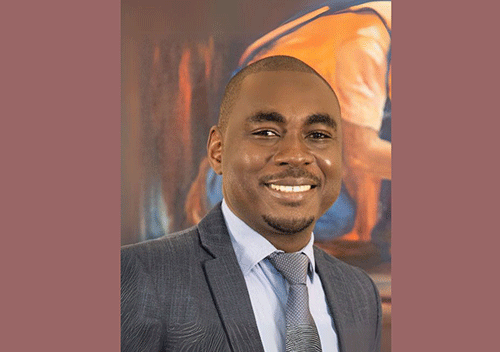
*Dr Gambo is the Head of Policy, Research and Partnerships at Shelter Afrique Development Bank.