

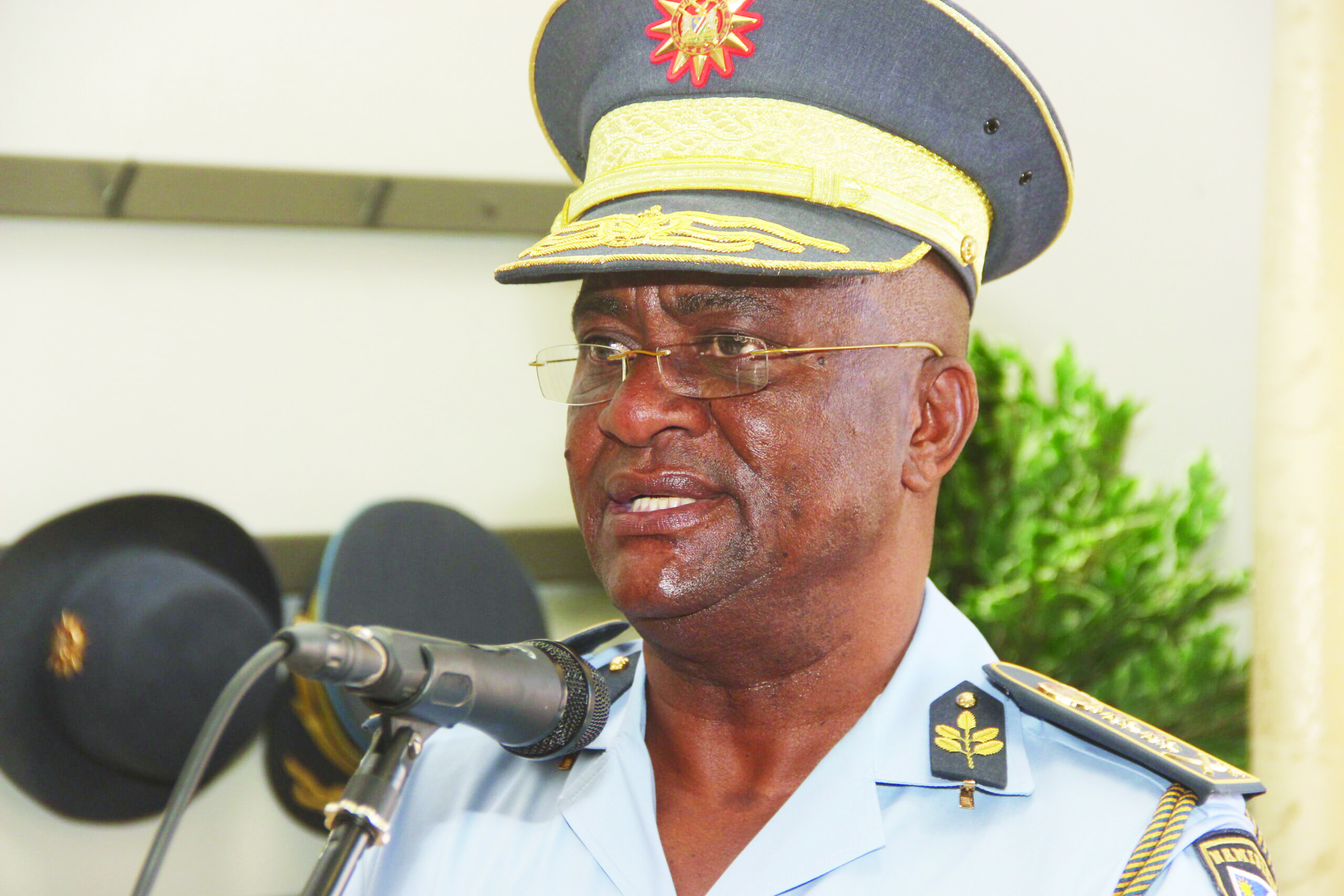

An article in The Namibian newspaper on Tuesday, 29 July 2025, reports that the United States of America’s (USA or US) military has raised concern over “jihadist groups” and “drug cartels” near Namibia’s borders, following high-level talks with the Minister of Defence and Veteran Affairs, which have increased tensions. This issue apparently involves establishing an outpost for the US Africa Command (Africom).
Primarily, this concerns American imperialism, which is based on American exceptionalism: the belief that the US is different from other countries because of its unique role or status. This has had a significant impact worldwide, especially in the 20th and 21st centuries.
US presence in Africa
Let me begin by saying this: Although Namibia is indeed an active hub of transnational organised crime, it is not yet a frontline or particularly involved in global Islamic jihadist or drug wars. Namibia’s military has a Power Index score of 2.6384, with a score of 0.0000 considered exceptional in the Global Firepower (GFP) annual assessment. Furthermore, Namibia is an active member of the African Union alliance. Therefore, we do not need American military forces on or off our shores.
What are the US interests in Africa? The US and Africa are separated by a significant distance. The shortest distance between the US mainland and Africa is about 3 600 miles (5 800 kilometres), according to a travel website. Technically, the US is not at war in Africa, so why is it continuing to expand its military bases or forces on African soil?
Currently, the US military maintains a vast global presence with around 750 military bases abroad. These bases are situated on every continent except Antarctica and are essential for US foreign policy, surveillance, and strategic military positioning. Over the past 15 years, the US government has quietly expanded its military footprint across Africa, engaging in the so-called active “special operations.”
Since the 2007 establishment of the Africa Command (Africom), the US has adopted a military-first approach to securing its interests on the African continent. Sadly, as is typical and historic in US foreign policy, this has had disastrous effects, such as endless and undeclared wars against “militant groups,” military interventions combined with the toppling of legitimate governments (coup d’etats), and political assassinations.
The harmful effects have significantly contributed to the falsehood of exaggerated claims and calls for democracy, all under false pretences.
After all, counterterrorism and countering drug cartel operations are primary roles of the International Criminal Police Organisation (Interpol) worldwide, which promotes global police cooperation to fight international organised crime. So why is the US replacing professional policing duties with military operations? And while the US is so worried about “drug cartels”, why is it exporting “drug lords”, “illegal aliens”, and “barbaric, violent criminal aliens” from several countries to developing nations like South Sudan?
It raises the question: Why is the US pursuing exploration on a military horse’s back? Because Africom’s focus on counterterrorism is a pretext for advancing US “strategic interests” in Africa to counter the growing presence and influence of other major military powers like Russia and China.
Africom’s main goal is seemingly to secure US influence in African governance and gain access to Africa’s natural resources, especially oil, gas, and minerals.
Perceived and real motives
The decision to establish Africom’s presence in Namibia would come at a steep cost of sacrificing our neutrality and independence, while the US would bolster its declining influence on the African continent during Africa’s rise in global importance. Their waning influence is due to their self-serving neo-colonial, imperialist actions.
Rightfully, Africa and the Southern Africa Development Community (SADC) are suspicious of Africom due to deep-seated concerns about a potential US neo-colonialism agenda, with the US seeking to control resources and influence policy outcomes in Africa and Southern Africa in particular. Militarisation of US foreign policy has negative and possibly lasting consequences and impacts on SADC regional stability.
Africa’s fears and suspicions are fuelled by the bloody history of Western imperialism and blatant ulterior motives that are driving Africom’s expansion. The concerns also extend to Africom’s goal of worsening existing conflicts or undermining local governance and decision-making processes.
Africom’s focus on “security” and “counterterrorism” is seen as a way to justify military intervention and sustain Western imperialist dominance. This threatens African sovereignty and self-determination. It could escalate conflicts rather than resolve them, destabilise the region, and undermine genuine efforts for peace and security.
The decoy
By 2050, Africa is projected to make up about 25% of the world’s population. It has some of the fastest-growing economies, and by 2063, Africa is expected to become the world’s third-largest economy. Additionally, according to a United Nations report, roughly 30% of the world’s mineral reserves are found in Africa, along with 12% of the world’s oil and 8% of the world’s natural gas reserves. Africa also contains 65% of the world’s arable land and 10% of the planet’s renewable freshwater resources. Given these factors, it is understandable why US interest in influencing African countries has significantly increased.
In summary, US imperialism is well documented: the expansion and dominance of political, economic, cultural, media, and military influence beyond its borders. The US is a self-interested and hypocritical state that always presents itself as an altruistic champion of democracy and freedom. It is essentially a wolf in sheep’s clothing. But history has shown us that it is a permanent dictator that suppresses and undermines African nations’ rights and self-determination.
The US is also complicit in overthrowing many African governments, fueling tribal tensions, and more. That’s why the US and French military forces were recently expelled from several West African countries. Lest we forget, during Africa’s struggles for independence, the US consistently supported Western-backed dictatorships and reactionary forces. Wars in Southern Africa like in Zaire (now DRC), Angola, and others serve as important case studies.
The notorious “Regime Change Agenda” driven by Western imperialist forces in Southern Africa remains a point of contention in our relations with those countries. Africans must stay vigilant and cautious of any movements, intentions, or encroachments through the US political agenda and military establishment on our lands. We must oppose any presence or agreements that allow Africom to operate in ways that threaten Namibia’s security, territorial integrity, and sovereignty. We must say No to American Imperialism!
*Maj. Gen. (RTD) J. B Tjivikua is a Criminal Intelligence Analyst.