


Thirty-five years after independence, we are still using a political system created by and for someone else. While other African nations have reformed their governance to suit their people, Namibia remains stuck with Westminster structures that increasingly let us down.
It is time to ask, why are we still running our government based on Britain’s political model?
Look around our continent. Countries that blindly cling to inherited colonial systems like Zimbabwe often end up with authoritarian governments or ongoing political crises.
But those that adapt governance to their own cultures, like Botswana, which successfully blend traditional leadership with modern democracy, build stronger, more stable societies. Namibia faces a similar choice.
We can continue battling with a flawed system or create something better.
Our Westminster system resembles a boxing match where the government and opposition punch at each other while the Speaker tries to maintain order.
The aim is to knock out your opponent, not to work together to solve problems.
But that is not how we traditionally make decisions in Namibia. Our communities have always valued consensus building, sitting together until we find solutions everyone can accept. If the house cannot hear the village, the village will hear the house on election day.
We are trying to govern a nation that believes in ubuntu using a system designed for political combat.
Here is the main issue: the same Cabinet ministers who should be scrutinised by Parliament are actually sitting in Parliament.
It is like having a referee who is also playing for one of the teams. This creates real problems.
Consider the minister of Urban and Rural Development, who can override decisions made by councillors whom voters specifically elected. When people in Windhoek or Oshakati choose their local representatives, why should an unelected minister have the power to nullify their choice?
Democracy is not a courier service where ballots are collected locally, and power is sent to the capital. If Windhoek demands obedience, let Windhoek earn it through performance, not proclamation.
Centralisation is when the problem resides in Katima, and the solution is buried in a memo. Even more troubling, we saw how this system facilitated the Fishrot scandal.
Ministers manipulated laws to grant themselves excessive power overfishing quotas, resulting in corruption that cost us millions and thousands of jobs.
Years later, the same structural problems remain unaddressed. Our diversity should be our strength, but Westminster’s adversarial approach turns it into a weakness. When political parties often align with ethnic groups and the system creates winners who take everything while losers get nothing, we deepen rather than heal old divisions.
For a country still recovering from apartheid a system that was designed to divide us, we need governance that brings us together, not drives us further apart.
While politicians score points against each other, ordinary Namibians suffer.
With nearly half our people living in poverty and youth unemployment at 30% plus, we cannot afford a system that produces more political theatre than actual solutions.
Botswana
Recognising customary rights in law and vesting authority in autonomous Land Boards reduced discretionary patronage, clarified appeals and gave citizens documentary proof of tenure key for planning and investment.
Urban waiting lists remain a capacity problem, not a model flaw.
Rwanda
Annual national dialogue aligns priorities, while district performance contracts link plans to measurable targets and public reporting.
The result is faster local service delivery, tighter planning discipline and more transparent accountability for district leaders.
Lessons
Imagine a system where Parliament is truly independent from the executive, providing real oversight where traditional leaders have meaningful roles in governance, not just ceremonial positions. Where decision-making emphasises consensus building over adversarial debate.
Where local communities have genuine control over their affairs.
Where ethnic diversity is seen as a strength requiring inclusive governance, not winner-takes-all competition. This is not about abandoning democracy but building a democracy that works for us.The Westminster system established us at independence, but independence was only the start of our journey.
We now have 35 years of experience.
We understand what works and what does not.Young Namibians who have never experienced Apartheid judge our system based on its current performance.
They see corruption fuelled by weak oversight, ethnic divisions reinforced by adversarial politics and slow responses to urgent challenges. Do these inherited systems still serve them?
We can keep using a system built for someone else’s problems, accepting its limitations and occasional crises.
Or we can join other successful African nations in creating governance structures that reflect our core values while upholding democratic accountability.
The choice between colonial inheritance and local innovation will determine our next 35 years. Which path do we want to choose?
Governance systems should be chosen by the people who live under them, not imposed by history.
We do not need stronger men. We need weaker excuses and stronger institutions.
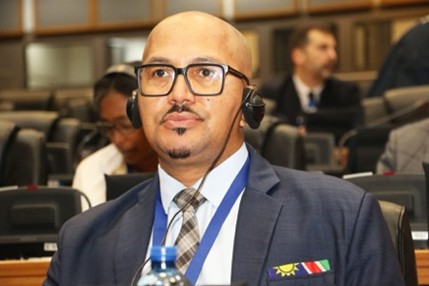
*Rodney (Omes Hatani) Cloete is a Member of Parliament.