


The hidden crisis in rural Namibia
Namibia has set an ambitious target: 50,000 affordable houses by 2029. Yet, for thousands of teachers, nurses, and civil servants in rural areas, this promise remains distant.
The problem is structural. Land in communal areas cannot be used as collateral, meaning commercial banks will not finance housing there. This has left rural Namibia without access to credit, private investment, or any realistic pathway to improved living standards.
This is not just a housing crisis. It is an education crisis, a healthcare crisis, and ultimately, a rural development crisis. Teachers live in overcrowded houses. Nurses share cramped quarters. Young graduates often reject rural postings altogether. Communities are left without essential services, deepening the rural–urban divide. Maria’s story: A symbol of the struggle Maria, a young teacher from Ohangwena, arrived in her first posting with enthusiasm. But there was no housing available for her. The only option was a crumbling room shared with two other teachers. With little privacy and dignity, she lasted only a few months before leaving.
Maria’s story is not unique. Across the country, teachers and nurses are leaving rural postings or declining them altogether because they cannot find a decent place to live. The result is predictable:
– Children sit in classrooms without teachers
– Clinics operate without nurses
– Communities are left behind
For teachers like Maria, housing is not just shelter. It is the difference between staying or leaving, between delivering services or abandoning communities.
Why rural housing doesn’t happen
It is not because government doesn’t care. Billions have already been committed to the national housing target. The real obstacle is the financing model. Without collateralizable land, banks will never fund rural housing. The system is broken, and it hurts everyone — especially the poorest communities who depend most on education and healthcare.
This gap has trapped rural Namibia in poverty and weakened service delivery. Unless addressed, the cycle will only deepen.
The PPP Solution
There is a way forward. Public-Private Partnerships (PPPs) can bridge this structural financing gap. By combining government’s land allocation and housing budget with private sector expertise, Namibia can unlock rural housing development for the first time. Beyond shelter: Building communities
Housing is more than just a roof. It is the foundation of service delivery and nation-building. When teachers have dignified homes, they stay in their posts. When nurses live in proper conditions, clinics remain staffed. When young professionals see rural postings as viable, entire communities thrive.
Conversely, without housing, schools remain empty, and clinics are understaffed. Development stalls, and rural people remain excluded from the promise of Vision 2030.
A Call to Action
If Namibia is serious about equitable development, we must face the truth: commercial banks will never fund rural housing. The future lies in innovative models that blend public responsibility with private initiative. PPPs are the only sustainable path forward.
Maria’s story should not be the norm. It should be the last warning. Teachers and nurses in rural Namibia deserve better. Rural children deserve classrooms with teachers, and rural families deserve clinics with nurses.
The government has set bold targets, but without addressing the financing gap, those targets will remain empty promises. By embracing PPPs, Namibia cannot only meet the housing challenge but also strengthen education, healthcare, and rural economies.
The time for debate is over. The time for action is now.
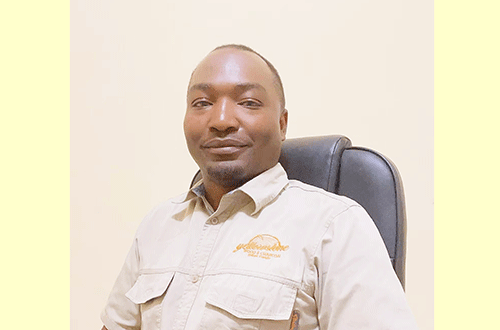
* Immanuel Sheehama is a seasoned entrepreneur and can be reached at (imms@agrischoenau.com/0812791235)