

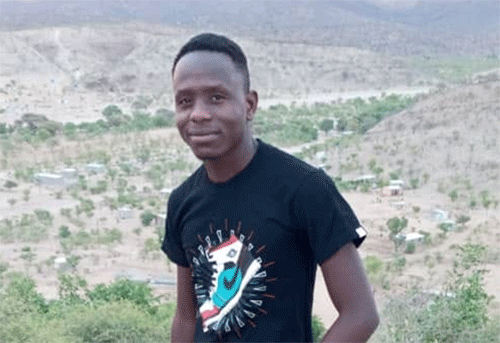

As a young person from the Kunene region and a member of the Kakurukouye Traditional Authority, where the proposed smart city is to be developed, I find myself reflecting deeply on the ongoing discussions surrounding Cape Fria. After listening to the recent interview of Chief Vemuii Tjambiru on The Agenda, I gained a clearer understanding of the vision behind the project. At the same time, it raised a number of personal concerns and questions that I believe are important to consider. Cape Fria is more than just land. It is part of our identity. It embodies our heritage and our deep connection to previous generations. The idea of turning such a place into a smart city is ambitious and, if executed well, could lead to significant development. Opportunities like creating jobs, improving infrastructure, and boosting the economy are welcome, especially in areas that have historically been excluded. However, I believe it is important to approach such a vision with careful thought. From my perspective, the scale of what is being proposed raises serious questions about its realism in its current form. A project of this magnitude requires vast financial resources, technical expertise, and long term commitment. It is difficult to believe that such a development could be carried out by a single company without strong backing.
This raises a concern that many may hesitate to voice: Are we sure this project is as presented, or are powerful external interests involved? With Namibia’s recent oil exploration near Cape Fria, it’s reasonable to suspect international actors with resource interests may be involved indirectly. Globally, large development projects often serve multiple, sometimes hidden, purposes. I am not making accusations, but I believe these are valid questions that deserve transparency. As citizens, we have a responsibility to understand who is behind such projects, what their interests are, and how those interests align with the well being of our communities and the country as a whole.Coming from a marginalised community, I see land loss not just through force but via ideas, promises, and influence, akin to modern psychological colonialism, where development is sold as benefiting all but often results in loss of land and control.
I want to make it clear that I am not against development, nor am I against the Cape Fria smart city idea itself. I support initiatives that genuinely uplift communities. However, development must be transparent, inclusive, and built on trust. It must involve the people it affects, not simply present them with decisions that have already been made. Another concern I have is the apparent lack of alignment between key stakeholders. From what I have observed, there seems to be a gap between the government’s position and that of traditional leadership.
The Ministry of Environment has expressed concerns about the project, particularly because Cape Fria is located within a protected national park. This raises legitimate environmental and legal considerations that cannot be ignored.
At the same time, it appears that there has not been a clear and open engagement between the government and traditional authorities on this matter. Personally, this is concerning. If a project of this importance is truly in the best interests of the nation, there should be visible collaboration and consensus among all parties involved. The absence of such alignment raises questions about the process and its transparency.
Looking at similar projects elsewhere in Africa, I am reminded of Akon City in Senegal. It was introduced as a bold and transformative vision, attracting global attention.
However, progress has been slow, and the project has faced several challenges.
This shows that even well publicised initiatives can struggle when confronted with the realities of funding, planning, and execution. This highlights the importance of dreaming big and planning realistically. Especially young people should delve beyond surface presentations of projects. Asking questions isn’t opposing development but ensuring it’s meaningful and sustainable.Community involvement is also critical. The people who are directly connected to the land must be fully informed and included in decision making processes.
They must understand what is being proposed, what it means for them, and what the long term implications are. Without this, there is a risk that decisions are made on behalf of communities rather than with them.In addition, I strongly believe that the government must play a central role in any project of this scale. As the custodian of national land and resources, it is essential to ensure that development aligns with national laws, policies, and interests. A project of this magnitude cannot succeed without proper oversight, coordination, and accountability. In conclusion, the Cape Fria smart city has the potential to be a transformative initiative, but only if it is approached with transparency, proper consultation, and genuine collaboration. It must be clear who is involved, what their intentions are, and how the project will benefit the people. As a young man from the region, I do not want to see history repeat itself. I want to see development that is honest, inclusive, and beneficial to all. Cape Fria should represent progress, but progress built on trust, not uncertainty. “Development should never come at the cost of truth, transparency, and the dignity of the people it promises to uplift.”
*Karirandua Tjingee is a resident of Otjitanda and writes in his personal capacity.