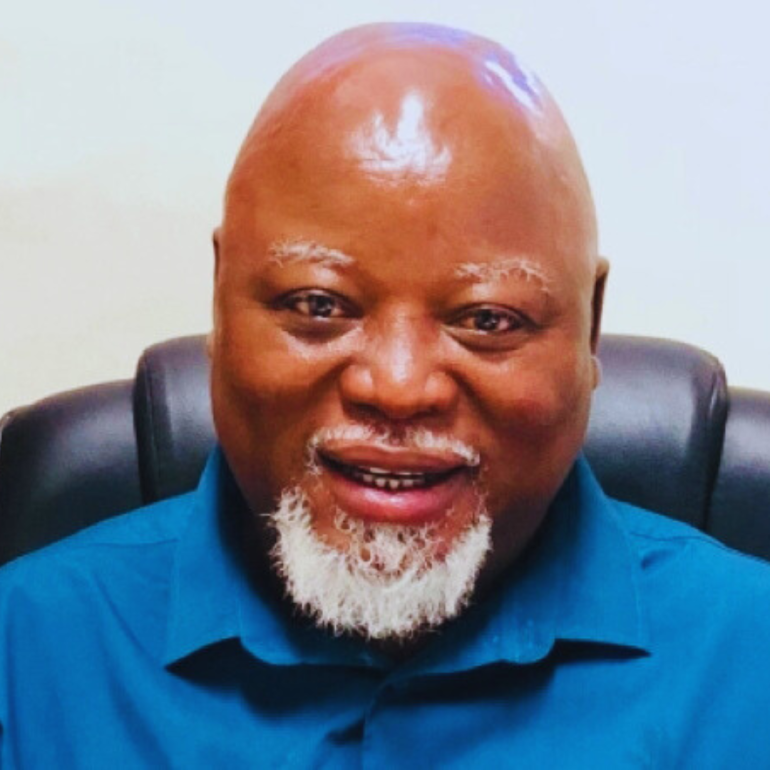

Ras Hans Sheehama used to call me “the philosopher.” But as I sit down with a heavy heart to write this tribute after his passing, I must state something clearly: He was the true philosopher — not me.
In Ras, Namibia had a voice of reason, of truth, of conscience. And in losing him, we lost far more than just a reggae musician. We lost a national thinker, a man whose songs were full of wisdom, questions, and warnings about the kind of society we are building.
Ras will be laid to rest on 20 September 2025. It’s a sad moment, but it is also a time to reflect on what he gave us — and what he stood for. His music was not ordinary. His lyrics were never just to entertain or to fill airwaves. Every song was a message. Every word had meaning. Ras was a man who studied our society with his heart, and spoke back to it through his music.
His song “The System is a Push and Pull” is a perfect example. He captured the daily struggles of ordinary Namibian people. He understood the frustration of trying to move forward in a system that sometimes lifts you up only to pull you back down. That song is not just reggae — it’s a commentary on governance, on policy, on inequality, on unemployment and on the fight between hope and hardship in our communities.
Then there’s “Inotila.” That song alone could be taught in schools and universities. It challenges us to look beyond what is shown on the surface. It asks: ‘What is really going on in our country? Who is really benefiting from independence? Who is speaking for the poor?’ Ras didn’t pretend things were fine. He wasn’t afraid to ask uncomfortable questions — and more importantly, he wasn’t afraid to give uncomfortable answers.
In “City Young Girl,” he touched on issues often ignored. A young woman caught in the chaos of city life, searching for love, identity, purpose. But this song was never just about one girl. It was about lost youth. It was about a generation being raised without guidance, without protection. Ras reminded us that when we fail to protect our children, we fail as a nation.
And who can forget “Tudimbulukeni Cassinga?” That song takes us back to the pain and sacrifice of our liberation. Ras carried history in his voice. He reminded us to remember, to respect, and to honour. While others moved on, Ras made sure the past remained alive — not to divide, but to teach. He knew that without memory, there can be no justice.
That’s why I say again: Ras was the true philosopher. He didn’t need a classroom or a podium. He didn’t write academic papers. He didn’t hold any government positions. But his music carried more value than many speeches, academic papers or policies. His music carried the heartbeat of a nation. It asked us all to do and be better — to be fairer, braver, and more united.
Ras Hans Sheehama deserves an honorary doctorate, which our country’s institutions of higher learning failed to notice. .
Not just because he was talented, but because he was a teacher (murongi) to the nation. He deserves hero’s status too — because he stood for the people, and he stood up to the system when it wasn’t doing enough. He called out poverty. He spoke for the voiceless.
He demanded action where many stayed silent. Through his music, he fought for a more equal, more just, and more inclusive Namibia – the Namibia we all want.
He dreamed of a country where no child goes to bed hungry. Where every voice is heard, no matter how small. Where leaders are servants of the people, not their masters. Where music is not just background noise, but a tool for bringing about social change. Ras held up a mirror to society and asked us, “Do you like what you see?” He challenged us to do more, to care more, to build better.
He was not motivated by fame or riches. He lived simply, but he thought deeply. He stayed true to his roots, to his beliefs, and to his people. In a world that often rewards pretenders, Ras remained real. And that’s why his legacy will last.
As we prepare to say goodbye to this great son of the soil, let us not bury his message with his body. Let us keep playing his songs, but more than that, let us live the values he sang about. Let us honour him not just with words, but with action. Let us keep pushing for the Namibia he dreamed of — one where justice, dignity, and equality are not slogans, but realities.
Rest in peace, Rasta man— the true philosopher of our time. You read Namibia clearly, and you loved it enough to speak truth to it. Your music was your lecture. Your songs were your protests. Your voice was your legacy. And that legacy will never die.
*Ndumba J Kamwanyah (PhD) is a public policy expert, focusing on the interplay of social welfare policy, development and democracy. He is also a peace and reconciliation scholar and a certified mediator with MA in conflict studies