


Sport in Namibia thrives on the talent and enthusiasm of athletes, yet behind every local tournament, school league, or community wellness programme sport officers are the driving force.
These professionals serve as the link between government policies, sports organisations, and grassroots participants, ensuring that sport contributes not just to competition, but also to health, social cohesion and youth development.
At the community level, the roles of sport officers are multifaceted. They promote physical activity, encouraging children and adults to maintain fitness through community events, athletics programs and recreational activities.
They also identify and nurture talent, scouting promising athletes from schools and local clubs and connecting them to regional and national development programmes. By organising competitions, sport officers provide platforms for skill development, exposure and healthy rivalry.
Importantly, they work to promote inclusion, ensuring women, youth, and people with disabilities can participate in sport and benefit from its social and health advantages.
Additionally, sport officers monitor programmes, report on progress and advise on infrastructure needs, acting as the professional bridge between local communities and national sporting authorities.
Across Namibia, the contributions of sport officers are evident. In Omaruru, Berthold Karumendu has successfully organised inter-school athletics competitions, coached youth teams, and facilitated talent scouting for regional tournaments.
In Rundu, Selma Nangolo, a sport officer, has established women’s football leagues and community wellness programmes that keep young people engaged and promote health awareness.
In Keetmanshoop, Thomas Kaperu has focused on school athletics and cycling programmes, ensuring rural youth have opportunities to participate in competitive sports.
Meanwhile, in Windhoek, Linda Hamukwaya has coordinated inter-district tournaments and youth training camps, nurturing athletes who later join national teams.
These examples illustrate how sport officers nationwide are actively shaping the athletic and social landscape, often under challenging circumstances.
Despite these critical roles, the status quo of sport officers in Namibia remains challenging. Many operate with limited resources, inadequate training and low remuneration, affecting programme quality and sustainability. Rural areas, in particular, face a shortage of functional sports facilities, equipment and transport, limiting opportunities for youth participation.
Furthermore, public awareness of the work sport officers do remains low, reducing recognition and support for their initiatives.
Systemic issues compound these challenges. Budget allocations are often inconsistent and officers sometimes rely on short-term projects or volunteer efforts.
This lack of stability affects long-term development strategies, talent pipelines and sustainability. The COVID-19 pandemic further disrupted activities, highlighting the profession’s vulnerability and the need for adaptability in programme delivery.
To address these challenges, strategic interventions are needed. First, sport officers should be professionalised through formal training programmes covering sports management, coaching, event coordination, and community engagement. Second, sufficient funding and infrastructure are essential.
Partnerships with municipalities, private sponsors and NGOs can facilitate the development of multi-purpose sports centres and improve access to equipment.
Third, public recognition of sport officers’ contributions can boost morale and highlight their importance through media coverage, awards, and community engagement campaigns.
Additionally, leveraging technology, including online training, digital competitions and social media campaigns can expand program reach to remote communities.
Clear career progression pathways and incentives are also needed to retain talented officers and maintain the quality of community sports development.
In conclusion, sport officers in Namibia are far more than administrators; they are educators, mentors, community builders and advocates for health and social inclusion. Their work fosters talent, strengthens community cohesion, and nurtures the next generation of athletes.
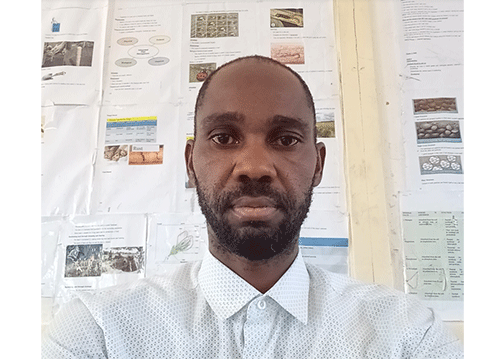
*Absalom Kamutjemo is a resident of Epako, Gobabis.